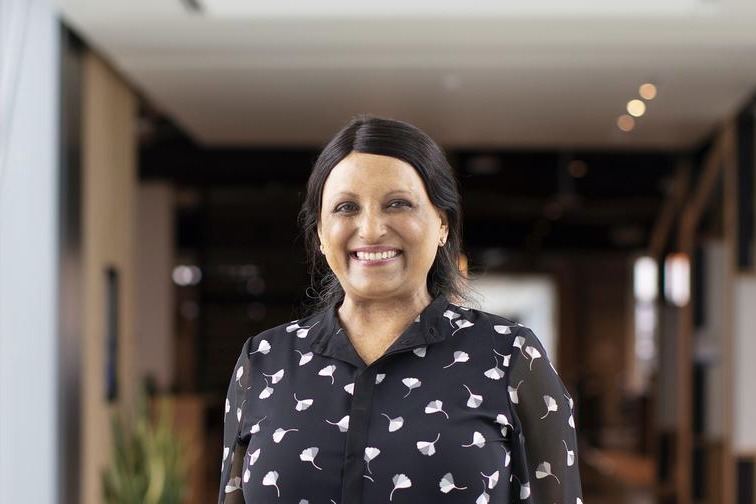
Alexandra Jeglitsch is the Austrian founder of Expedition Solopreneur, a mentoring platform that helps early-stage founders validate their ideas before they spend money building them, and of LUA LAB, a branding and design accelerator for startups. Since 2012 she has worked as a designer and brand strategist alongside VC-backed startups and bootstrapped solopreneurs — first from a van, a hostel and a two-person tent in South America, today from Salzburg, Austria. Her message to founders is blunt: start lean, test fast, and only build what people have already proven they will pay for.
Table of Contents
- From a Small City in Austria to a Tent in the Atacama
- Building LUA LAB From a Backpack
- The Accidental Launch That Created BrandQuest
- Expedition Solopreneur and the E.X.P.L.O.R.E. Framework
- Why Most Startups Fail Before They Start
- The Playbook She Gives Her Clients
- Frequently Asked Questions
- Conclusion
- Sources
From a Small City in Austria to a Tent in the Atacama
Her story does not start with a business plan, but with restlessness. Jeglitsch grew up in a small city in Austria with what she calls a "deep, nagging craving for freedom, independence and exploring possibilities." An exchange semester in Guadalajara, Mexico turned into a year; a Master's degree followed in Valencia, Spain. Routine bored her, so she moved into a well-paid UX designer role at a high-tech startup — and stayed restless anyway.
The resignation happened on impulse, from the kitchen floor, in tears. She quit without a plan B, launched LUA LAB on 1 May 2016, and within six months had packed the entire agency into a backpack and boarded a flight to South America. For almost two years she ran the business out of a van, then hostels, then a two-person tent in the Atacama Desert, hitchhiking between towns to find a stable internet connection while fishermen wondered why she was so obsessed with Wi-Fi. Working 32-hour stretches for little pay and trading hostel shifts for breakfast was not the nomad life she had pictured — and it was the training ground for everything she teaches now.
Building LUA LAB From a Backpack
LUA LAB is the branding and design accelerator she has run since 2016: intensive BrandSprints, done-for-you websites and design systems that take startups from scattered ideas to launch-ready clarity in days rather than months. Clients bring her in at ground zero, with an idea, a vision and sometimes early funding, but no direction; she acts as a temporary brand and product lead for three to six months until they are ready to hire in-house.
The turning point on the road was a single sentence from an Argentine hostel volunteer, handed to her with an empanada after she had worked 32 hours straight: her professional, buttoned-up website had nothing in common with the nomad her fellow travellers knew. "Why don't you quit the shoulds instead?" he asked. She rewrote the brand identity, the copy, the images, her process and her offer until they sounded like her. Within three months of the relaunch she had tripled her previous year's income, hired contractors and taken a month off to watch whales on the Argentine coast — receiving a deposit for a new project by text while she was there. Her conclusion: if you try to please everyone, you please no one.
The Accidental Launch That Created BrandQuest
Perfectionism and people-pleasing were, in her words, her biggest productivity killers. She spent years polishing work she did not believe in, executing designs she disliked because "the client is king." Then she accidentally hit publish on a half-finished offer page — with her own notes asking whether it sounded too intense, and no checkout to buy it. People started writing to ask how to sign up. Nobody cared that it was unfinished; they liked the raw thinking, and that it sounded like her.
That tech glitch became the seed of BrandQuest, her signature branding experience, built on personality rather than polish. It also produced the belief she states openly: execution is infinitely more valuable than an idea, because everyone has great ideas and almost nobody acts on them. Her advice to her younger self is the same — take up space, stop waiting for permission, and treat failure as data rather than as a verdict.
Expedition Solopreneur and the E.X.P.L.O.R.E. Framework
Expedition Solopreneur, the business named in her IdeaMensch profile, is aimed at founders who are "idea-rich but clarity-poor": people bouncing between concepts in analysis paralysis, unsure what to commit to. The offer is deliberately bite-sized — feedback sessions, 1:1 mentoring, group cohorts with live classes, virtual meetups and accountability — built around the E.X.P.L.O.R.E. Framework, her method for stripping an idea down to its core, testing market demand and launching without draining a savings account. The promise on the site is explicit: validate in weeks, not months, before you invest a single dollar in branding, development or marketing.
That framework is a direct response to her own expensive lesson. She co-founded a startup that ran out of cash — the classic loop of writing a business plan, building a website, pitch deck and prototype, pitching investors who want traction, and needing money to build the product that would create the traction. The correction she now preaches is pre-selling: validate demand, get people ready to pay, and only then build.
Why Most Startups Fail Before They Start
The data supports her warning. CB Insights reviewed 431 venture-backed companies that publicly shut down since 2023 and found that while 70% ran out of capital, that was almost always the final symptom rather than the root cause: 43% cited poor product-market fit, 29% bad timing or macro conditions, and 19% unsustainable unit economics (CB Insights, 2024). Most startups die of building something nobody wanted, not of running out of money.
The opportunity she is addressing is just as measurable. Women own 14,017,000 businesses in the United States — 39.1% of all firms — employing 12.2 million people and generating $2.7 trillion in revenue, according to the 2024 Impact of Women-Owned Businesses report. Small firms without employees dominate the landscape: the U.S. Small Business Administration counted 28,477,518 owner-staffed companies out of 34,752,434 small businesses in 2024, and Gusto's 2025 survey found that women make up more than 50% of new solopreneurs in the country. Independent work is scaling too: MBO Partners counted 79.2 million Americans doing independent work in 2025, with those earning more than $100,000 a year up 19% since 2024 to 5.6 million. Solo founders are no longer a niche — and they are the group most exposed to the planning trap Jeglitsch describes.
The Playbook She Gives Her Clients
Three principles run through her frameworks. First, start lean and test fast: sell the solution before you build it, and treat "build it and they will come" as the biggest lie in entrepreneurship. Second, own your story — authenticity attracts your kind of clients, and a generalist who connects dots across fields often beats a specialist watching one discipline. Third, rest is a strategy: after years of pushing through exhaustion she now calls hustle culture a scam, works out three or four mornings a week, and twice a week finishes at 1 p.m. to spend the afternoon in nature.
Her practical routine is deliberately unglamorous: deep work on her own business in the morning, client and mentoring sessions in the afternoon, an idea-ping-pong with a sparring partner until the well runs dry, then a walk or a notebook away from the desk until things click. She recommends joining an entrepreneur community — her best $100 spend — and credits How I Built This with normalising messy beginnings. The same conviction runs through our Success Stories, from Lauren Fleming rebuilding a pelvic health brand after a dismissed diagnosis to Emylee Williams walking away from a multi-million-dollar company to build something leaner.
Frequently Asked Questions
Who is Alexandra Jeglitsch?
Alexandra Jeglitsch is an Austrian brand and product strategist based in Salzburg. She founded the branding studio LUA LAB in 2016 and later launched Expedition Solopreneur, where she mentors early-stage founders. She has worked in design and brand management since 2012.
What is Expedition Solopreneur?
Expedition Solopreneur is a mentoring platform for founders who have too many ideas and too little clarity. It offers feedback sessions, 1:1 mentoring and group cohorts built around the E.X.P.L.O.R.E. Framework, a method for validating an idea before spending on branding, development or marketing.
What is the E.X.P.L.O.R.E. Framework?
It is Jeglitsch's lean startup method for stripping an idea down to its core, testing demand and launching fast. Founders learn to sell their solution before building it, so they validate the offer in weeks rather than months and avoid spending savings on a product nobody asked for.
How did Alexandra Jeglitsch run her business from a tent?
Within six months of launching LUA LAB she backpacked through South America for almost two years, working from a van, hostels and a two-person tent in the Atacama Desert. She hitchhiked between towns for internet connections, worked 32-hour stretches and traded hostel shifts for accommodation.
Why do so many startups fail, according to her experience?
Because they plan and build before they validate. Jeglitsch co-founded a startup that ran out of cash chasing the classic loop of business plan, prototype and investor pitches. CB Insights found the same pattern across 431 venture-backed shutdowns since 2023: 70% ran out of capital, but 43% cited poor product-market fit as the underlying cause.
What advice does she give to first-time founders?
Start lean, test fast and bootstrap smart: pre-sell, validate demand and build only after people are ready to pay. She also tells founders to own their story instead of copying someone else's blueprint, to treat failure as data, and to protect rest as business strategy.
Conclusion
Alexandra Jeglitsch's route from a kitchen-floor resignation in Austria to a tent in the Atacama, and from there to a mentoring business that helps founders avoid her most expensive mistake, is not an overnight-success story — she says so herself. It is a case study in the lean principle she now sells: ship, learn, keep moving. For founders with a drawer full of ideas and no idea which one to build first, her advice is simple: stop polishing, start testing, and let the market decide what deserves the next month of your life.
Sources
- CanvasRebel — "Meet Alexandra Jeglitsch" (2025): https://canvasrebel.com/meet-alexandra-jeglitsch
- IdeaMensch — "Alexandra Jeglitsch, Founder of Expedition Solopreneur" (2025): https://ideamensch.com/alexandra-jeglitsch
- Female Founder Space — "The Founder Journey of Alexandra Jeglitsch" (2024): https://femalefounderspace.com/innovating-consulting-the-founder-journey-of-alexandra-jeglitsch-founder-of-lua-lab
- Expedition Solopreneur official website: https://expedition-solopreneur.com
- CB Insights — "Why Startups Fail: Top Reasons" (2024): https://www.cbinsights.com/research/report/startup-failure-reasons-top/
- 2024 Impact of Women-Owned Businesses report: https://wbc-a4i-2024.s3.us-east-2.amazonaws.com/2024-WBC-CEO-Report-092304-0658pm-web.pdf
- U.S. Small Business Administration — FAQ About Small Business (2024): https://advocacy.sba.gov/wp-content/uploads/2024/12/Frequently-Asked-Questions-About-Small-Business_2024-508.pdf
- Gusto — "Behind the Boom in Solopreneurship" (2025): https://gusto.com/resources/gusto-insights/new-business-formation-solopreneurs-2025
- Forbes — "Six-Figure Self-Employment Surges" (2025): https://forbes.com/sites/elainepofeldt/2025/10/29/six-figure-self-employment-surges-report-finds