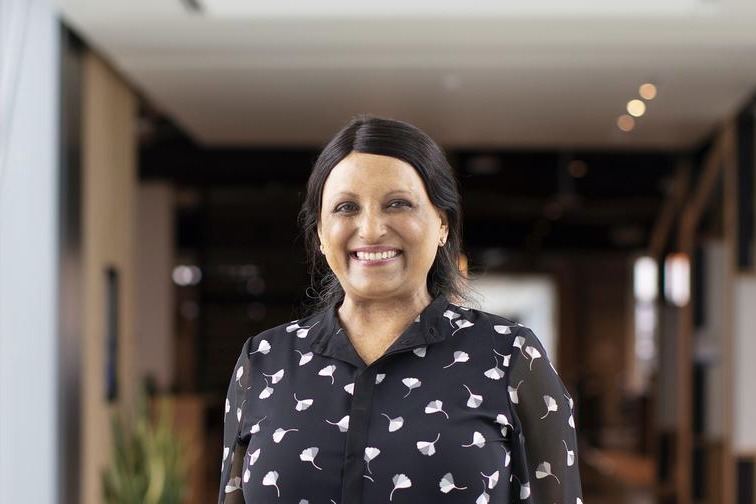
Bonnie Singleton built Pollinate Marketing, a Colorado Springs agency that works with independent hotels, restaurants and property managers, without ever buying into the industry's favourite growth story. She started the company as a side hustle in 2016, ran it at night and on weekends for three years while holding a full-time job and bartending shifts, and only handed in her notice when the agency had replaced her salary. Two decades of hospitality experience and one brutal pandemic later, she leads Pollinate Marketing under a rule she calls "Better Before More": optimise what already works before spending a dollar on anything new.
Her path is a useful counterweight to the advice female founders usually hear, because most of Pollinate's growth came from subtracting rather than adding — fewer clients, tighter boundaries, narrower focus and a refusal to chase every new channel. This is the story of how a hostess who never left hospitality turned a night-and-weekends side project into an agency with a published track record of doubling client leads while cutting their marketing spend.
Table of Contents
- From Side Hustle to Full-Time Founder
- "Better Before More": The Methodology
- The COVID Client That Cost Half the Business
- Boundaries as a Growth Strategy
- Why Hospitality Is Her Moat
- What Entrepreneurs Can Borrow
- Frequently Asked Questions
- Conclusion
From Side Hustle to Full-Time Founder
Singleton started Pollinate Marketing in 2016 as a side hustle alongside her corporate job, and she went full-time on the business in 2019. Before that she had spent years on the corporate side of hospitality — managing communications across multiple locations at Tucanos Brazilian Grill, then working in destination marketing at Visit Colorado Springs, where the brief was to build demand for an entire city rather than a single venue.
She had also been inside the industry since she was fifteen, starting as a hostess and picking up bartending and serving shifts at local restaurants even while she worked in marketing. That overlap is where the agency came from. Her first clients were two restaurant owners she already knew from working behind the bar; she never pitched them. "I was already there, behind the bar, on the floor, inside the business in the way you only can be when you actually work somewhere," she told CanvasRebel in April 2026.
The discipline that made the jump possible was a personal rule: she would not leave her salary until Pollinate had actually replaced it. "I had watched too many people bet everything before they had proven anything, and I wasn't going to do that," she said. Three years of nights and weekends later, the number hit, and she put in her notice.
"Better Before More": The Methodology
Pollinate's core claim is simple: measure and refine before you expand. Where most agencies push clients onto more platforms or a bigger ad budget, Singleton's team starts by fixing what is already producing results — a method she frames as "Better Before More."
The outcomes she reports are specific. In interviews in April 2025, she said the approach has helped clients double their monthly leads while reducing marketing spend by 40%, and move conversion rates from 2% to 6% by reaching the right customers instead of more customers. On the agency's own site, three pillars structure the work: defining the brand, building an always-on presence, then layering paid social and pay-per-click on top of that foundation.
That sequencing matters more than it sounds. Marketing budgets are no longer growing: Gartner's 2026 CMO Spend Survey, conducted among 401 marketing leaders in North America, the UK and Europe between January and March 2026, found marketing budgets effectively flat at 7.8% of company revenue in 2026, against 7.7% in 2025. When budgets flatline, the agencies that win are the ones that can prove where the money went — which is exactly the pitch behind a measurement-first consultancy.
The COVID Client That Cost Half the Business
During COVID, Pollinate lost its largest client, who accounted for more than 50% of monthly recurring revenue — a moment when Singleton was weighing payroll against rent. The failure was not the client leaving; it was the concentration she had allowed to build up around a comfortable contract.
The rebuild produced hard rules. No single client may represent more than 15% of revenue, and the agency maintains a four-month emergency fund as a non-negotiable. She has described those constraints as the foundation of everything Pollinate has done since, including how it handles large accounts today: protocols exist for allocating that revenue so it protects the team rather than inflating expectations.
What followed reads like a paradox but is a strategy. Pollinate doubled revenue every year for five consecutive years, then deliberately slowed down in year six to strengthen systems, train the team and refine its offerings. Delivery times dropped by 40% during that pause. "Sometimes the most powerful growth happens beneath the surface," she has said of the period — a lesson that maps directly onto the slow-compounding advice found in our piece on leadership lessons every woman executive should embrace.
Boundaries as a Growth Strategy
Singleton treats boundaries as an operating system rather than self-care. In 2021 she hit a breaking point working twelve-hour days and struggling to make payroll, and the recovery that followed reshaped the company: real office hours, published pricing, clients released when the fit was wrong, and a policy of saying no to scopes that will not solve the client's actual problem.
The practical habits are equally unfashionable. She protects the first 60 minutes of every workday — no email, no Slack — for revenue-generating work, and starts mornings with three pages of stream-of-consciousness writing, a practice borrowed from Julia Cameron's The Artist's Way. The team runs on unlimited PTO that people genuinely take, and she invests $100 per month in individual training for each team member.
The claim she returns to is that boundaries improve every metric at once: team satisfaction, client engagement and financial results rise together when availability and pricing are fixed rather than negotiable. "When I hold my own boundaries, all success metrics rise," she told Shoutout Colorado in April 2025.
Why Hospitality Is Her Moat
Pollinate deliberately narrowed its niche. The agency now positions itself around independent hotels, restaurants, short-term and multi-family properties — clients with genuine character that are losing margin to online travel agencies and listing sites. The company publishes its own figures on its website: more than $399 million in annual revenue produced for Colorado Springs businesses, roughly $20,000 in profitable monthly ad spend managed, 36+ years of combined digital marketing experience and 20+ years in hospitality.
The niche is well chosen. Distribution data shows why direct demand is worth paying for: the HOTREC European Hotel Distribution Study 2026 reported that direct bookings accounted for over half of European hotel reservations in 2025, with 36.4% coming through hotels' own online channels, while online travel platforms held 27.8%. TravelBoom's 2026 Leisure Travel Study, based on 500 active US leisure travellers, found hotel websites now drive 18% of bookings, and the State of Distribution 2026 report from the NYU Tisch Center and HEDNA recorded direct digital bookings rising from 22% in 2024 to 27% in 2026 while OTA share stayed at roughly one-third.
In other words, the commission leakage Singleton's clients are trying to escape has not gone away — which is the commercial argument for an agency that sells direct bookings rather than impressions. It is also why she sits on the HSMAI board, keeping the agency close to where hospitality marketing is heading.
What Entrepreneurs Can Borrow
Four lessons travel well beyond hotels and restaurants. First, cap concentration: one client above 15% of revenue is a risk, not a win. Second, replace revenue growth with systems growth at least once a year — Pollinate's most valuable year was one where the top line stood still. Third, sequence the work: brand clarity first, consistent presence second, paid growth third, because running ads for a property that has not decided what it is remains one of the expensive mistakes in this industry. Fourth, protect the first hour of the day for the work that actually earns money.
Founders building service businesses will recognise the same pattern in Ashley Rector's story of turning burnout into a women-owned social media agency, and in our practical guide on how to start a social media management studio from scratch. Positioning and differentiation come next: see six steps to building a strong personal brand as a female founder for the same discipline applied to personal brands.
Singleton's own next move follows the same logic. She has said she is structuring the business to acquire a local service business within a few years, reading Codie Sanchez's Main Street Millionaire as the playbook — proof that the "Better Before More" mindset is heading into a second act.
Frequently Asked Questions
Who is Bonnie Singleton?
Bonnie Singleton is the founder and CEO of Pollinate Marketing, a boutique digital marketing agency in Colorado Springs, Colorado, that works with independent hotels, restaurants and property managers. She has worked in hospitality since she was fifteen and has spent more than twenty years in the industry.
When was Pollinate Marketing founded?
Pollinate Marketing was founded in 2016 as a side hustle while Singleton worked in corporate restaurants and destination marketing. She moved to the business full-time in 2019, three years after starting it, once its revenue had replaced her salary.
What does "Better Before More" mean?
"Better Before More" is Singleton's operating principle: optimise the channels, systems and offers that are already working before adding new platforms or spending more on ads. She says it has helped clients double monthly leads while cutting marketing spend by 40%.
How did COVID change Pollinate Marketing?
During COVID the agency lost its largest client, who represented more than 50% of monthly revenue. Singleton responded with a rule that no single client can exceed 15% of revenue and a four-month emergency fund, then spent a later year deliberately pausing revenue growth to strengthen systems and cut delivery times by 40%.
What results does Pollinate Marketing report for clients?
Singleton has publicly reported that clients doubled their monthly leads while reducing marketing spend by 40%, and that conversion rates improved from 2% to 6% by targeting the right customers. These are agency-reported figures published in 2025 interviews rather than independently audited results.
What advice does Bonnie Singleton give new founders?
Her advice is to start before you feel ready, protect a daily hour for revenue-generating work, write down your own definition of success beyond revenue, and treat boundaries as a growth tool. She also recommends celebrating consistent daily actions as loudly as big milestones.
Conclusion
Bonnie Singleton's career shows what deliberate growth looks like when it is practised for a decade: a side hustle kept alive for three years, a client list capped on purpose, a revenue-doubling streak interrupted by a chosen pause, and a niche chosen because the economics underneath it are unforgiving. Nothing about Pollinate Marketing was accidental, and almost none of it involved doing more.
For women building service businesses, the transferable point is not the hospitality playbook itself but the sequence behind it — prove it before you bet on it, fix what works before you fund what is new, and let boundaries do the scaling that hustle cannot.
Sources
- CanvasRebel — "Meet Bonnie Singleton" (April 2026)
- Shoutout Colorado — "Meet Bonnie Singleton | Digital Marketing Agency Founder" (9 April 2025)
- IdeaMensch — "Bonnie Singleton, Founder of Pollinate Marketing" (24 March 2025)
- BoldJourney — "Meet Bonnie Singleton" (April 2025)
- VoyageDenver — "Exploring Life & Business with Bonnie Singleton of Pollinate Marketing" (2024)
- Pollinate Marketing — official website (accessed 9 November 2026)
- Gartner — 2026 CMO Spend Survey press release (11 May 2026)
- Statista / HOTREC — European Hotel Distribution Study 2026 (September 2026)
- TravelBoom — 2026 Leisure Travel Study (October 2025)
- NYU Tisch Center & HEDNA — The State of Distribution 2026