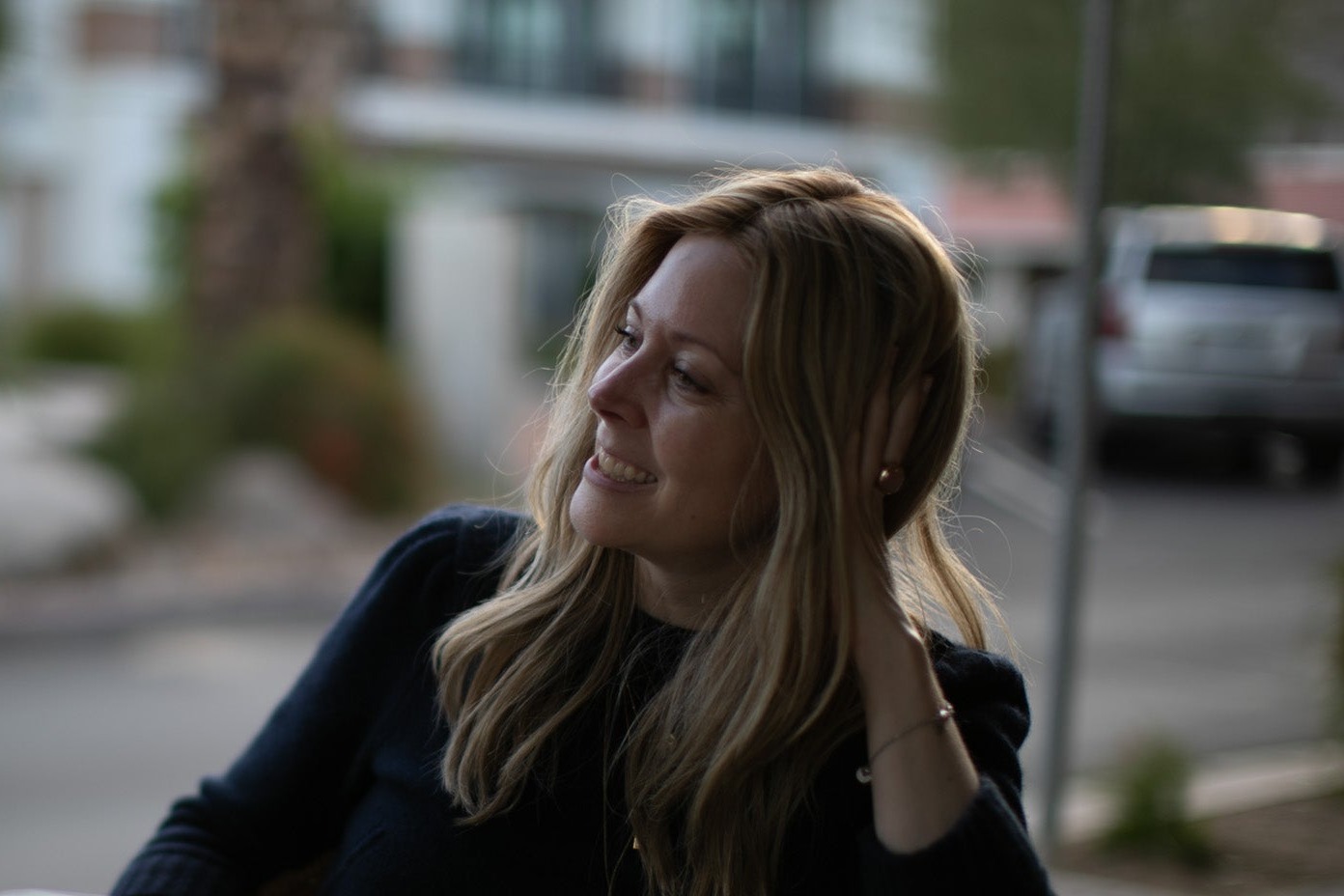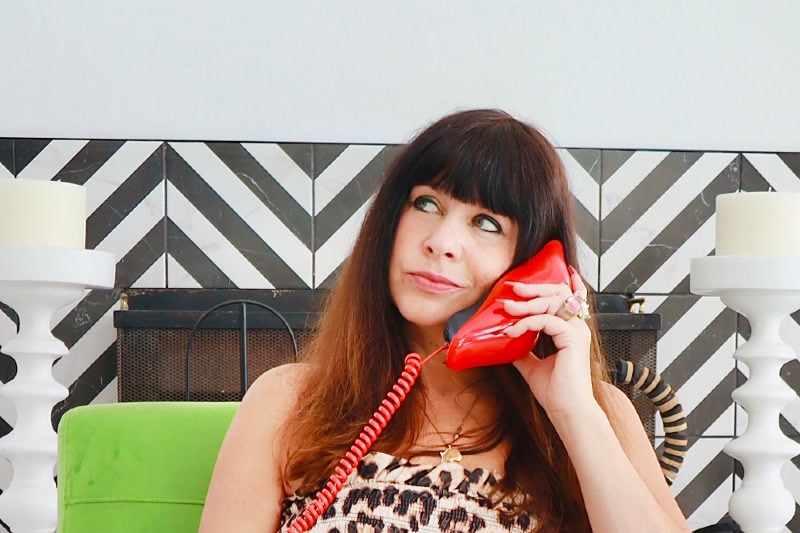
Daniela Gottschalk is the creative force behind Tinzeltown, a high-concept project development and interior design firm that designs what she calls "content creator spaces" — rooms engineered to be photographed, filmed and shared. A trained copywriter and practising psychotherapist from Frankfurt, she spent years running shops, bars and a boutique hotel before clients kept asking her to design their homes. Today her landmark project, The Bohoho in Camps Bay, South Africa, hosts influencers, production teams and luxury travellers alike. The timing looks less like luck than foresight: Goldman Sachs Research valued the creator economy at $250 billion in 2023 and forecasts it could reach $480 billion by 2027.
This success story follows Gottschalk's path from Frankfurt hospitality to international interior design, breaks down what makes The Bohoho work as a business, and extracts the lessons she repeats for anyone building a creative practice.
Table of Contents
- From Copywriting and Therapy to Interiors
- Building Tinzeltown Around Creator Spaces
- The Bohoho: A Landmark Project in Camps Bay
- Hospitality Roots That Still Feed the Business
- Business Lessons for Entrepreneurs
- Frequently Asked Questions
- Conclusion
From Copywriting and Therapy to Interiors
Gottschalk did not train as a designer — she arrived at interior design through hospitality, marketing and psychology. She qualified as a copywriter, opened shops, founded Souper, described as Frankfurt's first soup bar, in 2000, and counselled clients as a therapist. The pivot happened slowly and then all at once: friends and customers began inviting her to "just take a look" at their homes in London and Sydney, and guests at her boutique hotel in Croatia asked her to design houses as far away as France.
"I needed to open several shops, cook hundreds of thousands of liters of soups, mix endless Moscow Mules, and counsel many, many people before I found out that I did not need to run a shop to design it, and that talking therapy is not the only way to touch people on a soul level," she told PR ON THE GO in 2024.
That background still shows in the finished rooms. Gottschalk treats interiors as psychological instruments: a space either shrinks the people inside it or gives them permission to perform. The formal transition came when favours turned into commissions — what she calls an epiphany, after which "everything else fell into place" and the business acquired its name almost overnight.
Building Tinzeltown Around Creator Spaces
Tinzeltown sells a category it helped name: high-concept spaces designed for people whose lives are documented. The firm takes on its own development projects and client commissions worldwide, combining project development, interior design and hospitality concepts under one roof. Gottschalk has owned Tinzeltown since May 2022, according to her LinkedIn profile.
The commercial logic is straightforward. The interior design services market was worth $117.1 billion in 2025 and is projected to reach $201.9 billion by 2034, a 6.2% compound annual growth rate, according to a market outlook published in October 2025. Within that growth, hospitality and experiential design move fastest, because hotels, bars and rental villas now compete partly on how they look on a phone screen.
Gottschalk's advantage is that she ran venues long before she designed them for other people. "Owning restaurants and bars in a truly international city like Frankfurt and owning a boutique hotel in Croatia is what I would call 'the secret ingredient'," she says. Regulars in Frankfurt are frequently expats and transit travellers who carry her rooms' image with them; a man from Auckland once wrote to her because his wife wanted a kitchen like the one she had designed.
The Bohoho: A Landmark Project in Camps Bay
The Bohoho is Tinzeltown's flagship: a three-bedroom villa in Camps Bay that turned a private house into a content production set and a boutique stay at once. Opened to its first guests in December 2024, it channels a 1960s Palm Springs summer through cerulean blue and lime green, black-and-white graphics, metallic accents, letterbox-red details and Jonathan Adler's "lips" motif set into the swimming pool. It accommodates six to eight guests and books through its own website, Airbnb and Booking.com.
The location is a strategic choice, not a holiday whim. Cape Town recorded 1.44 million foreign overnight visitors in 2025 and R19 billion in international visitor spending, according to Cape Town Tourism figures released in June 2026. Content professionals are part of that flow: global influencer marketing spending reached an estimated $32.55 billion in 2025, close to double the 2022 estimate of $16.4 billion, reports the Influencer Marketing Hub.
Coverage followed quickly. SA Decor & Design described the project as "an evolution of Instagram backgrounds, dopamine decor and old Hollywood design elements" becoming a whole new category of project development, while Gottschalk's press portfolio — assembled by the Berlin agency The Coup — lists expert features in Martha Stewart Living, Livingetc and The Spruce alongside her IdeaMensch interview.
Hospitality Roots That Still Feed the Business
Frankfurt remains the operating base: Gottschalk has run the cult bar Theplacetobe in the Weißadlergasse for around 25 years. Souper, the soup bar she founded in 2000, stayed with her until the 2020 lockdown. She first visited Cape Town in 2007, fell in love with the city and returned repeatedly for nearly two decades — the pattern that eventually produced The Bohoho.
Both continents now reinforce each other. The Western Cape, the province containing Camps Bay, received about 1.5 million international tourist arrivals in 2025, an 11.1% increase over 2024, according to Wesgro, the province's investment agency. Germany — Gottschalk's home market — accounted for 10.9% of those arrivals, second only to the United Kingdom among overseas source markets. Her Frankfurt clientele and her Cape Town guests increasingly travel the same corridor.
The arrangement also depends on a team she trusts. When she travels, the bar staff run Theplacetobe in constant virtual contact with her, and she is currently redesigning a well-known restaurant in Tamboerskloof, a Cape Town neighbourhood, according to top magazin Frankfurt.
Business Lessons for Entrepreneurs
Three lessons recur across Gottschalk's interviews: put the business first, refuse the middle ground, and be honest about whether you are actually creative.
- The business comes first. The failure she names most readily is carrying employees she could not afford because she wanted to be liked: "The business and you must come first. You carry all the responsibility and you cannot pour from an empty cup. You cannot be popular and be the boss." She adds the blunt corollary: "A business is not family."
- Fit in or stand out — you can only choose one. "As an interior designer you can only satisfy one of these very ambivalent desires and of course you choose the road to be true to yourself," she says. For her, that means rooms other people consider too loud are the point, not a risk.
- Test yourself before you bet everything. Her advice to aspiring creatives starts with an uncomfortable question — "are you really CREATIVE?" — meaning: can you generate ideas under constraints of timing, budgets and opinions, or do you need total freedom? If the answer is yes, she says, give 200% and trust the process.
Underneath all three sits a single strategy: "I have no strategy other than to be 100% authentic and always do my best. I don't cheat, I don't take shortcuts." Founders in adjacent creative fields face the same choice between safe and recognisable — see 6 Steps to Building a Strong Personal Brand as a Female Founder for a structured approach, or Starting an Interior Design Consulting Business Online for the mechanics of selling design services.
Frequently Asked Questions
Who is Daniela Gottschalk?
Daniela Gottschalk is a Frankfurt-based interior designer and the owner of Tinzeltown, a high-concept project development and interior design firm. Trained as a copywriter and working for years as a psychotherapist, she moved into design through hospitality, running bars, shops and a boutique hotel before taking on design commissions.
What is Tinzeltown?
Tinzeltown is Gottschalk's own firm, established as an active brand since May 2022, that combines project development, interior design and hospitality concepts. It specialises in what the industry calls content creator spaces: expressive, highly photographed interiors built for travellers, creators and production teams.
What is The Bohoho and where is it?
The Bohoho is a three-bedroom boutique villa in Camps Bay, Cape Town, South Africa, designed and developed by Tinzeltown and opened to guests in December 2024. It sleeps six to eight guests and mixes 1960s Palm Springs glamour with pop-art colour, a pool with a signature Jonathan Adler lips motif, and ocean and mountain views.
How did Daniela Gottschalk become an interior designer?
She became a designer by accumulation rather than by degree: copywriting, retail, Frankfurt hospitality, a boutique hotel in Croatia and work as a therapist. Customers and friends kept asking for her opinion on their homes, requests turned into commissions, and after an epiphany moment she built a name for the business — Tinzeltown — around the work.
What design trends does Gottschalk predict?
She points to limitless pattern and colour combinations with "no no-go's", colour drenching, hand-painted terraces, a return of breeze blocks, and layered fabrics on curtains, beds and walls. Her forecast rests on a simple motive: as life feels less predictable, people want a home that works as a cocoon and a refuge.
How can I book The Bohoho or contact Tinzeltown?
The Bohoho can be booked directly through its website, Airbnb or Booking.com. For design commissions, collaborations or press enquiries, the practical route is Gottschalk's LinkedIn profile or the contact page of Tinzeltown's own website.
Conclusion
Daniela Gottschalk's career is an argument for accumulating raw material: shops, bars, a hotel, therapy sessions and two decades of hospitality all became design intuition before Tinzeltown ever took a commission. The Bohoho shows what that intuition produces — a house that works simultaneously as a retreat, a set and a product — and the market data suggests the model has room to grow, with creator-economy spending climbing toward $480 billion by 2027 and interior design services expanding at 6.2% a year. The lesson for other entrepreneurs is not to copy maximalist colour, but to design for how people actually behave: photograph, share, return, and pay for the feeling.
Sources
- PR ON THE GO — Expert interview with Daniela Gottschalk of Tinzeltown (November 28, 2024)
- IdeaMensch — Daniela Gottschalk, Owner of Tinzeltown (February 21, 2025)
- top magazin Frankfurt — The Bohoho Kapstadt: Frankfurts Interior-Traum in Südafrika (October 23, 2025)
- Travel Weekly — The Bohoho opens in Camps Bay, Cape Town
- SA Decor & Design — The Bohoho, a project development by Tinzeltown (March 5, 2025)
- Goldman Sachs Research — The creator economy could approach half a trillion dollars by 2027 (April 19, 2023)
- Interior Design Services Market Outlook 2025-2034 (October 2025)
- Influencer Marketing Hub — Influencer Marketing Statistics
- Cape Town Tourism — Cape Town's Visitor Economy in 2025 (June 15, 2026)
- Wesgro — Western Cape Tourism Performance, Annual 2025
- The Coup — The Bohoho press folder