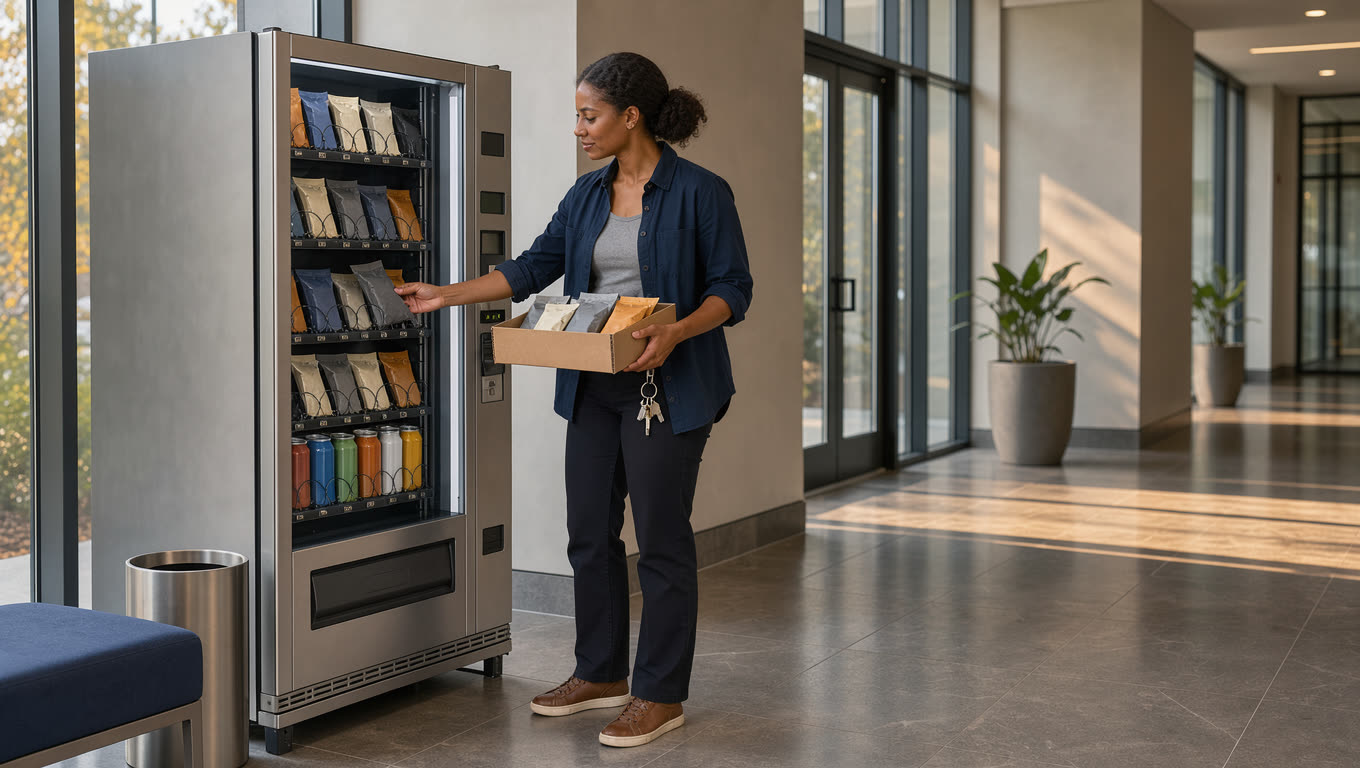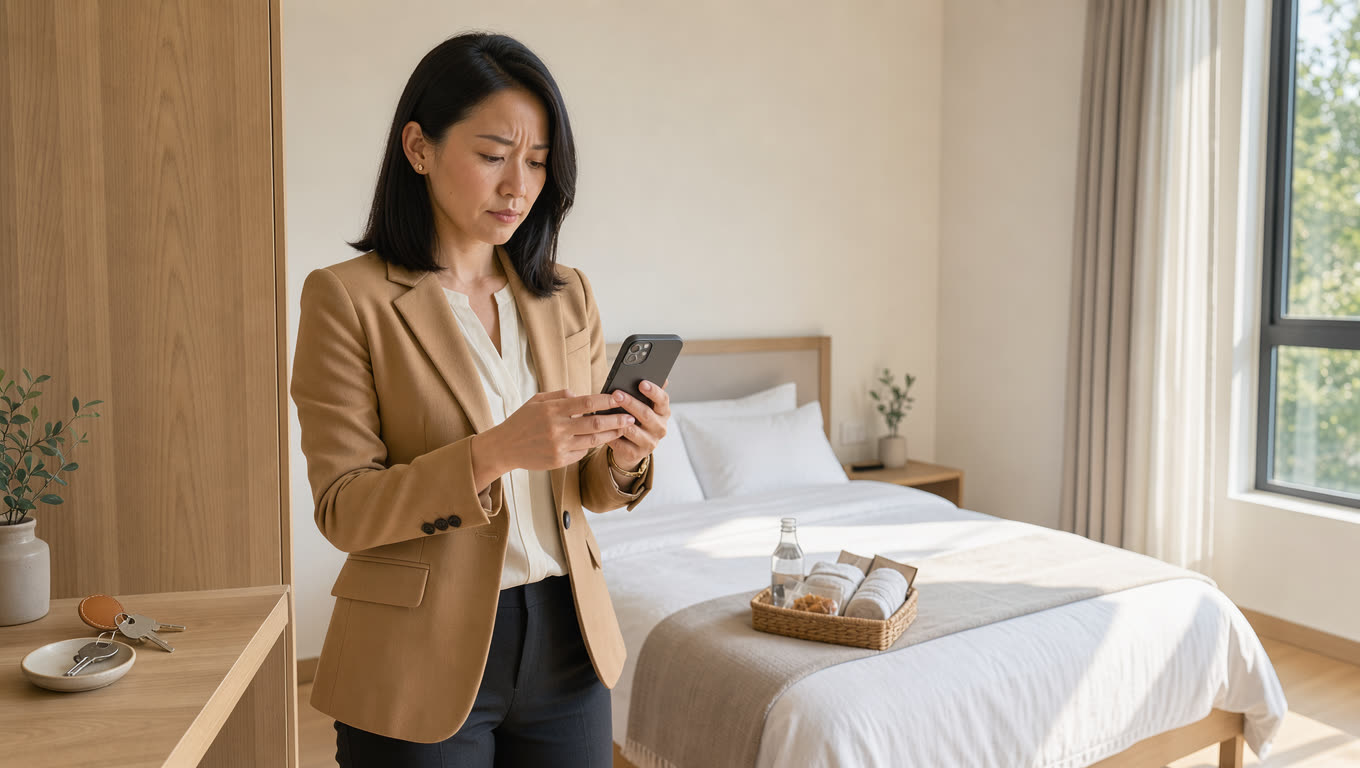
An Airbnb co-hosting business lets you run other people's short-term rentals and earn a share of the booking revenue — usually 10% to 25% — without owning, leasing or furnishing a single property. You handle guest messaging, cleaning coordination, maintenance calls and pricing; the owner keeps the property and collects the income after your share.
It is one of the few service businesses where demand is structural: millions of hosts list part-time, guests expect an answer within an hour, and professionally run listings consistently outperform amateur ones. For women entrepreneurs, co-hosting scales with systems rather than with hours worked — every additional door multiplies the same fee percentage. This guide covers what co-hosts do, how to win first clients, how to price the work, and which regulations apply.
Table of Contents
- What Is an Airbnb Co-Hosting Business?
- Why Demand for Co-Hosts Keeps Growing
- What a Co-Host Actually Does
- How to Get Your First Clients
- How to Price Your Co-Hosting Services
- The Income Math: What a Co-Host Can Earn
- Tools That Run the Business
- Rules, Licenses and Insurance
- Mistakes to Avoid
- Frequently Asked Questions
- Conclusion
What Is an Airbnb Co-Hosting Business?
An Airbnb co-host is an independent operator, not an Airbnb employee, hired by a listing owner to handle some or all of the day-to-day work of a listing in exchange for a share of its revenue. The owner adds you to their listing inside Airbnb, chooses a permission level — full access, calendar and messaging access, or calendar only — and configures a payout that the platform routes to you automatically after check-in.
Because Airbnb does the billing, a co-host never sends an invoice or chases a payment: the platform supports four payout structures — a percentage of booking revenue, a fixed amount per booking, the cleaning fee only, or the cleaning fee plus a percentage. Owners can add up to ten co-hosts to a single listing, which means one property can be staffed like a small operation: one person on messaging, one on turnovers, one on pricing.
The model has no barrier of capital: no mortgage, no lease and no furniture budget — your inputs are a phone, a laptop, local reliability and a documented process. That is why it works as an entry point into the wider property management business: the skills transfer directly, but you start with one door instead of a portfolio.
Why Demand for Co-Hosts Keeps Growing
Demand for co-hosts keeps growing because short-term rental supply is large, mostly part-time and increasingly held to professional standards: travel on Airbnb generated more than $93 billion in economic activity across the United States in 2025, while the typical US host earned about $15,600 in supplemental income that year. A co-host sits in the gap: cheaper than a full-service company, more reliable than a neighbour.
Three trends work in your favour. First, professional management pays: an analysis of seven major US markets through March 2026 found professionally managed listings earning 26% to 113% more annual revenue than individually run ones. Second, the audience is already female — Airbnb reports that 58% of its hosts self-identify as women, a community that often prefers dealing with another host. Third, Airbnb has productised the market: by late 2026 its Co-Host Network had matched more than 15,000 vetted co-hosts to over 100,000 listings across 12 countries, so owners now look for help inside the app instead of through word of mouth.
What a Co-Host Actually Does
A co-host does three things constantly: answers guests, coordinates turnovers and adjusts pricing. Airbnb groups the work into seven services a full-support co-host can offer on an ongoing basis — listing setup, pricing and availability, booking requests, guest messaging, on-site guest support, cleaning and maintenance, and listing photography — and owners usually buy a subset of them rather than the whole menu.
Guest messaging is the core, because response speed drives bookings and search visibility: inquiries arrive at night, on weekends and during holidays, and a slow reply costs the owner money. Turnover coordination is the second pillar — scheduling cleaners, checking photographs of the reset property, restocking supplies and dispatching maintenance. Pricing is the third and the most valuable: nightly rates must move with seasonality, local events and competitor supply, which is exactly the work that justifies the higher fee tiers. On Airbnb's own network, co-hosts average a 4.86 guest rating and 73% hold Superhost status — the bar your profile will be measured against.
How to Get Your First Clients
Your first client is usually someone you already know: a neighbour who rents a spare flat, an investor who bought without factoring in operations, or a host drowning in messages. Airbnb's Co-Host Network is the strongest lead channel once you qualify, and its entry conditions are public: 10+ hosted stays (or 3+ stays totalling 100+ nights) in the past 12 months, an average guest rating of 4.8 or higher, a cancellation rate below 3% and a verified identity.
Five steps take you from zero to bookable:
- Get a track record. Manage one listing — a friend's, a relative's, a client's — for at least ten stays and protect the rating obsessively.
- Package three offers. A messaging-only tier, an operational tier and a full-service tier, each with a named deliverable list; owners buy clarity, not hourly work.
- Put it in writing. A short co-host agreement covering responsibilities, the fee base, listing access, expenses and exit terms — the most consistently recommended practice in the industry.
- Apply to the Co-Host Network. Keep your rating above 4.7 and answer prospective hosts within 24 hours: Airbnb hides profiles whose response rate falls below 90%.
- Work local channels. Real-estate investor meetups, host Facebook groups and property managers needing overflow help produce the first doors.
How to Price Your Co-Hosting Services
Price co-hosting at 10% to 25% of booking revenue depending on scope: guest communication only sits at 10% to 15%, operational management at 15% to 25%, and full service — pricing, vendors, reporting — at 25% and above. Industry data puts the common range at 10% to 30% with an average close to 20%, so a quote of "20%" without a named service tier tells an owner nothing.
Two details decide whether your fee survives the first review. First, the fee base: state explicitly whether your percentage applies to gross booking revenue or to the host's payout after Airbnb's cut — since 2026 most hosts pay a single 15.5% service fee deducted from their payout, and the two bases differ materially. Second, the stack: a 15.5% platform fee plus a 20% co-host fee removes roughly 35% of gross booking revenue before cleaning, utilities or maintenance, which is why owners compare you with full-service managers charging 25% to 40%.
Flat monthly fees suit low-revenue or seasonal properties, but whichever structure you choose, put the numbers in the written agreement before the first booking arrives.
The Income Math: What a Co-Host Can Earn
A co-host's income is doors multiplied by revenue per door multiplied by your commission, and at US averages a 20% share is worth roughly $8,850 per door per year. AirDNA data puts average annual revenue per US Airbnb listing at $44,235 in 2025, so the arithmetic on a typical door is $44,235 × 20% ≈ $8,850 in gross fees before your own software and mileage costs.
- 3 doors: about $26,550 a year in gross fees.
- 5 doors: about $44,250 a year in gross fees.
- 8 doors: about $70,800 a year in gross fees.
Those figures are illustrative, not promises: revenue per door varies with market, property type and season. The lever that matters most is pricing and occupancy — professionally managed listings earn 26% to 113% more than identical ones run by their owners, so demonstrating that lift on your first door beats any discount.
Tools That Run the Business
A three-tool stack is enough to run ten or more doors part-time: a messaging and channel hub, a dynamic pricing tool, and a cleaning coordination platform. All three are active in 2026 — Hospitable, used by more than 26,000 hosts, automates guest communication across Airbnb, Vrbo and Booking.com; PriceLabs prices over 700,000 properties daily across more than 150 countries; and Turno, an official Airbnb software partner, schedules turnovers and pays cleaners automatically.
Viability matters more than features: products disappear and consolidations are common — the checklist app Properly was absorbed into Breezeway and no longer exists as a standalone product. Confirm a tool's domain, pricing page and update history before building on it.
For market research, AirROI tracks more than 20 million properties across 190 countries and estimates what any address earns before you pitch its owner — a five-minute revenue estimate beats a generic introduction.
Rules, Licenses and Insurance
You must check the short-term rental rules of every property you manage, because permits, night caps and fines follow the listing — and increasingly the operator. Of 126 US markets verified against official government sources in 2026, 117 require a permit, licence or registration before hosting, and Airbnb itself reports that roughly 80% of its top 200 locations worldwide already have some form of short-term rental regulation in place.
The rules are local and they bite: New York City's Local Law 18 limits stays to a primary residence with the host present and caps guests at two, Los Angeles caps unhosted home-sharing at 120 nights a year, and San Francisco caps it at 90. Your protection is a written agreement obliging the owner to disclose permits and insurance, plus a general liability policy of your own if you perform on-site work.
Mistakes to Avoid
The most common mistake is selling full-service work at a messaging-only price: 10% for pricing, maintenance coordination and night-time emergencies is how a co-host burns out within six months. The second is leaving the fee base undefined, so your commission is calculated after Airbnb's 15.5% service fee and the property's expenses.
- Scaling before systems. Add doors only when response times and reviews stay stable; one lost 4.7 rating can hide your network profile.
- Ignoring local regulation. Managing an unlicensed listing exposes the owner first, but your reputation second.
- Skip the written agreement. Verbal splits are how co-host relationships end in disputes.
- Selling only on price. Owners who hire the cheapest co-host churn fastest; owners who hire the fastest responder rarely do.
Frequently Asked Questions
Do I need to own property to start an Airbnb co-hosting business?
No. A co-host manages someone else's listing, so you need no mortgage, no lease and no furniture budget — only a hosting track record, reliable local operations and a written agreement with the owner. Airbnb itself lets owners invite co-hosts directly and pay them through the platform.
How much do Airbnb co-hosts charge?
Most co-hosts charge 10% to 25% of booking revenue: 10% to 15% for guest messaging only, 15% to 25% for operational management, and 25% or more for full service including pricing and reporting. Industry benchmarks put the common range at 10% to 30% with an average close to 20%, and some co-hosts prefer a flat monthly fee per property instead.
What are the requirements to join Airbnb's Co-Host Network?
You need an active listing as a host or co-host, 10+ stays (or 3+ stays totalling 100+ nights) in the past 12 months, an average guest rating of 4.8 or higher, a cancellation rate below 3% and a verified identity. To stay visible you must keep a rating of at least 4.7 and answer prospective hosts within 24 hours to hold a 90% response rate.
How do co-hosts get paid?
The listing owner configures the payout inside Airbnb, choosing a percentage of booking revenue, a fixed amount per booking, the cleaning fee only, or the cleaning fee plus a percentage. You confirm the proposal and Airbnb routes your share to your bank after check-in, so there is no invoicing — but anything more complex, such as expense reimbursement or a retainer, needs a side agreement in writing.
How many listings can one co-host manage?
As many as your systems can support without slowing response times: most solo co-hosts start with two or three doors and add one only when reviews, ratings and reply speed stay stable for several months. Automated messaging, a cleaning marketplace and dynamic pricing are what eventually let a single operator run ten doors or more.
Is Airbnb co-hosting regulated?
Yes, at city level. In the United States, 117 of 126 verified markets require a permit, licence or registration before hosting, and roughly 80% of Airbnb's top 200 locations worldwide have some form of short-term rental regulation. Always verify the rules for the exact address — night caps, primary-residence requirements and fines apply to the listing, and your agreement should make the owner responsible for them.
Conclusion
An Airbnb co-hosting business is a low-capital, recurring-income model: the owner supplies the property, the platform supplies the bookings and the billing, and you supply the operations that guests notice — fast answers, spotless turnovers and pricing that moves with demand. Start with one door you can run flawlessly, package three tiers, agree the fee base in writing, and let tools carry the repetitive work.
The economics reward consistency rather than heroics: at industry averages, five well-managed doors can produce roughly $44,000 a year in gross fees, and every property you improve becomes the case study that wins the next owner. Still comparing options? See our roundup of 20 trending business ideas for women in 2027 alongside other service businesses you can start without inventory.
Sources
- Airbnb Help Center — Find a co-host on the Co-Host Network (seven full-support services, up to 10 co-hosts per listing)
- Airbnb Help Center — Requirements to join and stay on the Co-Host Network (10 stays or 100 nights, 4.8 rating, 3% cancellation cap, 4.7 visibility floor, 90% response rate)
- Airbnb Help Center — How co-host payouts work (four payout structures)
- Airbnb Resource Center — Find the right co-host on Airbnb (4.86 average rating, 73% Superhosts)
- Airbnb Resource Center — Simplifying Airbnb service fees (single 15.5% host service fee, updated October 13, 2026)
- Airbnb Newsroom — Hosts and guests boost US economy by a record $93B in 2025 (April 15, 2026)
- Airbnb Impact — United States (58% of hosts self-identify as women; ~80% of top 200 locations regulated)
- Hostaway — How much do Airbnb co-hosts cost? (10% to 30% range, average near 20%, written agreement advice)
- Uplisting — How much does an Airbnb host make in 2025? (AirDNA: $44,235 average annual revenue per US listing)
- Revenuenaire — Airbnb Co-Host Network vs. hiring a revenue manager (15,000+ co-hosts, 100,000+ listings, 12 countries)
- Short Rental Rules — Airbnb regulations by city, 126 US markets (117 markets require a permit; NYC, LA and San Francisco caps)
- AirROI — Airbnb market data platform (20M+ properties tracked, 190+ countries)
- Hospitable, PriceLabs and Turno — official sites checked for viability in November 2026