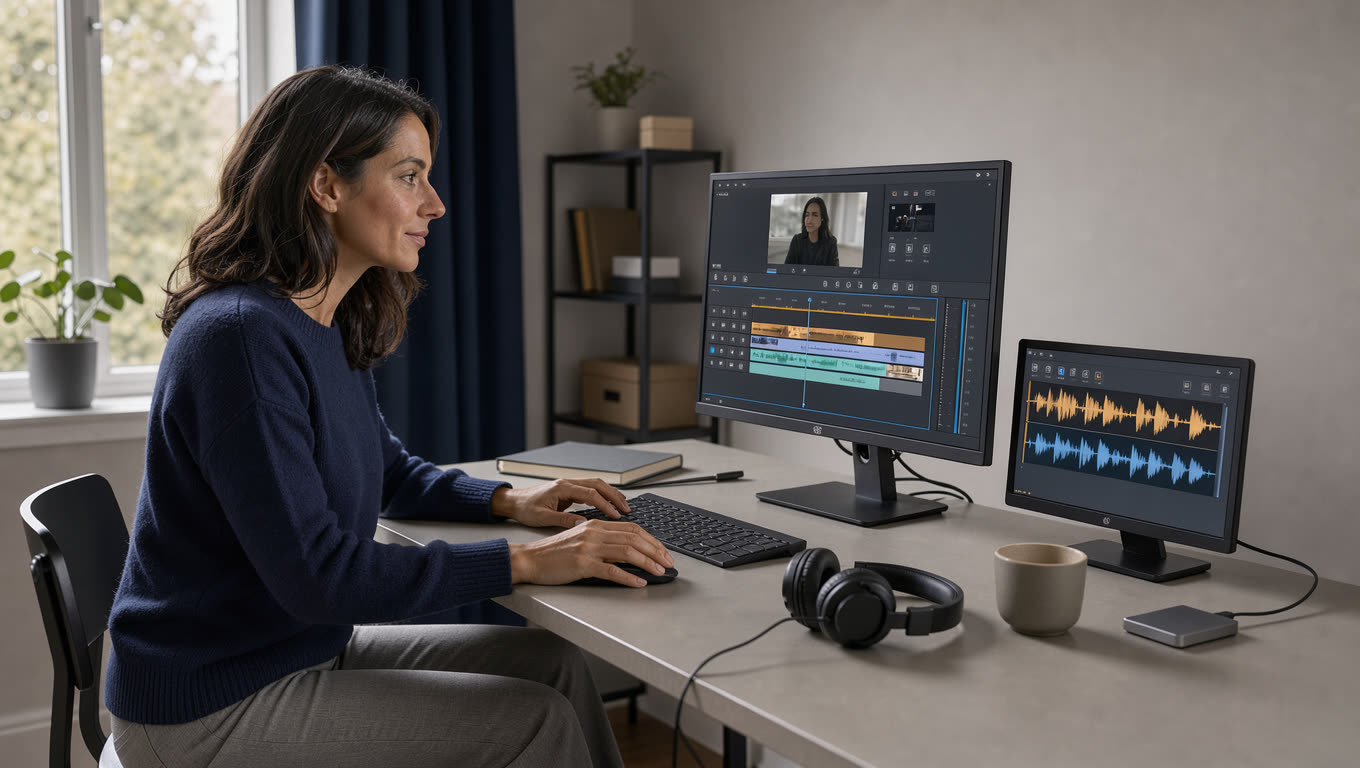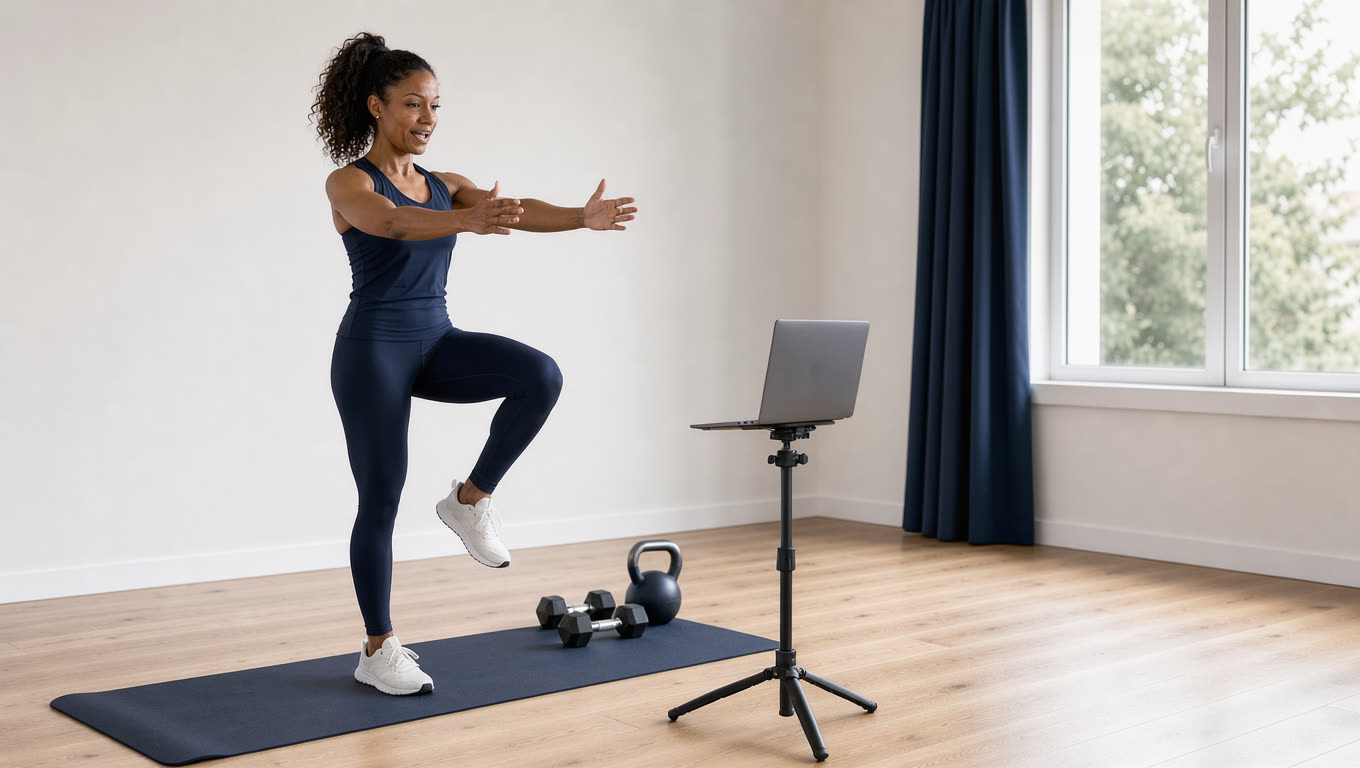
An online fitness coaching business lets you train clients anywhere through workout plans, video check-ins and messaging — no gym floor, no commute, no cap on how many people you can serve. It is one of the few businesses a certified trainer can start with a laptop and a phone, and demand keeps climbing: the global fitness apps market alone was worth USD 12.1 billion in 2025 and is projected to reach USD 33.6 billion by 2033 (Grand View Research, 2026).
Table of Contents
- Get Certified First: Credentials That Clients Trust
- Choose Your Coaching Model: Group Programs vs 1-on-1
- Build Your Tech Stack
- Price and Package Your Offers
- Reduce Churn From Day One
- Win Your First Clients
- Frequently Asked Questions
Get Certified First: Credentials That Clients Trust
Get certified before you sell anything: a recognised personal training certification plus current CPR/AED is the baseline clients expect, and it protects you legally when you write programs for other people's bodies. In the United States there were thirteen NCCA-accredited personal trainer certifications as of March 2025 (NETA certification comparison, 2025), with major providers such as NASM, ACE, ACSM and NSCA all requiring at minimum a high school diploma or GED and a current CPR/AED credential to sit the exam (NASM exam requirements, 2026).
Pick a mainstream accredited credential rather than the cheapest one you can find, then add a specialisation that matches your niche — corrective exercise, behaviour change, women's fitness or nutrition. Renewal is part of the job: most boards require 20 continuing education hours every two years. If you are not yet certified, a wellness-focused path such as becoming a certified wellness coach covers overlapping ground if you plan to blend fitness with nutrition and habits.
Choose Your Coaching Model: Group Programs vs 1-on-1
The model you choose decides your income ceiling: 1-on-1 coaching earns the highest rate per client but caps your hours, while group programs trade personal attention for leverage and predictable revenue. Most coaches end up combining both — a small roster of premium private clients plus a lower-cost group offer.
Async 1-on-1 coaching (a written plan, weekly check-ins, messaging) typically sells for USD 100–400 per month, while live video sessions are priced per session and can reach USD 88 each (Exercise.com pricing guide; Bespoke Fit cost analysis, 2026). Group models sit lower: structured group programs commonly run USD 20–100 per month, and fitness challenges USD 10–50 (Exercise.com, 2026). A US price index put the median online personal training package at USD 199.50 per month in October 2026 (Institute of Personal Trainers Price Index), which is a useful anchor for your first offer.
Build Your Tech Stack
Your tech stack is the delivery mechanism for everything else: one coaching app for programs and messaging, one payment processor, and one scheduling or video tool. You do not need more than that to serve your first fifty clients.
Dedicated coaching platforms are affordable and mature. ABC Trainerize starts free for one client and offers paid plans from about USD 10 per month, with a one-time USD 169 fee for a custom-branded app; TrueCoach charges roughly USD 30–165 month-to-month depending on active client count (Coachway platform comparison, 2026); Everfit offers a free tier for up to five clients (Trainerize competitor guide, 2026). All three were verified live and actively priced as of late 2026. The wider market is healthy — fitness app revenue grew 24.5% in 2025 to USD 3.4 billion, with 540 million people using fitness apps that year (Business of Apps, 2026) — so your clients already know how to use these tools.
Price and Package Your Offers
Price on the value of the outcome, not the hours you spend: clients buy consistency, accountability and a result, and underpricing signals a hobby rather than a service. Start with two or three tiers so prospects can self-select instead of walking away over a single number.
A workable structure: a group tier around USD 60–100 per month, a core 1-on-1 tier around USD 150–250 per month, and a premium tier with live calls at USD 300+. The market supports it — hybrid coaching (online plus in-person) and lifestyle coaching packages commonly reach USD 200–500 per month (Exercise.com, 2026). Raise prices after every five clients or every three months, whichever comes first, and grandfather existing clients for one renewal cycle so the increase never feels like a bait-and-switch.
Reduce Churn From Day One
Churn is the single biggest killer of coaching businesses, so treat onboarding as a retention programme rather than an admin step. The maths is unforgiving: the average health club retains only 66.4% of members annually — roughly one in three leaves every year (Health & Fitness Association 2025 Fitness Industry Benchmarking Report, covering 175 companies and more than 17,000 facilities across 27 countries).
Attrition concentrates early, which is where you act. Most cancellations happen between months two and four, and members who are correctly onboarded in their first twelve weeks retain at 87% at the six-month mark (ABC Fitness, The Economics of Retention). Build a first-14-days sequence: a welcome message within an hour, a kickoff video call, the first workout scheduled before they leave the call, and a check-in at day 3, 7 and 14. Track a single leading indicator — weekly workouts logged — because a client who stops logging is a client about to cancel. Answer messages within one business day; responsiveness is the cheapest retention lever an online coach owns.
Win Your First Clients
Your first ten clients come from relationships and demonstrated expertise, not ads: publish useful content, offer a free two-week intake challenge, and ask every result for a testimonial and a referral. Paid advertising only becomes sensible once you can prove a client keeps paying for at least three months.
The demand is there, particularly among women. Women made up 65.23% of the boutique fitness end-user base in 2025, and US women drove a 16% year-over-year increase in personal training participation in 2024, reaching 7.3 million users (Research and Markets boutique fitness report, citing Health & Fitness Association data, 2026). Niching down — postpartum strength, perimenopause fitness, strength training for beginners over 40, runners training for their first half marathon — makes you the obvious choice for one audience instead of a generic option for everyone. For outreach mechanics and content habits, the playbook in starting a freelance consultancy transfers almost directly to coaching.
Frequently Asked Questions
Do I need a certification to coach clients online?
Yes. You are writing exercise programs for other people's bodies, so a recognised certification (NASM, ACE, ACSM, NSCA and others hold NCCA accreditation) plus current CPR/AED certification is the professional baseline. It also matters for liability insurance, which most coaching platforms and gyms require.
How much can an online fitness coach charge?
Async 1-on-1 coaching generally sells for USD 100–400 per month, with a market median around USD 199.50 per month in the US as of October 2026. Group programs typically run USD 20–100 per month, and live video sessions are often USD 40–88 each.
Is group coaching or 1-on-1 coaching more profitable?
1-on-1 pays more per client but is limited by your hours; group coaching scales to many more clients at a lower price. Most sustainable businesses run both: a small premium private roster for cash flow and a group program for leverage.
Which software do online fitness coaches use?
Coaching platforms such as ABC Trainerize (free for one client, paid plans from about USD 10 per month), TrueCoach (roughly USD 30–165 per month by client count) and Everfit (free for up to five clients) handle programs, messaging and payments. Add a payment processor and a video call tool and you are fully operational.
Why do online coaching clients cancel?
They cancel because they stop making progress or stop feeling accountable. Most cancellations happen between months two and four, and the industry average annual retention is just 66.4%. Structured onboarding in the first twelve weeks pushes six-month retention to around 87%.
How long does it take to get first clients?
Most new coaches land their first paying clients within four to eight weeks when they combine a clear niche, free intake challenges or taster sessions, and direct outreach to their existing network. Testimonials from those first clients then shorten every subsequent sale.
Conclusion
An online fitness coaching business is built on four decisions: get certified, choose a coaching model, set a price that reflects value, and obsess over retention from day one. Start narrow — one niche, one flagship offer, one coaching platform — and serve your first ten clients manually before you automate anything. The market rewards consistency: a USD 12.1 billion fitness apps market in 2025 and 7.3 million US women using personal training mean the demand exists. Your job is to be the specific coach one specific audience can trust.
Sources
- Grand View Research — Fitness Apps Market Size, Share & Trends Report 2026-2033 (market size USD 12.1 bn in 2025, USD 33.6 bn by 2033): https://www.grandviewresearch.com/industry-analysis/fitness-app-market
- NETA — Comparison of Personal Trainer Certifications, NCCA-Accredited (thirteen accredited programs as of March 2025): https://www.netafit.org/comparison-of-personal-trainer-certifications/
- NASM — Certified Personal Trainer (NCCA) exam prerequisites (high school degree/GED, CPR, AED): https://support.nasm.org/are-there-any-prerequisites-for-the-nasm-certified-personal-trainer-ncca-exam
- Exercise.com — How much should you charge as an online fitness coach (tier price ranges): https://exercise.com/grow/how-much-should-you-charge-as-an-online-fitness-coach
- Institute of Personal Trainers — Online Personal Training Packages (US median USD 199.50/month, October 2026 index): https://instituteofpersonaltrainers.com/blog/how-to-build-your-online-personal-training-packages
- Bespoke Fit — How much does online personal training cost (2026 service and price table): https://bespoke.fit/blog/how-much-does-online-personal-training-cost
- Coachway — TrueCoach vs Trainerize 2026 (platform pricing): https://coachway.io/articles/truecoach-vs-trainerize/
- Trainerize — Top TrueCoach Alternatives and Competitors for 2026 (Everfit free tier): https://www.trainerize.com/blog/top-truecoach-alternatives/
- Business of Apps — Fitness App Revenue and Usage Statistics 2026 (USD 3.4 bn revenue, 540 m users in 2025): https://www.businessofapps.com/data/fitness-app-market/
- Health & Fitness Association — 2025 Fitness Industry Benchmarking Report, cited by Gymdesk gym membership statistics (66.4% annual retention): https://gymdesk.com/blog/gym-membership-statistics
- ABC Fitness — Fitness Industry Statistics 2026: The Economics of Retention (cancellations in months 2-4, 87% six-month retention with proper onboarding): https://abcfitness.com/abc-articles/fitness-industry-statistics/
- Research and Markets — Boutique Fitness Market Share Analysis 2026-2031 (women 65.23% of end users in 2025; HFA data on 7.3 m US female personal training users, +16% YoY): https://www.researchandmarkets.com/reports/6253840/boutique-fitness-market-share-analysis