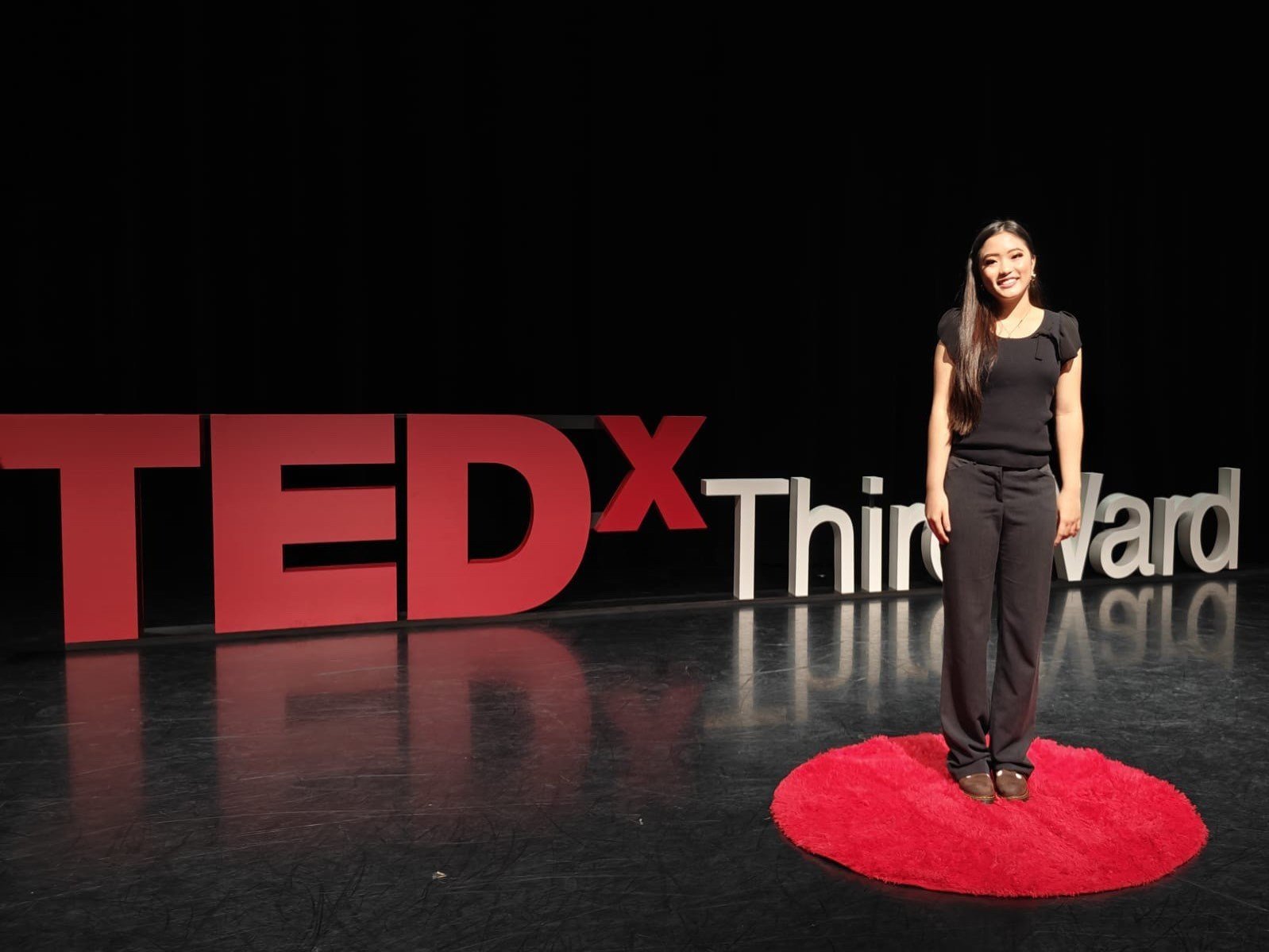
Kristy Kim is the co-founder and CEO of TomoCredit, the San Francisco fintech that made headlines for underwriting credit on cash flow instead of FICO scores. A South Korean immigrant who arrived in the United States alone at age 11, she founded the company in 2019 after being rejected for an auto loan five times despite a steady banking-sector salary. Today, TomoCredit serves a customer base measured in the millions and has pivoted from credit cards to an AI-native financial assistant. This is the story of how one rejection turned into a mission to open the financial system to people it has always overlooked.
Table of Contents
- From South Korea to San Francisco
- Five Rejections and a Craigslist Apartment
- Building TomoCredit on Cash Flow, Not FICO
- Scaling Up: Funding, Growth and Recognition
- Leading Through Setbacks
- The Pivot to AI: TomoIQ and the TomoScore Model
- Leadership Lessons for Founders
- Frequently Asked Questions
- Conclusion
- Sources
From South Korea to San Francisco
Kristy Kim left South Korea by herself at 11 to attend school in the United States, moving in with a host family while her parents stayed behind to run their businesses. She has often described her parents' decision as an act of trust rather than confidence: they let her go before there was any evidence that the gamble would pay off. Both of them were entrepreneurs, so she grew up watching businesses get built, problems get solved and plans get rewritten in real time.
She went on to study at the University of California, Berkeley, and entered investment banking in San Francisco in 2011. On paper, she had done everything right: a respected degree, a professional job and savings large enough to buy a car outright. The financial system, however, did not see it that way. Without an American credit file, she was invisible to lenders — one of roughly 26 million U.S. consumers the Consumer Financial Protection Bureau classified as "credit invisible," alongside another 19 million whose records were too thin or stale to be scored (CFPB, 2015).
Five Rejections and a Craigslist Apartment
The rejection that changed Kim's career came from an auto dealership: she was turned down for a car loan five times, not because of income or employment, but because she had no credit history. When she asked a Citibank branch manager whether the bank could vouch for her salary and savings, she was told that its lending and banking departments simply could not communicate that way. The rules were the rules.
Housing had been just as hard. With no credit score and no family in the country to co-sign, her rental applications were refused until she found a landlord on Craigslist and pitched him directly: she offered her employer as a reference and asked him to judge her character instead of her file. It worked. Those two experiences — the apartment and the car — stayed with her long after her finances improved, because they exposed a structural problem rather than a personal one. Credit history, not financial responsibility, was gating access to basic adult life.
The scale of that problem is hard to overstate. In its landmark study, the CFPB found that about one in ten American adults had no credit record at all, and that nearly 30 percent of consumers living in low-income neighborhoods were credit invisible (CFPB, 2015). Industry estimates put the number of young adults who are "cash rich" but "credit poor" at more than 30 million (CFPB figures cited by Business Wire, 2021). For a first-generation immigrant, a recent graduate or a young professional, a thin file can block an apartment, a car loan and, in many cases, a job.
Building TomoCredit on Cash Flow, Not FICO
In early 2019, Kim co-founded TomoCredit with Dmitry Kashlev, a Russian immigrant who had faced the same barrier. The name is short for "Tomorrow's Credit," and the premise was simple: if traditional scoring models punish people for missing history, underwrite them on the financial behavior that is actually visible — real-time cash flow, income and spending patterns.
The card was designed for people with no credit score, with no annual fee, and it was funded by merchants rather than by consumers. The founders were accepted into the Barclays Accelerator, powered by Techstars, in 2019, which connected them with the early-stage investors who would back the company. From the beginning, the mission was framed as financial inclusion rather than a niche product: immigrants, international students and young adults were the target market, not an afterthought.
Kim has been explicit about the emotional dimension of that mission. In interviews she has said she wants immigrants especially to feel empowered rather than ashamed about lacking a credit score, because not knowing the system is not the same as being untrustworthy (CNBC Make It, 2025).
Scaling Up: Funding, Growth and Recognition
TomoCredit raised a $7 million seed round in February 2021, with participation from KB Investment, a subsidiary of South Korea's Kookmin Bank, along with Barclays, BAM Ventures, Ulu Ventures and others; angels in the round included Arlan Hamilton of Backstage Capital and former Venmo COO Michael Vaughan (Business Wire, 2021). By October 2022, Forbes was reporting a $122 million raise for the company, and its valuation had reached $222 million in a 2022 fundraise, according to PitchBook data cited by Forbes in 2024.
The growth metrics were equally striking. The Los Angeles Times profiled Kim among its best CEOs in 2022, reporting that TomoCredit had processed more than two million applications, that 95 percent of its full-time employees were immigrants, that 90 percent of cardholders were people of color, and that 60 percent of its C-suite was female (Los Angeles Times, 2022). CNBC later reported that the company generated more than $20 million in revenue in the year before its 2025 profile, citing documents reviewed by the network.
Recognition followed the numbers: Kim appeared on Inc.'s list of top female founders, TomoCredit was named to Fast Company's Best Workplaces for Innovators in 2025 and won a Fintech Breakthrough Award for personal finance, and the company ranked No. 2,052 on the 2026 Inc. 5000 list (TomoCredit press page, 2026).
Leading Through Setbacks
Kim's story is not a straight line upward, and the most instructive chapter is the one that was hardest. In late 2023, customers of the TomoCredit card reported that their cards had stopped working and that rewards balances were inaccessible; the company said the card had been paused for system updates, and it has not returned to its previous form (NerdWallet, 2023; Forbes, 2024). Forbes also reported in October 2024 that TomoCredit had defaulted on a $30 million credit line from Silicon Valley Bank in early 2023, and that Experian, TransUnion and Equifax had all ended their data-reporting relationships with the startup. Kim responded publicly that the reporting was inaccurate, but declined a detailed interview at the time.
For a company whose core promise was building customers' credit histories, losing bureau reporting was an existential challenge: a credit-building product that cannot report to the bureaus cannot deliver on its promise. Rather than defend a model that no longer worked, the team pivoted — winding down the card program and rebuilding around software, subscription revenue and AI.
The Pivot to AI: TomoIQ and the TomoScore Model
TomoCredit's current flagship is TomoIQ, an AI-native financial assistant built on the company's proprietary TomoScore model. Instead of relying on static credit profiles, TomoScore analyses real-time transaction data and payment behavior to produce personalized recommendations — essentially the credit coach Kim said she always wished existed. In a November 2025 announcement, the company revealed that Kim uses the product daily and that her own dashboard showed a 760 credit score and a highest-limit card of $34,950 (PR Newswire, 2025).
The company describes its personalization engine as trained on more than 20 million consumer banking profiles, and frames its market as the 120 million Americans underserved by traditional credit systems (PR Newswire, 2025). Kim has also become a public advocate for diversity in AI, arguing that products designed by a narrow group of people miss the different ways that households save, spend and pay — and that women and diverse founders build tools that reflect real financial lives.
The through-line from 2011 to now is consistent: the technology changed, from a manual underwriting model to an AI assistant, but the customer did not. TomoCredit still serves the people a traditional score would ignore.
Leadership Lessons for Founders
Asked to name the qualities that shaped her journey, Kim points to curiosity, adaptability and trust (TomoCredit blog, 2026). Curiosity turned a personal frustration into a business: she kept asking why a system judged history instead of behavior. Adaptability carried her from immigration to investment banking to startups, where almost nothing goes according to plan. And trust — her parents' trust in letting an 11-year-old cross the world — taught her that progress usually requires moving before certainty arrives.
She is also refreshingly non-transactional about relationships. Her biggest opportunities, she has said, came from connections built slowly over time rather than from networking events. For women founders in particular, her advocacy is a reminder that representation in leadership shapes what gets built: a diverse team notices market gaps that a homogeneous one never sees.
The setbacks matter as much as the wins in this list of lessons. Kim lost a card program, a bank line and bureau partnerships, and rebuilt the company around a new product anyway. Resilience, in her telling, is not a personality trait; it is a practiced response to uncertainty.
Frequently Asked Questions
Who is Kristy Kim?
Kristy Kim is the co-founder and CEO of TomoCredit, a San Francisco fintech company she started in 2019. She immigrated from South Korea to the United States alone at age 11, studied at UC Berkeley and worked in investment banking before launching the company.
What problem does TomoCredit solve?
TomoCredit serves consumers who lack a traditional credit history — immigrants, international students and young adults. The CFPB has estimated that about 26 million American adults are credit invisible, with another 19 million holding records too thin to be scored.
How did Kim come up with the idea?
She was rejected five times for an auto loan in 2011 despite a steady income and savings, and struggled to rent an apartment without a credit score. Those rejections convinced her that the system rewarded credit history rather than actual financial behavior, and that a cash-flow-based alternative could work.
What happened to the TomoCredit card?
The card program was paused in late 2023 after customers reported cards that no longer worked, and Forbes reported in 2024 that the three major credit bureaus had ended their reporting partnerships with the company. TomoCredit subsequently wound down the card and shifted to a subscription and software model.
What is TomoIQ?
TomoIQ is TomoCredit's AI-native financial assistant, powered by the proprietary TomoScore model. It analyses real-time transaction and payment data to give users personalized insights and recommendations, rather than relying on a static credit profile.
What recognition has Kristy Kim received?
Kim was named among the Los Angeles Times' best CEOs in 2022 and featured in Inc.'s female founders coverage. TomoCredit was named to Fast Company's Best Workplaces for Innovators in 2025, won a Fintech Breakthrough Award for personal finance and ranked No. 2,052 on the 2026 Inc. 5000 list.
Conclusion
Kristy Kim's career shows what happens when a personal frustration is met with curiosity instead of resignation. Denied credit despite doing everything "right," she built the product she needed, raised capital from Korean and American investors alike, scaled it through a boom and a public crisis, and rebuilt it around AI when the original model broke.
For women founders weighing their own leap, her central lesson is worth repeating: you do not need certainty to start, you need conviction, preparation and people who believe in you early. If you enjoyed this profile, read more success stories on our site, such as Vivian Liu of Origami For Good or Daeyna Grant of Gold Crush Cocktails.
Sources
- Business Wire, "TomoCredit Raises $7 Million in Seed Funding," February 10, 2021.
- Consumer Financial Protection Bureau, "CFPB Report Finds 26 Million Consumers Are Credit Invisible," 2015.
- Los Angeles Times B2B, "Kristy Kim — Best CEOs," 2022.
- CNBC Make It, "This Korean immigrant started a fintech startup called TomoCredit," September 15, 2025.
- Forbes, "Experian, TransUnion And Equifax Have Cut Off TomoCredit's Reporting Access," October 25, 2024.
- Forbes, "TomoCredit Raised $122 Million Helping Break Credit Poverty," October 17, 2022.
- PR Newswire, "TomoCredit Founder Kristy Kim Shares Her Personal Credit Journey," November 5, 2025.
- PR Newswire, "TomoCredit CEO Kristy Kim Champions Diversity in AI," October 22, 2025.
- TomoCredit, "TomoCredit Founder Kristy Kim Shares the Personal Story Behind Building TomoCredit," June 24, 2026.
- NerdWallet, "5 Things to Know About the Tomo Card," updated 2024.