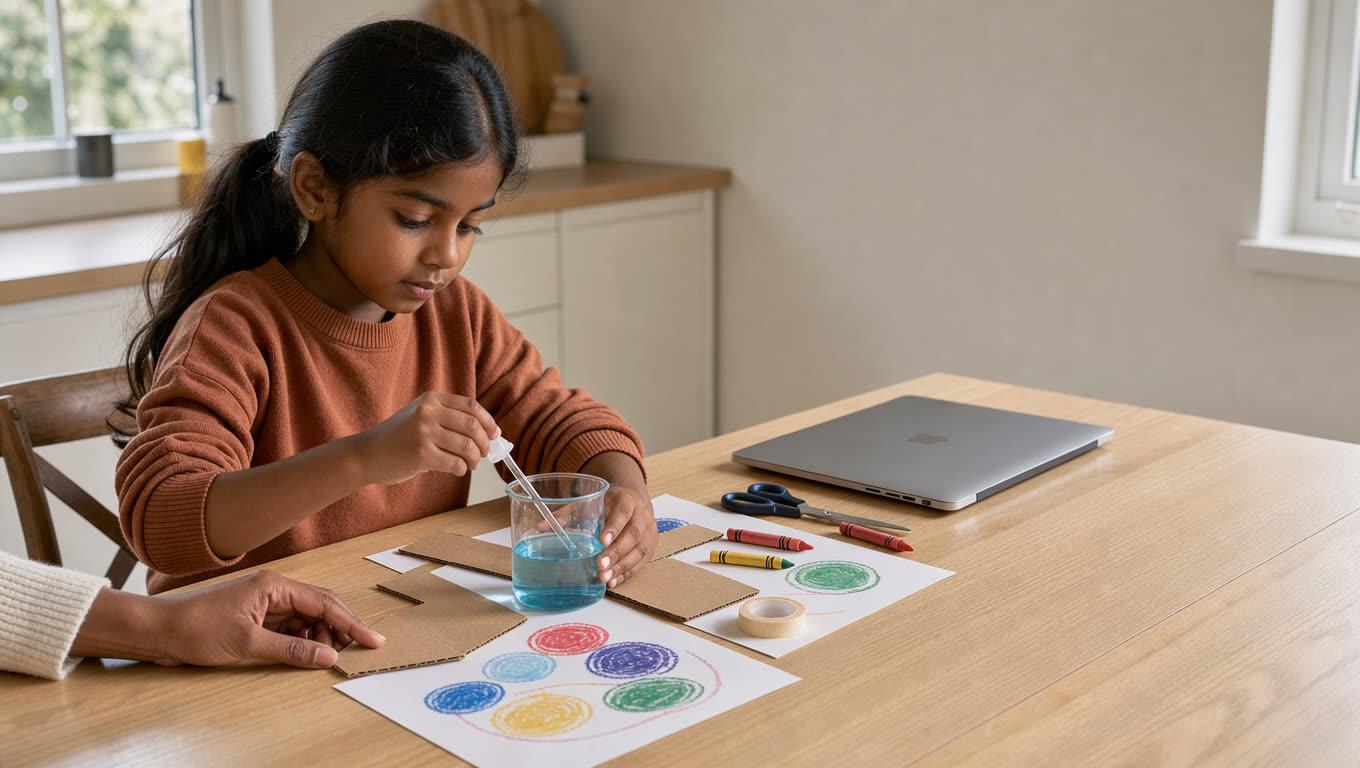
A kids activity box subscription is a viable small business in 2027 because demand is recurring, the category is still growing, and the product can be designed once and shipped every month. The global kids subscription box market was worth USD 4.0 billion in 2025 and is forecast to reach USD 8.34 billion by 2034, a compound annual growth rate of 8.5% (Dataintelo, October 2026), while 65% of parents say they are looking for screen-free activities for their children (Global Growth Insights, October 2026).
This guide explains how to launch your own box step by step: choosing one age band, designing and sourcing the contents, shipping them profitably, pricing the plan, and — the part that decides whether the business survives — keeping parents subscribed through the first year.
Table of Contents
- Why a kids activity box is a viable business
- Pick one age band and one theme
- Design the box and source the contents
- Fulfillment and logistics
- Pricing and unit economics
- Keeping parents subscribed
- Schools, gifts and partnership channels
- Frequently Asked Questions
- Conclusion
- Sources
Why a kids activity box is a viable business
It is viable because the category grows every year and because you can reach buyers without a retail shelf. Online direct-to-consumer subscriptions already account for 84% of spending on kids subscription boxes, and North America holds 38% of global value (Dataintelo, 2026). In parallel, US retail toy sales grew 6% in 2025 to USD 30.3 billion, with units sold up 3% (Circana, reported by The Toy Association, 2026) — parents are still buying play, and they are buying more of it at higher prices.
Three forces make the timing good for a 2027 launch:
- Screen-free demand. More than 65% of parents actively seek screen-free activities that encourage learning and creativity, and 72% prefer educational products (Global Growth Insights, 2026).
- A physical activity gap. Only 24% of US children aged 6 to 17 get the recommended 60 minutes of activity every day (CDC, Physical Activity Facts). A box that gets a child off a screen and onto a project addresses a documented parental concern, not a fad.
- A category with room. Educational boxes make up 30% of kids subscription box value and STEM boxes are the fastest-growing type at 10.4% a year (Dataintelo, 2026).
The trade-off is honest: this is a physical-goods business with real shipping, real tariffs and real churn. The rest of this article is about managing those three costs.
Pick one age band and one theme
You should pick a single age band and a single theme, because age determines the contents, the box size, the price and how long a family stays subscribed. School-aged children (6–11) account for 41% of market value, while toddlers are the fastest-growing age group at 9.1% a year (Dataintelo, 2026).
The practical choice is between three bands:
- Toddlers (1–3) — highest growth, cheapest contents (sensory and motor skills), but boxes are heavy and children outgrow them fast.
- Preschool (3–5) — the sweet spot for most first-time founders: strong craft and story themes, parents willing to pay, and two to three years of natural progression.
- School-aged (6–11) — the largest segment by value and the easiest to theme (science experiments, engineering challenges, nature exploration), with a higher tolerance for a premium price.
Then narrow the theme: STEM, art and craft, books, cooking, nature, or geography. A "kids activity box" competes with everything; a "monthly science experiment box for ages 6–9" competes with very little. For the mechanics of choosing a niche and a subscription model, see our guide on launching a subscription box business.
Design the box and source the contents
The box should be a curriculum, not a bag of toys: four to six complete activities, one instruction sheet per activity, every material included, and a theme that a parent can describe in one sentence. If a box needs a trip to the store to be usable, it will be cancelled.
Sourcing is where margins are won or lost. Nearly 80% of US toys are sourced from China, and the extra tariff on Chinese imports rose to 20% in March 2025, which raises the landed cost of almost every component in a crate (Dataintelo, 2026). The mitigation is structural: split sourcing across two or three suppliers, favour domestic craft and paper manufacturers for the non-toy parts of the box, and negotiate quotes in writing with a validity period before you take a single pre-order.
Before you commit to any supplier, run a viability check on the incumbents you will be compared against. KiwiCo, Lovevery and Little Passports are all active — KiwiCo reached every US Target store on 2 August 2025, and Little Passports sells in more than 1,000 Target stores (Dataintelo, 2026). They set the quality bar, and their retail presence means your differentiation has to be theme and personalisation rather than price.
Two compliance points are non-negotiable for children's products: age grading and small-parts rules (in the US, the Consumer Product Safety Improvement Act requires tracking labels and third-party testing for children's products), plus a materials safety statement for anything that goes near a child's mouth or skin. Build the testing cost into your first-year budget rather than discovering it after your first 100 orders.
Fulfillment and logistics
Fulfillment typically consumes 15% to 25% of revenue for subscription box operators, driven by weight, shipping zone and packaging (BusinessDojo, 2026). That means logistics is not an administrative detail — at a USD 40 price point, a five-dollar error in packaging cost is 12.5% of your gross profit.
Four operating rules keep the cost at the bottom of that range:
- Pack in-house until roughly 400–500 boxes a month. A manual pick-and-pack line of one or two people is cheaper than a third-party fulfilment centre until volume is predictable.
- Set a hard cut-off and a single ship day each month. Batching every box into one pick session removes the idle labour of daily shipping.
- Design the box around the carrier's rate breaks, not the other way round. Flat-rate and zone-banded boxes beat custom dimensions at low volume.
- Right-size the carton. Oversized packaging raises the dimensional weight charge and the damage rate at the same time.
Move to a 3PL only when your own packing time exceeds what the same money buys in customer acquisition, and require a trial month with your actual box before signing an annual contract.
Pricing and unit economics
You should price between USD 25 and USD 55 per shipment, the band where subscription boxes cluster, with gross margins of 40–60% after sourcing and fulfillment and a blended customer acquisition cost of USD 70–78 (BusinessDojo, 2026). For a children's activity box with all materials included, USD 32–48 a month is the realistic starting range.
A worked example at USD 40 a month:
- Cost of goods and packaging: USD 14 → gross profit USD 26 (65% gross margin before shipping).
- Shipping and fulfillment: USD 9 → contribution USD 17.
- Blended acquisition cost: USD 75 → payback after roughly 4.4 months of contribution.
That payback period is the single most important number in the model, because it is measured in months of a subscriber's life — and subscribers do not stay that long by default. Offer 3, 6 and 12-month prepay at a discount: monthly plans run 4–7% monthly churn while annual plans run below 2% (BusinessDojo, 2026). Prepay also brings cash forward, which funds the next box's inventory.
Keeping parents subscribed
Churn is the number one killer of a kids activity box, because children outgrow the contents and parents review every discretionary subscription at the same time each month. The median monthly churn across subscription box merchants was 7.44% in Subbly's 2024 churn report, and 44% of all cancellations happen within the first 90 days (Swell, 2025, cited in DontPayFull's 2026 compilation).
Retention tactics that measurably work:
- Win the first box. With 44% of cancellations inside 90 days, the unboxing of box one does more for lifetime value than any discount you will ever offer.
- Offer skip and pause instead of cancel. Allowing a pause reduces churn by up to 20% (Gitnux, 2025), and a paused family is far easier to win back than a cancelled one.
- Trigger a save offer on cancel intent — a bonus item in the next box, or a discounted quarter — rather than on the cancellation screen alone.
- Answer the value question. "Lack of perceived value" is the top cancellation reason, cited by 43% of subscribers (Gitnux, 2025); a printed "what your child learned this month" card is a cheap, concrete answer.
- Build the age progression into the product so the family moves from the toddler line to the preschool line instead of leaving. Retention is a product roadmap problem, not an email problem.
Schools, gifts and partnership channels
Schools and parent associations are the cheapest acquisition channel available to you, because they already aggregate the exact households you are targeting. In Parentkind's 2025 PTA member survey (488 responses), 82% of PTAs had received support from businesses in the previous year, and registered parent associations raised an average of GBP 14,251 a year — money that flows to playground equipment, educational materials and outdoor learning (Parentkind, 2025).
Three channel plays follow from that:
- Fundraising partnerships — offer a school a percentage of every annual plan sold through a class code. It is a commission deal for you and a low-effort fundraiser for them.
- Gifting — prepaid 3, 6 and 12-month gift plans sold in the holiday season carry no churn at all: the subscriber is already paid for.
- Marketplaces — listing on Cratejoy's marketplace brings discovery but costs a 15% referral fee on every order and every renewal plus a 7% buyer fee (Cratejoy pricing, checked October 2026). Use it as a test channel, and keep your own site — on Shopify with a subscription app, or a subscription-first platform such as Subbly — as the primary storefront where you own the customer list.
Frequently Asked Questions
How much does it cost to start a kids activity box subscription?
A lean launch costs roughly USD 3,000–8,000: about USD 1,500–4,000 for the first production run of 100–150 boxes, plus packaging, age-grading and safety testing, a subscription storefront, and an initial advertising budget of USD 500–1,500. You can cut the total by pre-selling before you manufacture.
What age group should my activity box target?
Target one band of roughly three years — 3–5, 6–8 or 9–11 — because age dictates contents, box size, price and how long a family stays subscribed. School-aged children represent 41% of market value and toddlers are the fastest-growing group at 9.1% a year, so both are defensible starting points (Dataintelo, 2026).
How do I stop parents cancelling after two or three boxes?
Design for the first 90 days, where 44% of all cancellations occur: make box one flawless, send a short onboarding sequence, and offer skip or pause rather than cancel — allowing a pause reduces churn by up to 20%. Then remove the reason to leave by letting the subscription progress with the child's age instead of ending when they outgrow it.
Where do I source the materials for each box?
Use two or three suppliers rather than one: a Chinese or regional manufacturer for components, a domestic craft or paper producer for printed and consumable items, and a local printer for instruction booklets. Nearly 80% of US toys come from China and the additional tariff reached 20% in March 2025, so a single-source supply chain is a margin risk (Dataintelo, 2026).
How many subscribers do I need to make a living?
At a USD 40 price point and roughly USD 17 of contribution after goods, shipping and fulfillment, 250 subscribers generate about USD 4,250 of monthly contribution, and 500 generate about USD 8,500 before your own salary and advertising. Treat 300–500 active subscribers as the realistic full-time threshold for a solo operator.
Can I run this business from home?
Yes, up to a few hundred boxes a month. Packing in-house is cheaper than third-party fulfillment until volume is predictable, but check your lease or local rules on storage, outbound shipments and any food or cosmetic components, and keep children's product compliance documentation with every batch.
Conclusion
A kids activity box subscription is a buildable business for a 2027 launch: an USD 8.34 billion forecast market by 2034, 84% of spending already online, and a product that solves a documented parental problem. The formula is narrow — one age band, one theme, four to six complete activities, a box built around carrier rate breaks, a USD 32–48 price with prepay options, and a retention system aimed at the first 90 days.
Start with a pre-sale campaign of 100 boxes, prove that families renew for a third month, and only then commit to a large production run. The founders who fail at this model usually fail on churn and shipping, not on demand.
Sources
- Dataintelo — Kids Subscription Box Market Size, Share & Forecast Report 2025 to 2034 (market size, CAGR, age bands, tariffs, retail expansion; last updated October 2026).
- Global Growth Insights — Kids Subscription Box Market Trends (market value 2025, parent preference statistics; updated October 2026).
- Circana via The Toy Association — U.S. Toy Industry Returns to Growth in 2025 and U.S. Sales Data (USD 30.3 billion retail sales, +6%).
- US Centers for Disease Control and Prevention — Physical Activity Facts (24% of children 6–17 meet the 60-minute guideline) and MMWR QuickStats, 2024 (activity by screen-time hours).
- Subbly — The Churn Data Report (median churn 7.44%, 2024 merchant data).
- BusinessDojo — Subscription boxes: average revenue, profit and margins (AOV, gross margin, CAC, logistics share) and What is the churn rate for subscription boxes? (churn by plan type).
- DontPayFull — Subscription Box Statistics 2026 (Recurly benchmarks, 44% of cancellations in the first 90 days).
- Gitnux — Subscription Box Statistics (pause reduces churn by up to 20%, 43% cite lack of perceived value).
- Parentkind — PTA Member Survey Results 2025 (82% of PTAs received business support; average PTA income).
- Cratejoy pricing and platform status, checked October 2026 via Cratejoy Alternatives; Subbly platform status via subbly.co.