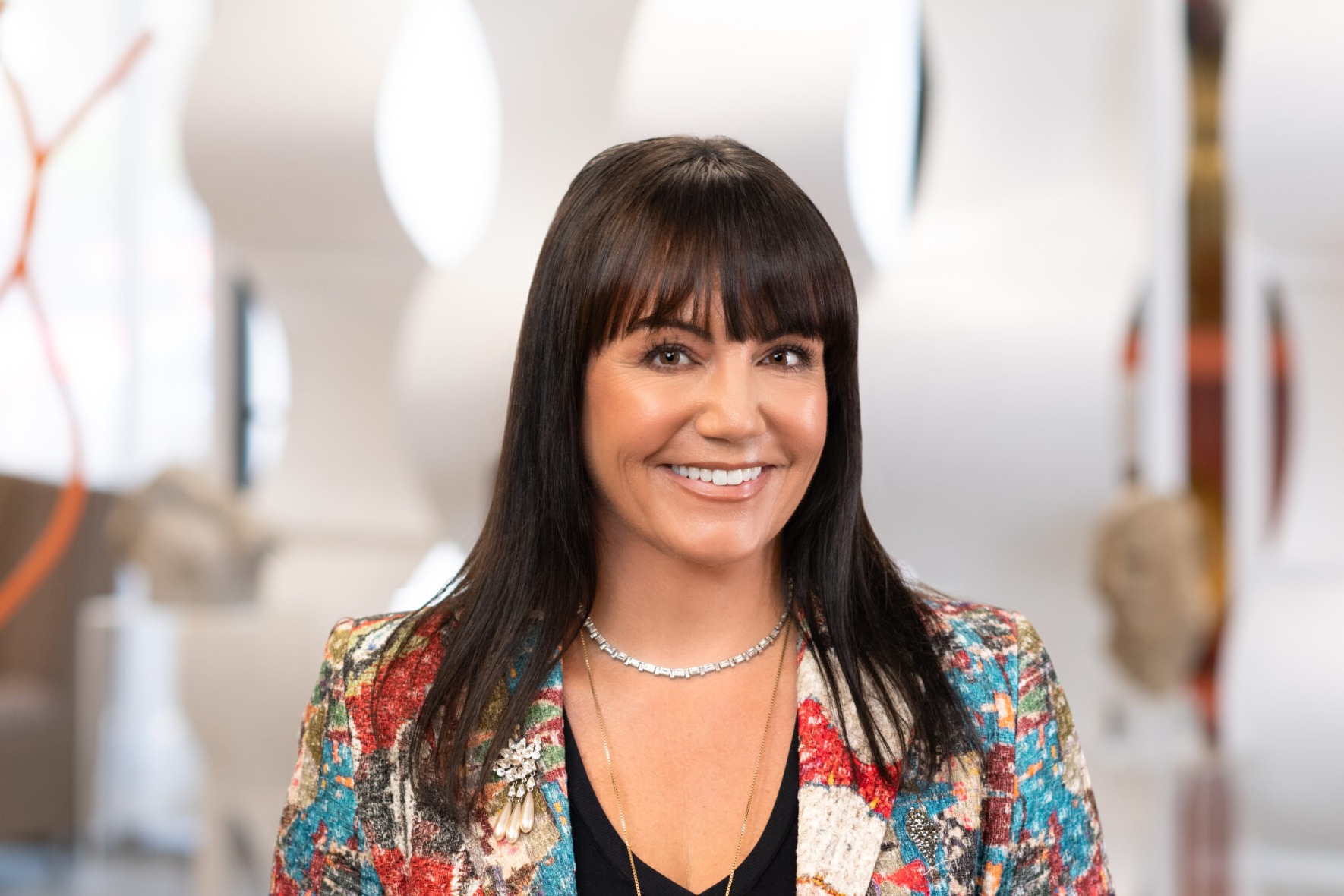
Maayan Aviv is the CEO of American Friends of NATAL (AFN), the New York-based nonprofit that funds and champions NATAL, Israel's leading trauma and resiliency center. Since taking the role in 2023, she has steered a small American "friends of" organization through the most turbulent period in its twenty-year history — and in the process has become one of the clearest voices arguing that nonprofits should be run with the same discipline as any growth business.
Her path was not a straight line into the executive suite. It ran through international relations, more than a decade at a pediatric rehabilitation hospital, and a personal connection to the aftermath of terror attacks in Israel. What makes her story useful to women building their own organizations is not the title she holds, but the operating system behind it: listen before you lead, treat an emergency windfall as a windfall, and build partnerships that outlast the news cycle.
Table of Contents
- Who Is Maayan Aviv?
- From ALYN Hospital to NATAL
- Leading Through October 7
- The Business Discipline Behind a Nonprofit
- Collaboration as a Growth Strategy
- Building a Resilient Team
- Listening, Feedback, and Hard Lessons
- Telling the Story: The Totally Visible Podcast
- What Women Entrepreneurs Can Learn
- Frequently Asked Questions
Who Is Maayan Aviv?
Maayan Aviv is a nonprofit executive with more than 15 years of leadership experience in the Jewish philanthropic sector, and she has led American Friends of NATAL as CEO since 2023. She grew up between New York and Israel, served in the Israeli army, and built her career in international relations, strategic planning, fundraising, and community partnerships.
AFN is the U.S. partner of NATAL, an organization founded in 1998 that provides free, trauma-focused mental health care to Israelis affected by war and terrorism. AFN itself is a 501(c)(3) headquartered at 1120 Avenue of the Americas in New York, with a ruling year of 2005 and roughly two decades of fundraising behind it. Its public profile carries a four-star Charity Navigator rating and a Candid Platinum transparency seal — signals that matter when donors compare hundreds of causes.
Aviv's formal training is in international relations, supplemented by a nonprofit management program at New York University.
From ALYN Hospital to NATAL
Before NATAL, Aviv spent more than 12 years at American Friends of ALYN Hospital, a pediatric rehabilitation center in Israel, serving first as executive director and later as CEO. That tenure gave her the full nonprofit toolkit: board management, donor stewardship, event fundraising, and the unglamorous logistics of moving money across borders toward a program she did not run directly.
One episode from those years became a template. ALYN's annual bike ride in Israel was a signature fundraiser, and when the pandemic made it impossible, her team rebuilt it as a series of U.S.-based rides. The mission stayed fixed; the format changed. That instinct — protect the purpose, rewrite the playbook — would be tested far more severely a few years later.
She joined AFN after being recruited by NATAL's leadership, including co-founder Jude Yovel Recanati. What drew her was unusual: a trauma organization run by women, willing to put everything on the table. "I was inspired by NATAL's female leadership," she recalled in an interview with Authority Magazine. "I really had not seen that before in the not-for-profit sector."
Leading Through October 7
Aviv's defining test arrived on October 7, 2023, when demand for trauma care in Israel surged overnight and AFN's phone began ringing with supporters old and new. Her response was to scale the organization's support function fast while resisting the temptation to redesign its mission around a single emergency.
The numbers explain the pressure. According to AFN's self-reported profile on Candid, NATAL has handled more than 70,000 helpline calls, delivered over 42,000 therapy hours, and carried 4,000-plus patients in clinical care since the war began, on top of a helpline that runs 24/7 and a clinical unit treating more than 3,000 patients a week. At AFN's November 2026 "Communities of Hope" gala in New York, Aviv told the room that NATAL had helped more than 700,000 Israelis over its history — and that "behind every number is a human story."
Her most revealing decision was not to cancel. Several supporters wanted the annual gala scrapped after October 7; she argued for transforming it into a gathering with a purpose. It sold. She repeated the pattern with AFN's Yom Hazikaron ceremony, rebuilding the format and hosting it herself after a first attempt fell flat.
The Business Discipline Behind a Nonprofit
Aviv's central argument is that charitable status does not exempt an organization from market logic, and that nonprofits should plan as rigorously as companies do. Writing in Forbes Business Council in November 2026, she pointed out that nonprofits compete for a finite pool of donor dollars, build brands, chase growth, and measure success in revenue — exactly like businesses.
The size of that pool is well documented. Giving USA 2025 reported that Americans gave $592.5 billion to charity in 2024, a record in current dollars but still a finite sum shared across every cause. And the post-October 7 surge was dramatic: by June 2024, the Jewish Federations of North America reported that more than 150,000 donors had given over $833 million to its emergency campaign.
Her warning is that surges are not revenue. Organizations that hired and built programs as if the peak would last now carry costs they cannot sustain, while donors face a more crowded field than ever. The fix she prescribes is unglamorous: diversify income, plan for year three rather than week three, and let business-minded board members stress-test the numbers.
Collaboration as a Growth Strategy
Where most organizations see competition for donations, Aviv sees an opportunity to borrow audiences. Her view, stated plainly in an IdeaMensch interview, is that "there is no competition in philanthropy" because the need is larger than any single organization's capacity.
In practice that has meant building affinity groups — communities of professionals who gather around the mission from inside their own industry. AFN's Real Estate Network, initiated by director of community outreach Kym O'Meara, was the proof of concept; a mental health affinity group followed. The organization has also partnered with art institutions, running clubs, surf communities, and other mental health groups, on the theory that people respond to a cause when it shows up inside a community they already belong to. Dale Nirvani Pfeifer's move into AI-powered philanthropy follows the same logic of meeting donors where they already are.
For founders, the lesson transfers directly. A partnership with an adjacent community usually costs less than a paid acquisition campaign, and it compounds: each collaboration introduces your work to an audience someone else has already vouched for.
Building a Resilient Team
Aviv describes a resilient team as one built on trust, transparency, and a shared vision — the same foundations we explored in the nine pillars of team cohesion — and she hires for character before credentials. In her ValiantCEO interview she explained that she looks for people who are skilled but also fundamentally good collaborators, whose strengths complement rather than duplicate each other, and she treats staff as whole people with families and limits.
Her crisis communication follows five rules she can recite: transparency, including about uncertainty; immediacy, sharing updates as soon as they exist; two-way dialogue; empathy for the stress people are carrying; and a focus on solutions rather than blame.
She also insists on modeling the behavior she expects. When she describes self-care, she is specific: exercise, walks, honest conversations with advisors, and a deliberate effort to drop non-essential tasks during a crisis. That is capacity management, not wellness branding.
Listening, Feedback, and Hard Lessons
If there is one skill Aviv returns to in every interview, it is listening — which she distinguishes sharply from communicating. Listening, in her framing, is how you connect dots between ideas, spot a donor's real motivation, and catch the feedback that tells you an event or a campaign missed.
Her hardest early lesson was cultural. Arriving as an American executive director for an Israeli parent organization, she assumed she could lead the relationship the American way. She could not. "The failure was coming in as an 'American' executive director and not as an Israeli based in America that wants to establish a relationship," she said. The lesson she extracted: "Being right doesn't make you the winner."
She applies the same honesty to feedback itself, quoting a former board president of ALYN: if you are surprised by feedback, you did not do a good job. That posture lets a leader change a format or an operating model without taking every revision personally.
Telling the Story: The Totally Visible Podcast
Under Aviv, AFN has also become a media producer. The organization's podcast, Totally Visible, features her in conversation with athletes, artists, filmmakers, and clinicians about turning adversity into a way of living, releasing episodes roughly twice a month.
The guest list shows the strategy: a four-time Paralympian, a former Shayetet 13 commando turned novelist, a tattoo artist building healing programs. The framing is deliberate — the show is not about the tragedy of trauma but about the expertise of healing. For a nonprofit, that is content marketing with a purpose: it earns attention without buying it.
What Women Entrepreneurs Can Learn
Aviv's playbook translates well beyond the nonprofit sector, particularly for women building organizations from a standing start with limited resources. Five lessons stand out, several of them echoing the leadership habits of women executives we have profiled.
1. Treat a surge as a surge. One record campaign is not recurring revenue. Diversify before the emergency ends, and budget for the year after the headlines move on.
2. Build affinity, not awareness. A community that already trusts its own members will trust you faster than any advertising budget allows.
3. Listen as a discipline. Feedback is data. If a launch, a pitch, or an event underperforms, the audience has already told you why.
4. Manage up with empathy. Boards, investors, and partners are volunteers with their own schedules and pressures. Meeting them where they are is not politics; it is operating skill.
5. Hire for character, then give people room. Aviv's favorite leadership example is letting a team member own an idea completely — the Real Estate Network — and supporting it rather than absorbing it. That is how organizations scale past their founder.
Frequently Asked Questions
Who is Maayan Aviv?
Maayan Aviv is the CEO of American Friends of NATAL, the U.S. nonprofit partner of NATAL, Israel's trauma and resiliency center. She has more than 15 years of nonprofit leadership experience and previously served as executive director and CEO of American Friends of ALYN Hospital.
What does American Friends of NATAL do?
AFN is a New York-based 501(c)(3) that supports NATAL's trauma care in Israel through fundraising, awareness, and partnerships. NATAL, founded in 1998, provides free psychological support including a 24/7 helpline, clinical treatment, resilience workshops, and training for first responders and educators.
When did Maayan Aviv join American Friends of NATAL?
She joined AFN in 2023 as executive director and CEO, after more than 12 years at American Friends of ALYN Hospital. She is also a member of the Forbes Business Council, where she writes about nonprofit leadership.
What is her leadership philosophy?
Her approach combines listening, transparency, and business discipline. She argues that nonprofits compete on market logic, that emergency campaigns should be treated as one-time surges rather than recurring revenue, and that leaders should hire for character and give team members real ownership.
What is the Totally Visible podcast?
Totally Visible is a podcast hosted by Maayan Aviv for American Friends of NATAL. Episodes feature athletes, artists, clinicians, and people who have lived through trauma, focusing on how healing works rather than on the tragedy itself.
What can entrepreneurs learn from her experience?
Three transferable lessons: treat funding spikes as temporary rather than structural, build partnerships inside communities that already have trust, and treat listening as a core operating skill rather than a soft extra. She also stresses that adapting the format while protecting the mission is how organizations survive shocks.
Conclusion
Maayan Aviv's career is a case study in what happens when nonprofit leadership is treated as a management discipline rather than a calling alone. She inherited a twenty-year-old American support organization, met a demand shock that would have broken a less structured team, and responded by diversifying revenue, professionalizing partnerships, and building a public voice through original media.
For women entrepreneurs, the through-line is unglamorous and portable: know your numbers, protect your mission while changing your methods, hire people you trust, and listen hard enough that feedback arrives before the surprise does. That is how an organization survives its worst quarter — and, as Aviv puts it, how the people it serves get to live again.
Sources
- Forbes Business Council, "Nonprofits Run On Market Logic, So Run Them Like A Business" by Maayan Aviv, November 20, 2026 — forbes.com (Giving USA 2025 figure of $592.5 billion; Jewish Federations of North America emergency campaign data)
- Candid / GuideStar profile, American Friends of NATAL Inc (EIN 20-1914370) — guidestar.org (NATAL helpline, clinical and training programs; self-reported impact metrics since October 2023)
- EIN Presswire, "American Friends of NATAL Holds NYC Gala for Israel's Mental Health Crisis," November 2026 — einnews.com (700,000 Israelis helped; gala remarks)
- Authority Magazine, "Maayan Aviv of American Friends of NATAL: Five Things You Need To Know To Successfully Lead A Nonprofit," July 2024 — medium.com
- IdeaMensch interview with Maayan Aviv, October 2024 — ideamensch.com
- ValiantCEO, "Resilient Leadership Insights: Maayan Aviv from American Friends of NATAL," August 2024 — valiantceo.com
- American Friends of NATAL, team and press pages — afnatal.org/team; podcast page afnatal.org/podcast