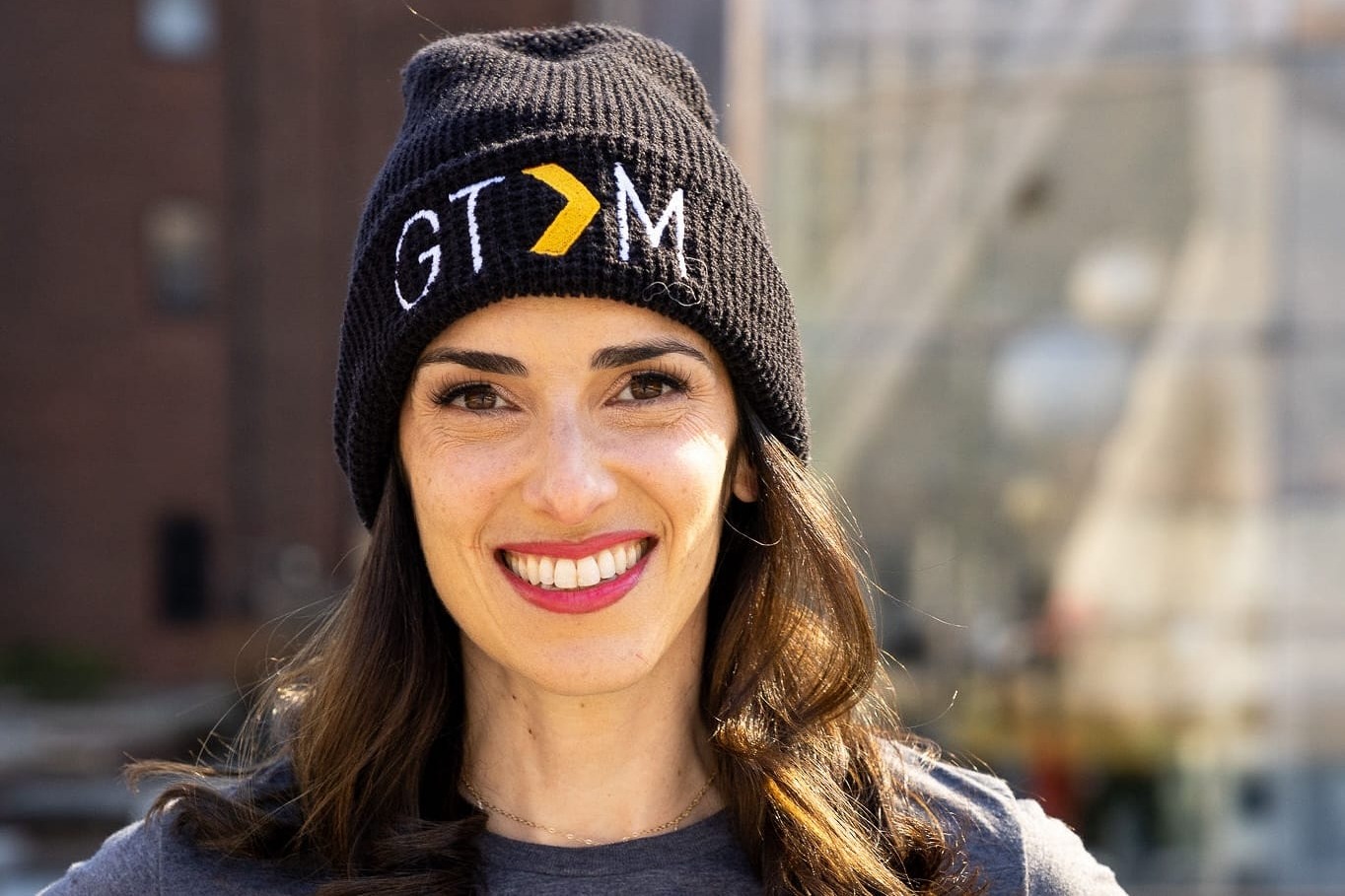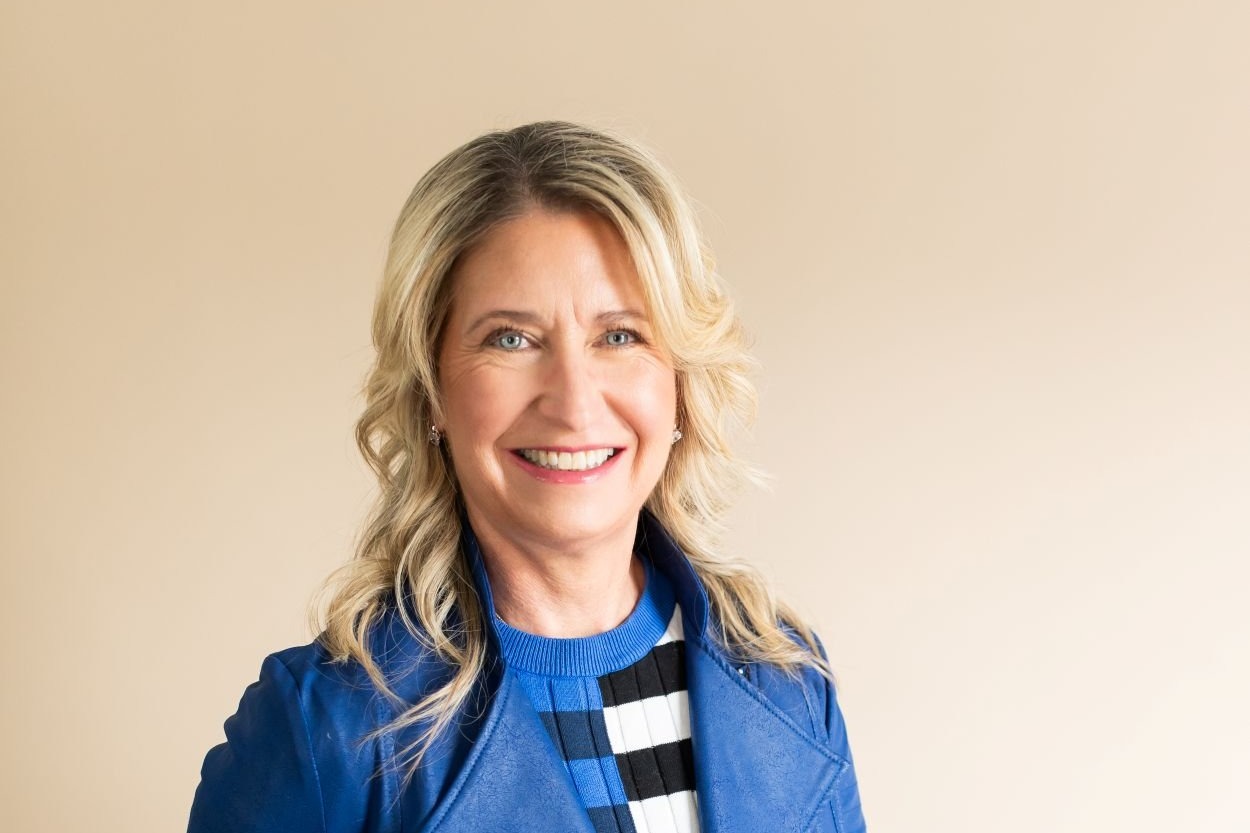
Mary Lemmer is the founder of Improve, a consultancy that uses improvisation, behavioral research and nervous-system science to help leaders respond when there is no script to follow. She built the company in August 2018 after a career that ran from a teenage gelato business to venture capital, and her programs now reach organizations including Google, Verizon, Pfizer, Square, TED and Lyft.
Her answer to a world of constant change is deceptively simple: treat leadership like an improv scene. You cannot pause the scene to gather more information, so you listen, accept what you are given and build on it. This article traces how Mary Lemmer turned that instinct into a methodology, what the published research shows, and what entrepreneurs can borrow from her approach.
Table of Contents
- Why Uncertainty Is the New Workplace Normal
- From a Teenage Gelato Business to Venture Capital
- How an Improv Class Changed Her Career
- Building Improve Into a Global Consultancy
- The Results Improve Delivers
- The Science Behind Improv
- The Four Principles of the Improve Method
- Mary Lemmer's Advice for Entrepreneurs
- Frequently Asked Questions
- Conclusion
- Sources
Why Uncertainty Is the New Workplace Normal
Uncertainty is now a permanent condition of working life, which is exactly why improv-trained leadership has become a business discipline rather than a novelty. Gallup surveyed 18,665 U.S. employees and found that seven in ten reported disruptive change inside their organization in a single year, while Deloitte's 2025 Global Human Capital Trends report estimated that the average worker now lives through about 10 planned enterprise changes a year, up from two in 2016.
The cost of poorly handled change is measurable. In Eagle Hill Consulting's 2025 change management survey of 1,448 U.S. employees, 34% said the changes they had been through were not worth the organizational effort, and the American Psychological Association's 2025 Work in America survey found that workers who experienced sudden changes or uncertainty at work more often reported poorer mental health. Leaders who can respond calmly to incomplete information are therefore not a nice-to-have; they are the difference between a workforce that adapts and one that burns out.
From a Teenage Gelato Business to Venture Capital
Mary Lemmer started her first business as a teenager, building a gelato venture in the Lansing area of Michigan while still at school. She enrolled at the University of Michigan in 2006 and graduated from the Ross School of Business with a BBA in 2010, having thrown herself into independent research with faculty and the Zell Lurie Institute for Entrepreneurial Studies.
After college she ran the gelato business alongside a demanding job in venture capital, later serving as a director at a technology unicorn and working in early-stage investing. By her own description she was a "recovering venture capitalist" with several businesses running at once, including Schox Philanthropy, Startup Late Night, Payitoff and Iorio Gelato. It was a portfolio career built on control, discipline and a calendar that left no gaps — and it was slowly making her miserable.
How an Improv Class Changed Her Career
An improv class taken largely for fun turned into the pivot point of Lemmer's career. As she told the University of Michigan's Ross School of Business, if something did not go as planned it would "throw me off into a tailspin of anxiety"; although her discipline made her productive, it also made her "a miserable human". On an improv stage she found the opposite: everything she said was accepted and supported, so she did not have to strategize or second-guess herself.
She went to Chicago to train at The Second City and continued at the Upright Citizens Brigade in New York and The Groundlings in Los Angeles, accumulating roughly 15 years of improvisation training. The benefits showed up at work first — better communication with colleagues, more comfortable decisions with limited information, less anxiety — and then on the stage itself. At a conference in 2018, more than 100 people attended her session, and afterwards a woman approached her in tears to say the experience had changed her life. Lemmer began charging for workshops while still investing, until her mother's verdict after a session for 30 CEOs — "You were incredible" — convinced her to make the work her full-time focus.
Building Improve Into a Global Consultancy
Improve was founded in August 2018 to help people and organizations figure out what comes next when there is no script, and it now runs across four service lines: speaking, workshops and training, leadership labs and advisory work. At its center sits The Improve Method™, a research-informed methodology built from more than a decade of combining improvisation with nervous-system and behavioral science.
The client list spans corporations, startups, universities and conferences: Verizon, Pfizer, Google, Square, TED, Lyft, Riot Games, KPMG, ProQuest, Patreon, TechStars, Silicon Valley Bank and the University of Michigan, among others. The company's stated mission is to help one million people become more capable of handling whatever comes their way, an ambition that also runs through Lemmer's TED Talk, "How Improv Can Improve Your Leadership and Life," her Life, Improvised newsletter and her book How to Handle Anything: Four Improv Principles for Navigating Life's Curveballs (Bloomsbury, 2026).
The Results Improve Delivers
Improve publishes outcome data from the trainings it designs and delivers, and the numbers are consistent across Lemmer's own channels: participants report a 30% improvement in communication skills, a 25% improvement in listening skills and a 49% improvement in the ability to adapt, with a 95 Net Promoter Score across clients.
Her advisory work carries a different kind of evidence. Lemmer has advised startups that went on to raise more than $50 million, and she has played a role in startup teams that collectively raised over $3 billion, with some later going public or being acquired. Her six-session leadership training was named the number one program on Forbes' list of the "6 Best Business Management Courses for Elevating Your Business Career" — a rare external endorsement for a curriculum built on comedy exercises.
The Science Behind Improv
The claim that improv is good for you is no longer only anecdotal: Lemmer's own peer-reviewed research measured what actually happens in the body during a structured improv course. Together with Ori Amir, she published a study in Dramatherapy (Vol. 46, No. 1, 2025) in which 28 adults took a weekly improv comedy course delivered over Zoom for six weeks.
Participants wore Oura rings two weeks before the course to establish a baseline and throughout the program, while emotional states were tracked with self-report questionnaires. The results showed increased feelings of creativity, connectedness, energy and empowerment after each class, together with decreases in feeling tired and lonely; the ring data showed improved sleep quality and physical activity, with greater sleep improvements among older adults. It is early evidence from a small single-group study, but it points in the same direction as the coaching results: practicing response rather than reaction changes how people feel and perform.
The Four Principles of the Improve Method
The Improve Method™ distills years of stage work into four principles that leaders can apply without ever setting foot in a theater:
- Say yes, and — accept the reality you are in and build from there instead of arguing with it.
- Take everything as a gift — treat whatever happens, including the setback, as information you can use.
- Play the scene you're in — respond to what is actually happening rather than what you expected or rehearsed.
- If it feels weird, do it — move toward productive discomfort and experiment beyond your habitual response.
On an improv stage you cannot stop the scene, convene a meeting or wait until you have more information, so you have to respond. Lemmer's insight was that executives face the same constraint during reorgs, launches and funding conversations, and that the same muscles — listening, trust, clear communication, recovery after a mistake — decide who handles those moments well.
Mary Lemmer's Advice for Entrepreneurs
Her first piece of advice to founders is to practice improv yourself before introducing it to a team, because entrepreneurs set the tone for company culture and need to walk the talk. Her suggestions are deliberately small: take a new route on your walk, brush your teeth with your non-dominant hand, or run exercises such as "First Word, Last Word" to train active listening.
For turning ideas into products she uses a habit she calls SLED — Something Little Every Day — writing a few pages, sketching a new workshop or sharing a work-in-progress with collaborators so that momentum never depends on a perfect burst of inspiration. She is also a public skeptic of hustle culture, arguing that intentional, sustainable work with space for deep focus and rest produces better long-term outcomes than exhaustion. For founders who want to sharpen their pitch, her improv-based techniques focus on concise, compelling storytelling — a useful complement to the communication strategies and leadership qualities covered elsewhere on this site.
Frequently Asked Questions
Who is Mary Lemmer?
Mary Lemmer is the founder of Improve and the creator of The Improve Method™, an improv-inspired, research-backed approach to navigating uncertainty. She is a University of Michigan Ross graduate, a TED speaker, the author of How to Handle Anything (Bloomsbury, 2026) and a trained improviser who has performed and studied at The Second City, the Upright Citizens Brigade and The Groundlings.
What is Improve and when was it founded?
Improve is a consultancy founded in August 2018 that helps people and organizations respond when there is no script to follow. It works through speaking, workshops and training, leadership labs and advisory services for clients such as Google, Verizon, Pfizer, Square, TED, Lyft and KPMG.
What is The Improve Method™?
The Improve Method™ is Mary Lemmer's research-informed methodology for adapting under uncertainty, combining improvisation with nervous-system and behavioral science. It is organized around four principles: say yes and, take everything as a gift, play the scene you're in, and if it feels weird, do it.
What results do Mary Lemmer's trainings produce?
Participants in her programs report a 30% improvement in communication, a 25% improvement in listening and a 49% improvement in adaptability, with a 95 Net Promoter Score across clients. Her advisory clients have raised more than $50 million, and the startup teams she has worked with have collectively raised over $3 billion.
What does the research say about improv?
A 2025 study published in Dramatherapy by Ori Amir and Mary Lemmer followed 28 adults through a six-week Zoom improv course while they wore Oura rings. Participants reported feeling more creative, connected, energized and empowered and less tired and lonely, and the devices recorded improvements in sleep quality and physical activity.
What advice does Mary Lemmer give entrepreneurs?
Practice the skills yourself first, then bring them to your team: start small with exercises that build active listening and flexibility. She also recommends SLED — doing Something Little Every Day to move an idea forward — and favors intentional, sustainable work over hustle culture, because steady progress beats exhausting bursts.
Conclusion
Mary Lemmer's career shows what happens when a founder stops treating discipline and creativity as opposites. A teenage gelato business, a venture-capital job and an improv class eventually converged into Improve, a consultancy that gives leaders a practical way to act when the plan collapses. In a workplace where seven in ten employees experience disruptive change every year, the ability to listen, accept reality and build on it is less a performance skill than a survival skill.
For entrepreneurs, the lesson is not to book an improv class tomorrow. It is to build small, repeatable practices — one little thing every day, a "yes, and" instead of a reflexive no, a deliberate pause before reacting — that make response a habit rather than an exception.
Sources
- Michigan Ross — "Mary Lemmer, BBA '10: Using Improv to Transform the Business World"
- Mary Lemmer — About page (results, training, biography)
- Improve — Our Story (founding, mission, four principles)
- Improve — Keynotes (The Improve Method™ principles)
- Mary Lemmer — LinkedIn profile (founding date August 2018, clients, service lines)
- IdeaMensch — Mary Lemmer interview (SLED habit, daily routine)
- Pipe Up Project — "How Improv Improves: Insights from Mary Lemmer" (2018 conference, research in progress)
- Amir, O. & Lemmer, M. — "Improving physiology with improv", Dramatherapy 46.1, 2025 (DOI 10.1386/dj_00028_1)
- Gallup — "Disruptive Change Is Hitting Leaders and Managers Hardest" (2024, n=18,665)
- Deloitte — 2025 Global Human Capital Trends: organizational agility and stability at work
- Eagle Hill Consulting — State of organizational change management, 2025 (n=1,448)
- American Psychological Association — Work in America 2025: The Experience of Working in America During Times of Change