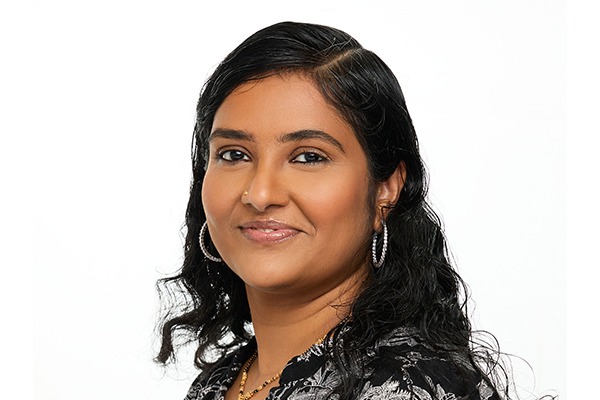
Mathangi Swaminathan is a Harvard-trained social entrepreneur who turned her own experience of gender-based abuse into a global platform for other survivors. As founder and CEO of Parity Lab, the India-born social enterprise she launched in 2021, she has built what she describes as the first incubator dedicated to community-led organizations working to end violence against women and girls.
Today, Parity Lab's programmes have reached more than 70,000 people across five countries, and its fellowship model has been documented as a case study at the University of Chicago Booth School of Business. This is the story of how a girl from Chennai who once left a promising private-sector career "with no concrete plan" became one of the most closely watched builders in the global gender-justice field — and what her journey can teach women founders everywhere.
Table of Contents
- From Chennai to Harvard: A Decade Choosing the Impact Space
- Why She Founded Parity Lab in the Middle of a Pandemic
- The Survivor-Led Model: How Parity Lab Works
- Funding a Nonprofit from Scratch: 180 Conversations in One Year
- Parity Lab's Impact by the Numbers
- Lessons for Women Founders from Mathangi Swaminathan
- Frequently Asked Questions
- Conclusion
From Chennai to Harvard: A Decade Choosing the Impact Space
Mathangi Swaminathan grew up in Chennai, India, and built her first career in the private sector. After three years she hit a wall: on paper everything looked right, but she felt disconnected from the work. She quit, moved back to India without a concrete plan, and took her first role in social impact at Ashoka: Innovators for the Public, helping launch the organisation's Youth Venture programme in the country.
That job meant travelling India to identify young changemakers. One of them was a girl named Manisha, married off as a child and a mother by 17, who was building a grassroots initiative to stop child marriage in her own village. "She had no formal training, didn't speak English, and had never stepped outside her village before. But she had a fire in her. And she lit a fire in me," Swaminathan told CanvasRebel. That encounter set the direction of the next decade of her work at the intersection of gender equity, leadership development and mental wellness.
The credentials accumulated along the way are substantial: a master's in public administration from the Harvard Kennedy School, where she was a World Bank Scholar; an MBA from the Indian School of Business; a 2017 Acumen India Fellowship; and recognition as a World Economic Forum Global Shaper. In 2019 she received Harvard University's Jane Mansbridge Award for research on reducing gender bias in organisations in India, work she had done after introducing a gender lens into a pharmaceutical company's recruitment strategy. She has since published in peer-reviewed journals and written op-eds for The Hindu, The Hill and other outlets.
Why She Founded Parity Lab in the Middle of a Pandemic
Parity Lab exists because two crises converged in 2020. Swaminathan has described watching a surge in domestic violence worldwide as lockdowns trapped women with their abusers, alongside a sharp rise in child marriages in India that she puts at 60–70%, while political shifts cut international funding for the grassroots organisations doing the actual work on the ground.
"I remember really feeling helpless. I kept hearing reports from grassroots organizations calling and saying, 'Violence has massively increased, we don't know what to do. [We don't have enough funding], we might be shut down.'"
Her motivation, however, was not purely professional. "I have endured violent trauma and gender-based abuse in many forms, both within personal and professional spheres," she told The Better India. Parity Lab was founded in 2021 as the answer to a gap she had spent years watching widen: survivors and the local leaders closest to them were excluded from the funding, coaching and institutional support that larger NGOs could access. Her stated mission is unusually ambitious for a founder-led nonprofit — to end gender-based violence in one generation.
The Survivor-Led Model: How Parity Lab Works
Parity Lab's core bet is that survivors should not be treated as beneficiaries waiting to be rescued. "Survivors are not broken people to be rescued — they are powerful change agents," Swaminathan says. The organisation identifies women leaders from marginalised rural communities — Dalit, Adivasi and nomadic tribal women who have typically been running organisations that serve 2,000 or more families for 10 to 15 years — and surrounds them with an embedded support system.
That support is delivered mainly through year-long fellowships. The Grameen Jyothi Fellowship serves rural Indian women leaders, while a Global Women's Fellowship opens the model to participants across sectors, and a fellowship for men is planned to build male allies. Structurally, Parity Lab has described its programme as an 18-month accelerator combining capacity building, trauma-informed coaching, connection to local funding circles, shared legal and accounting support, storytelling and data workshops, and fundraising strategy. Coaching is delivered in partnership with Leadership That Works-India through a programme the organisation calls Project Inner Voice.
Alongside the fellowship work, Parity Lab has expanded into a flagship corporate and nonprofit model called Anchor™, which equips institutions to prevent gender-based harm and build emotionally resilient teams, and a platform called Greenlight, currently offered to universities through a research pilot. The trajectory is deliberate: what began as a rural India experiment now combines gender equity, leadership development and mental wellness in one ecosystem designed with and for survivors.
Funding a Nonprofit from Scratch: 180 Conversations in One Year
Swaminathan did not come from money, and she did not know any major donors. Her fundraising story is a useful counter-narrative to the idea that social ventures scale on a single big break. She designed Parity Lab as a nonprofit and started with what she had: a spreadsheet and a network of about 30 people.
Every day she spent roughly 20 minutes reaching out, refining her pitch and asking for feedback. Each conversation produced two or three introductions. Within a year she had spoken to nearly 180 people about the idea. That effort landed DAWN Worldwide as her seed funder — but the more valuable outcome was the web of relationships behind it. "Every single one of our future donors has come from that original web of people," she said. Her first three funders were women-led foundations, which she now cites as evidence that women funders can be catalytic in a space where they are often underestimated.
The work was validated externally in 2023 when she was selected as an Echoing Green Global Fellow — one of just 20 fellows chosen from nearly 2,000 applicants — accompanied by an $80,000 stipend and leadership development support for Parity Lab's growth.
Parity Lab's Impact by the Numbers
The scale of the problem explains why the numbers matter. Globally, one in three women experiences violence in her lifetime — more than one billion people — and in India at least two women are sexually assaulted every hour, while every six hours a young married woman is beaten to death, burned or driven to suicide, according to analysis published by Acumen Academy. Swaminathan has added her own framing from the field: up to 67% of partnered women experience gender-based violence, and more than 85% of those affected struggle with mental health consequences.
Parity Lab's response, reported across multiple profiles since 2021, includes:
- More than 70,000 individuals reached through programming, including over 20,000 men equipped with violence-prevention tools;
- Over 100 leaders trained through fellowships, with 40+ Gender Champions developed;
- Mental wellness programmes launched in six rural communities in India, with work spanning four states and expanding internationally;
- Programmes documented as reaching people across five countries, with the Anchor™ model featured as a University of Chicago Booth School of Business case study.
The ambition for the next phase is bigger still: Swaminathan has set a goal of incubating more than 100 organisations and reaching 10 million-plus families by 2032. Her research arm is a serious part of that strategy — Parity Lab's white paper on the journey to justice for rural Indian women drew on more than 200 hours of interviews, and its analysis of systemic barriers cites a 2019 J-PAL finding that 39% of police officers in India believe gender-based violence complaints are generally unfounded, against a national court backlog of roughly 40 million cases.
Lessons for Women Founders from Mathangi Swaminathan
Build allies, not audiences. Swaminathan describes herself as an introvert who never thrived in large networking rooms. Instead she invested in deep, one-to-one relationships with people who genuinely aligned with her mission. Those trust-based connections opened doors that visibility alone never could — a strategy any founder in a relationship-driven market can copy.
Treat burnout as a systems failure, not a personal one. She has written openly about pushing herself into burnout because the mission felt urgent, and the recalibration that followed: rest, boundaries and embodiment are now part of her leadership practice rather than luxuries. Her daily routine — ten minutes of meditation, a protected 8:00 a.m. to 4:30 p.m. block with no-disturb zones, and short breathwork breaks — is deliberately unglamorous.
Let data and lived experience reinforce each other. As a monitoring and evaluation consultant through her second venture, Voyageurs Consulting, she designs trauma-informed measurement systems for mission-driven organisations. Her conviction is that healing is structural, not only personal, and that evaluation should track both impact and wellbeing.
Start where you are. A spreadsheet, 30 contacts and 20 minutes a day was enough to begin. If you are planning your first raise, our guides to funding options for female founders and leadership lessons for women executives follow the same principle. For more on turning personal difficulty into a mission-led business, see Candice Hilton's recovery-to-lifeline story and our pieces on mindset shifts for ambitious female entrepreneurs.
Frequently Asked Questions
Who is Mathangi Swaminathan?
Mathangi Swaminathan is the founder and CEO of Parity Lab, a global social enterprise working to end gender-based violence through survivor-led leadership. She is an alumna of the Harvard Kennedy School, an MBA graduate of the Indian School of Business, an Echoing Green Fellow, an Acumen India Fellow, a World Bank Scholar and a World Economic Forum Global Shaper. She also runs Voyageurs Consulting, a practice focused on trauma-informed monitoring and evaluation.
What is Parity Lab and what does it do?
Parity Lab is a nonprofit accelerator and social enterprise founded in 2021 that supports community-led organisations addressing violence against women and girls. It provides capacity building, trauma-informed coaching, healing-centred community, and connections to funding and legal or accounting support. Its programmes include the Grameen Jyothi Fellowship for rural Indian women leaders, a Global Women's Fellowship, and the Anchor™ model for corporates and nonprofits.
How does Parity Lab support survivor-led organisations?
Parity Lab identifies women leaders from marginalised communities who already run grassroots organisations, then embeds a support system around them for a year or more. That includes coaching and peer circles, storytelling and data workshops, help with organisational structure and compliance, pitch and fundraising preparation, and access to local funding circles. The aim is to let leaders scale their own solutions rather than importing outside models.
How did Mathangi Swaminathan fund Parity Lab?
She began with a spreadsheet and a network of about 30 people, spending roughly 20 minutes a day on outreach until she had spoken to nearly 180 people within a year. That effort secured DAWN Worldwide as seed funder, and every subsequent donor has come from that original network. A 2023 Echoing Green Fellowship added an $80,000 stipend and leadership support after she was selected from close to 2,000 applicants.
What impact has Parity Lab achieved so far?
Parity Lab's programmes have reached more than 70,000 individuals, including over 20,000 men given violence-prevention tools, and have trained more than 100 leaders, among them 40 Gender Champions. Mental wellness programmes operate in six rural communities in India, and the organisation's work spans four Indian states and five countries. Its stated goal is to incubate 100-plus organisations and reach 10 million-plus families by 2032.
What advice does she give to women founders?
Her recurring advice is to build allies rather than chase broad visibility, to treat emotions as useful data, and to protect stillness — she keeps ten minutes of daily quiet as a non-negotiable. She also argues that rest and boundaries are strategic assets: after burning out on an urgent mission, she rebuilt her leadership around internal alignment instead of constant output.
Conclusion
Mathangi Swaminathan's path shows what happens when a founder refuses to separate personal healing from institutional design. From a private-sector career she walked away from, to a Harvard education funded by scholarships, to a spreadsheet-driven fundraising campaign, she has built Parity Lab into a model that now shapes how universities, funders and nonprofits think about survivor leadership. The measurable results — 70,000-plus people reached, 100-plus leaders trained, programmes on several continents — are significant, but the deeper contribution is the premise itself: that the people closest to a problem are the right people to solve it. For women building mission-driven ventures, that premise is the most transferable thing in her story.
Sources
- Parity Lab — About Us (team biography, 2026)
- Echoing Green Fellows Directory — Mathangi Swaminathan (2023 fellow profile)
- IdeaMensch — Mathangi Swaminathan interview (August 2025)
- CanvasRebel — Meet Mathangi (April 2025)
- Acumen — Mathangi Swaminathan's Groundbreaking Initiative to Address Gender-Based Violence in Rural India
- Acumen Academy — Disrupting the Cycle of Gender-Based Violence in Rural India (August 2023)
- American Bazaar — Mathangi Swaminathan: Championing gender justice through survivor-led innovation (January 2025)
- American Bazaar — Mathangi Swaminathan selected as an Echoing Green Fellow (August 2023)
- The Better India — How Women-Led Initiative Parity Lab Heals and Inspires Communities (April 2025)
- Thrēo — Stop Punishing Survivors When They Dare to Escape (Mathangi Swaminathan)
- Authority Magazine — Social Impact Heroes: Mathangi Swaminathan of Parity Lab