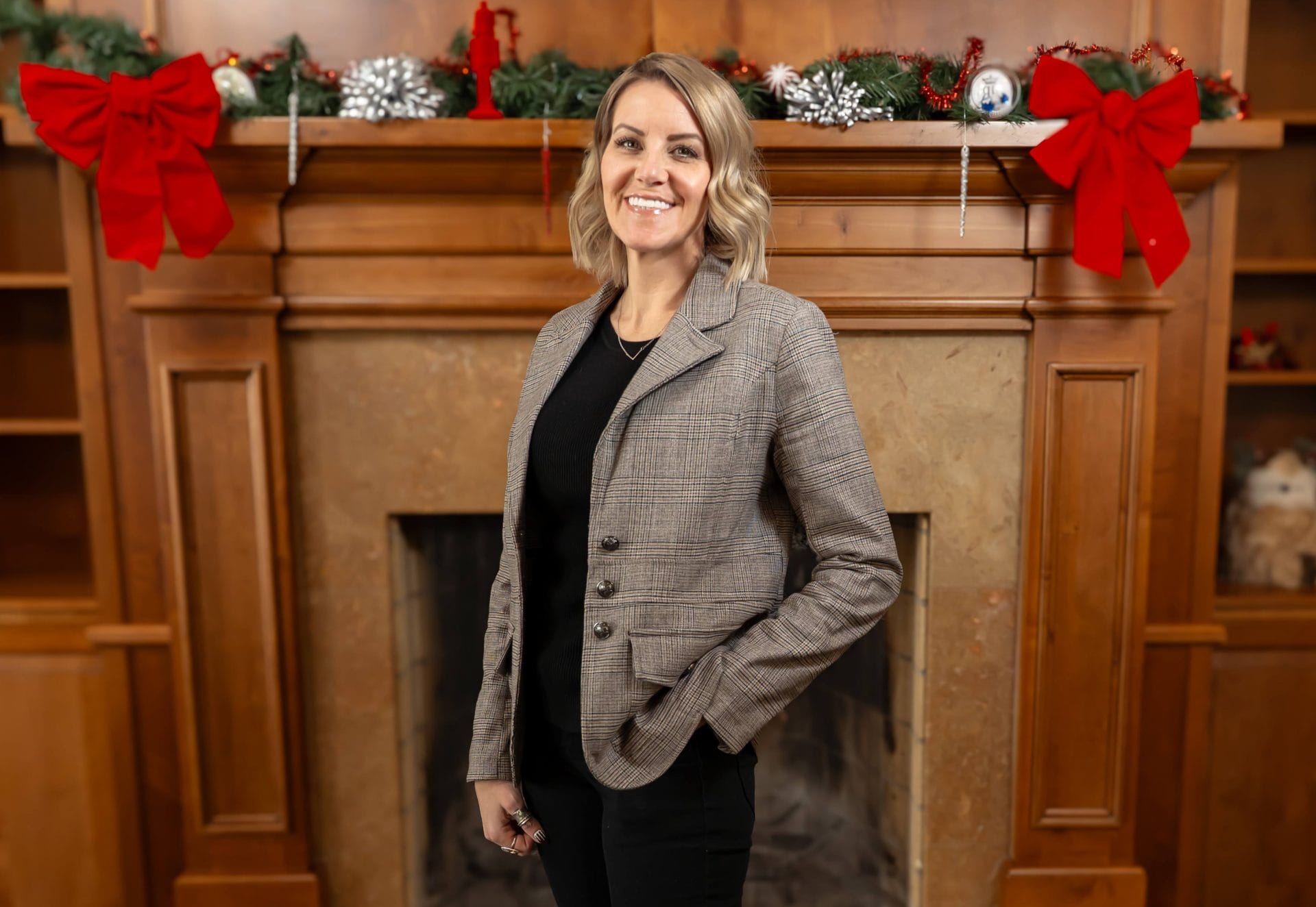
When Natalia Bishop arrived in the United States from Colombia at the age of 17, she had a suitcase, her family, and roughly $400. Two decades later, she is a general partner at a $50 million venture capital fund, the board chair of an accelerator for women founders, and one of the most recognizable startup ecosystem builders in Louisville, Kentucky. Her career is a case study in what happens when an immigrant founder turns exclusion into infrastructure: instead of waiting for the venture capital industry to open its doors, she spent ten years building new ones — first a coworking space, then an edtech company, and finally a fund that writes checks to the founders the traditional system overlooks.
Table of Contents
- From Colombia to Louisville: An Immigrant's Start
- Building Story: Louisville's First Startup Hub
- The Level Up Lesson: When Letting Go Is the Right Call
- From Founder to Investor: Renew Venture Capital
- Championing Underrepresented Founders at Wild Accelerator
- Productivity, Boundaries and the Human Side of Building
- Frequently Asked Questions
- Conclusion
From Colombia to Louisville: An Immigrant's Start
Natalia Bishop is a Colombian-born venture investor and startup ecosystem builder who has called Louisville home for around 20 years. Her public account of her arrival is disarmingly concrete: "I came to the United States from Colombia when I was 17 years old with my family, a suitcase and about $400. Like many entrepreneurs, I had ambition and drive, but very little access. I didn't always know who to ask for help, or how to navigate the systems and networks that make growth possible."
That sentence explains almost everything she has done since. Bishop has said repeatedly that her drive to invest and build community comes directly from having been on the wrong side of the access gap. The funding data shows how wide that gap remains: founders from female, Black, Latinx and LGBTQ+ populations — the combined demographic Bishop now serves — accounted for just 2% of venture capital funding, according to a 2026 Wild Accelerator release cited by Louisville Business First, even as they become the fastest-rising segment of new founders. PitchBook's 2025 research adds a second layer of nuance: US female-founded startups raised a record $73.6 billion in 2025, capturing 27.7% of total US venture deal value, yet companies founded solely by women still garnered roughly 1% of total capital. The headline numbers are improving at the top; the underlying distribution is still brutally uneven.
Building Story: Louisville's First Startup Hub
Bishop's first answer to the access problem was physical space. In 2016 she founded Story, Louisville's first startup-focused coworking space and entrepreneurial hub, with an explicit mission of creating a more cohesive and diverse startup community in the region — providing resources, connections and education to founders who were not connected to the existing networks.
Building a community hub taught her the operating lessons she later carried into everything else. As she later summarized it: "I got my footing as a CEO when I founded Story... Through this experience, I earned my entrepreneurial stripes, learning lessons about scalability, fundraising, building a team, and an inspiring brand, but most importantly how to build community." Story positioned her at the center of Louisville's founder scene, and it was the place where she learned that community is not a soft asset — it is the pipeline through which deal flow, talent and mentorship actually travel.
The Level Up Lesson: When Letting Go Is the Right Call
From community builder, Bishop pivoted into becoming a tech founder herself with Level Up, a marketplace edtech platform designed to help women gain skills to develop their careers. The company had a strong external record: in 2020 alone it won a Vogt Award, completed Endeavor's Scale Up accelerator, and won the 5 Across Final Pitch competition.
And yet in early 2022 she wound it down. "We had great traction and great revenue, but I still couldn't close my pre-seed round," she explained. "This wasn't a huge round and it should have been doable with that level of traction." The failure to raise — despite validation — is what pushed her across the table, from pitching investors to becoming one. "Level Up was always about the exit," she said. "I wanted to do the impact, but it was always about taking whatever exit I had and investing it right back into the founders who look like me."
She has framed the shutdown as a deliberate choice rather than a defeat. "Continuing something — even something successful — is always a choice. Walking away is also a valid choice," she has said, noting that the cost to her health, family and personal well-being had become too high. For founders wrestling with the sunk-cost trap, her conclusion is memorable: sometimes the most powerful decision is knowing when to let go.
From Founder to Investor: Renew Venture Capital
In March 2022, Bishop joined Renew Venture Capital as a general partner, a move covered by Louisville Business First and announced on the firm's own press page. Renew, founded by Mark Hubbard, was raising a $50 million impact fund to write early-stage checks to scalable startups committed to social impact as well as women, LGBTQ+, Black, LatinX and other diverse founders historically excluded from venture capital. Check sizes run from $150,000 up to $1.5 million, depending on the round and the need, with no industry restriction and a North America-wide footprint.
What distinguishes her thesis from typical impact investing is the refusal to treat profit and purpose as a trade-off. "VCs tend to be 'all product knowledge and little heart,' and impact investors are often the inverse," she observed when joining the firm. "We have exceptional experience and expertise in digital product design and tech company expansion, and we remain as committed to real impact as any founder. We are not interested in trade-offs." Her conviction — which she has described as a view "almost nobody agrees" with her on — is blunt: you can make a lot of money and still do a lot of good, if you build companies intentionally so that both exist from the beginning.
Bishop prepared for the role through 500 Global's VC Unlocked program, and she has cited investors such as Mac Conwell of RareBreed Ventures and Arlan Hamilton of Backstage Capital as proof that she did not have to wait years or exit a company for millions to start investing. Since May 2025 she has also been an Angel Squad member at Hustle Fund, extending her reach into angel-stage investing alongside her work at Renew.
Championing Underrepresented Founders at Wild Accelerator
Bishop's community work did not stop when she became an investor. She serves as chairperson of the board of Wild Accelerator, a Louisville-based accelerator focused on female founders, and in 2025 she was honored as one of Louisville Business First's Nonprofit Visionary Leader Awards recipients.
In February 2026, Wild announced the launch of Wild Academy, a virtual platform designed to support founders from historically marginalized communities at scale. The academy is powered by WILLA — Wild Intelligent Learning & Leadership Assistant — an AI business coach offering personalized guidance, strategic thinking support and decision pressure-testing around the clock, plus an AI Path Generator that builds roadmaps adapted to a founder's business stage, goals and learning style. "We're not just teaching business fundamentals — we're reimagining what entrepreneurship support looks like when it's built for and by people who've been historically excluded from these spaces," Bishop said at the launch. "Wild Academy meets founders where they are. Whether that's idea stage or ready to scale, urban or rural, with or without traditional credentials."
The program targets the female, Black, Latinx and LGBTQ+ founder populations — the same 2% of VC funding slice she has spent her career widening. It is a logical extension of her thesis: if capital access is the bottleneck, then the fix has to combine money, mentorship and technology, delivered on the founders' schedule rather than the gatekeepers'.
Productivity, Boundaries and the Human Side of Building
Behind the fund titles and board seats, Bishop is unusually candid about how she actually works. In her April 2026 IdeaMensch interview, she described days that start at 5:30 or 5:45 a.m. with the school run, followed by a silent commute, then an immediate attack on the hardest task of the day "because that's when my energy is highest." She works in 90-minute increments because her productivity drops beyond that, caps most meetings at 30 minutes, and uses tools like Reclaim to schedule tasks around her energy patterns and ClickUp to keep projects visible. As someone with ADHD, she describes these systems as essential rather than optional.
Her most defended boundary is the end of the day: "When I'm done with work, I literally turn everything off." No smartwatch, no work notifications after 3–4 p.m. "I used to burn out trying to be everything for everyone. Now I'm intentional about when I'm working and when I'm not." Her advice to her younger self follows the same logic — success happens when opportunity meets preparation, but not every opportunity that appears is the right one, and sometimes the best decision is waiting.
On growth, she is equally practical: get comfortable with sales. "A lot of founders believe their product should sell itself, but that's rarely how it works," she says. Her own growth lever has been learning to ask for the sale and to guide the next step explicitly — "This is great — so what's the next step?" It is a small sentence that she credits as a huge driver of her career.
Frequently Asked Questions
Who is Natalia Bishop?
Natalia Bishop is a Colombian-born venture investor and startup ecosystem builder based in Louisville, Kentucky. She is a general partner at Renew Venture Capital, board chair of Wild Accelerator, an Angel Squad member at Hustle Fund, and the founder of Story, Louisville's first startup-focused coworking space, and of Level Up, an edtech platform for women's career skills.
What does Renew Venture Capital invest in?
Renew Venture Capital manages a $50 million impact fund that writes early-stage checks of $150,000 to $1.5 million to scalable startups committed to social impact, including companies founded by women, LGBTQ+, Black, LatinX and other underrepresented founders. It invests across North America without restricting itself to specific industries.
Why did Natalia Bishop shut down Level Up?
Bishop wound down Level Up in early 2022 because she could not close a pre-seed round despite strong traction and revenue, including a Vogt Award, Endeavor's Scale Up accelerator and the 5 Across Final Pitch competition in 2020. She has said the personal cost had become too high and that walking away was a valid choice — the experience is what pushed her to become an investor herself.
What is Wild Academy?
Wild Academy is a virtual platform launched in February 2026 by Wild Accelerator, where Bishop serves as board chair. Powered by an AI coach called WILLA, it offers founders from historically marginalized communities personalized guidance, roadmaps via an AI Path Generator, video modules and work guides covering topics like product-market fit and customer discovery — at any stage, urban or rural, with or without traditional credentials.
How does Natalia Bishop stay productive?
She starts her day between 5:30 and 5:45 a.m., works in 90-minute increments, caps most meetings at 30 minutes, and uses Reclaim and ClickUp to schedule around her energy patterns — systems she considers essential given her ADHD. Her hardest boundary is the end of the day: after 3–4 p.m., everything is turned off, including her smartwatch.
What advice does she give other founders?
Three things recur in her interviews: get comfortable with sales and explicitly ask for the next step; protect your time and technology boundaries to avoid burnout; and remember that not every opportunity is the right one — waiting for the right moment is often the best decision. She also prioritizes the people around her, including her team, family and friends, as the foundation of sustainable success.
Conclusion
Natalia Bishop's trajectory — immigrant arrival at 17, community builder, edtech founder, venture investor — is more than an inspiring arc; it is a template for how underrepresented founders can convert lived experience into ecosystem infrastructure. She did not wait for the venture capital industry to become more inclusive. She built a coworking space, then a fund, then an AI-powered academy, each one widening the door a little further for the founders who come after her. For women building businesses today, her central lesson is the one she learned from Level Up: capital follows community, and both follow intention.
Sources
- IdeaMensch — Natalia Bishop interview (April 15, 2026)
- Renew Venture Capital — "Louisville founder joins Renew Venture Capital as general partner"
- Renew Venture Capital — Team page: Natalia Bishop
- Louisville Business First / Bizwomen — "Wild Accelerator launches AI coach for underrepresented founders" (February 27, 2026)
- PitchBook — 2025 US All In: Female Founders in the VC Ecosystem
- Women Entrepreneurs — Kristy Kim, CEO of TomoCredit (on widening access to capital)