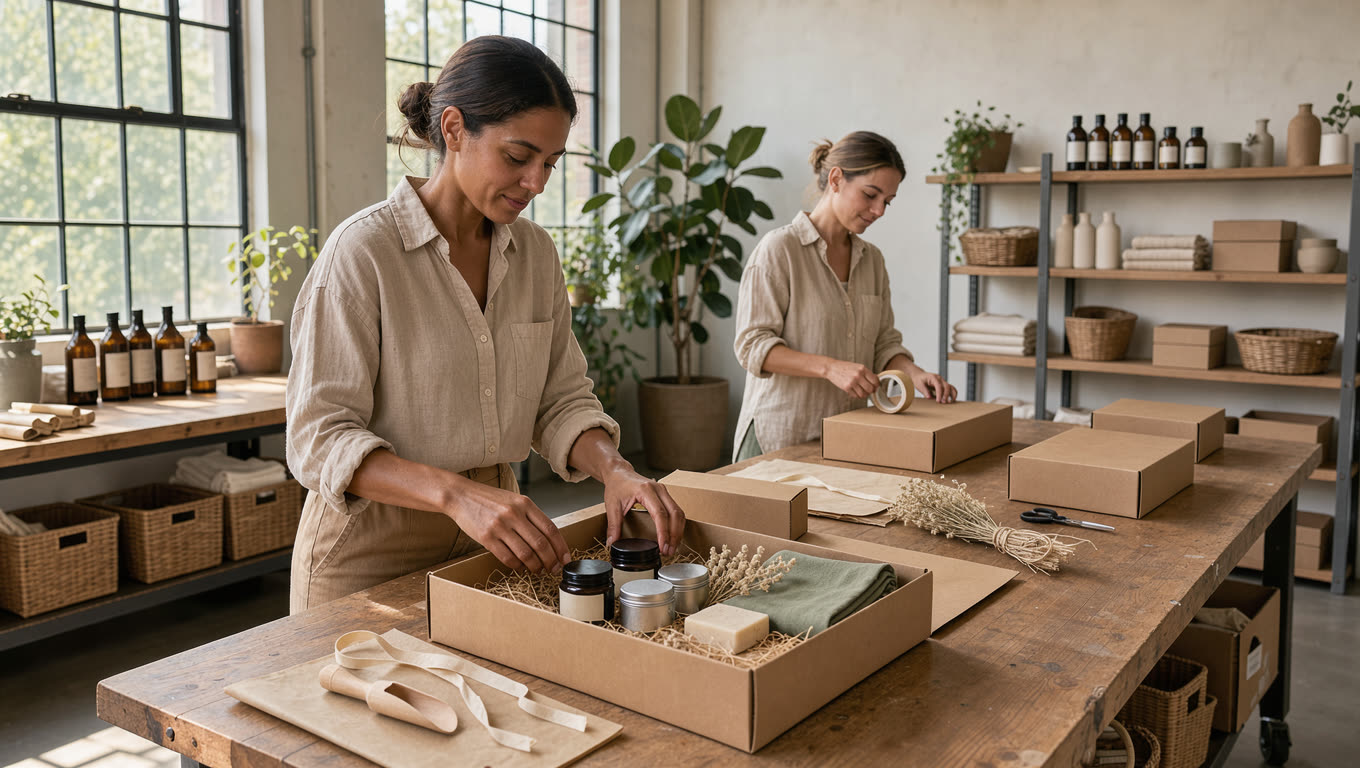
The subscription box industry has grown from a novelty into a mainstream retail channel, delivering curated products to doorsteps every month and giving small brands a direct route to loyal customers. Behind much of that growth are women founders who spotted what the big retailers were missing: a specific customer, served with genuine care.
This article profiles three of them — a sustainability pioneer, a champion of artisan makers and a personalised wellness founder — and breaks down the decisions that make their models work. You will also find the market numbers and practical lessons to steal.
Table of Contents
- Why the Subscription Box Industry Keeps Growing
- Emily: Curating Sustainable Lifestyle Solutions
- Sophia: Empowering Small Businesses Through Curated Collections
- Rebecca: Revolutionising Personal Care With Personalisation
- What the Three Founders Have in Common
- How to Build a Subscription Box Business Today
- Frequently Asked Questions
- Conclusion
- Sources
Why the Subscription Box Industry Keeps Growing
The subscription box industry keeps growing because consumers will pay for curation, convenience and surprise, and because the model gives brands predictable recurring revenue. According to IMARC Group, the global market grew from USD 42.5 billion in 2025 to USD 47.9 billion in 2026 and is projected to reach USD 124.1 billion by 2034, a compound annual growth rate of 12.64 percent.
Three forces drive that curve. First, customers are tired of infinite choice and increasingly pay someone to edit the catalogue for them. Second, social platforms reward unboxing, which turns every delivery into free marketing. Third, the economics are unusually good for small players: a subscription pre-sells inventory, smooths cash flow and makes lifetime value measurable from month one. That combination is why a two-person studio can now compete with a supermarket end-cap.
Emily: Curating Sustainable Lifestyle Solutions
Emily built her box around a single promise: everything inside it must be organic, fair-trade or genuinely low-impact, and every supplier must be able to prove it. Her answer to a crowded market was to make sustainability the filter rather than a marketing line.
That discipline produces specific, repeatable choices. Products are vetted against packaging rules before anything else, so plastic-free wrapping is a condition of entry rather than an afterthought. Supplier questionnaires cover labour practices and materials, and the answers are published, which turns transparency into a selling point. The commercial payoff is trust: subscribers stay longer when they believe the curation, and her retention reflects it. For founders, Emily's lesson is that a narrow ethical filter is not a constraint on growth — it is the reason a customer chooses you over a cheaper generalist box.
Sophia: Empowering Small Businesses Through Curated Collections
Sophia's box exists to give small producers access to customers they could never reach alone, sourcing handmade goods from independent workshops and putting them in front of a national audience each month. Her business is a distribution channel disguised as a gift.
The mechanics matter. Producers keep ownership of their products and set the terms; Sophia adds photography, storytelling and a subscriber base, which is precisely the part small makers cannot afford. Each box carries notes explaining who made each item and where, converting a product into a story that subscribers forward to friends. The result is a two-sided loyalty: makers commit their best work to her, and subscribers stay for the discovery. Her model maps closely onto the maker-economy thesis profiled in Sophia Fouzia Leaguedi's journey from humble beginnings to global export — local craft, scaled through modern channels.
Rebecca: Revolutionising Personal Care With Personalisation
Rebecca's box asks customers about their skin, hair and routines, then assembles a monthly selection matched to those answers, making personalised wellness feel affordable at a mass price point. Personalisation is her entire differentiation.
The system runs on feedback loops: each delivery invites a short review, and the next box adjusts to it, so the service literally improves with tenure. Sample sizes reduce the risk of trying something new, and the brand's community content teaches customers how to use what they receive, which raises satisfaction without raising cost. This is where the subscription model becomes genuinely defensible, because the accumulated preference data is something a supermarket shelf can never copy. Rebecca's approach shows founders that the winning variable is not the product itself but the quality of the match.
What the Three Founders Have in Common
These three founders share three habits: a narrow promise they repeat everywhere, radical transparency about sourcing, and a habit of treating every delivery as content. None of them competes on price, and none of them tries to be everything.
Each also built a feedback mechanism into the product — Emily's supplier questionnaires, Sophia's maker stories, Rebecca's post-delivery reviews — so the box gets smarter every month. They segment customers carefully, refusing subscribers whose expectations do not fit the promise, which keeps churn honest. And they treat operations as strategy: curation calendars are set months ahead, supplier relationships are managed like partnerships, and packaging is designed to survive delivery while still feeling like a gift. These unglamorous disciplines are what separate a durable brand from a promotion.
How to Build a Subscription Box Business Today
To build a subscription box business today, pick one customer with an unmet ritual, define a promise you can keep for twelve months, and validate it with a small paid pilot before buying inventory. Start narrower than feels comfortable — a specific skin type, a specific hobby, a specific diet.
Unit economics decide everything: target a box cost under a third of the subscription price, test packaging costs early because shipping damage destroys margin, and price annually where you can, since prepaid plans cut churn sharply. Plan your first twelve curation calendars before launch, because sourcing is a schedule problem, and treat supplier onboarding as a sales process. Founders starting out should also mine the top resources every woman entrepreneur should utilise and map the venture properly with the seven essential steps to craft a business plan before signing a single supplier.
Frequently Asked Questions
How big is the subscription box industry?
IMARC Group values the global subscription box market at USD 47.9 billion in 2026, up from USD 42.5 billion in 2025, and projects USD 124.1 billion by 2034 at a 12.64 percent compound annual growth rate.
Are subscription boxes still profitable in 2026?
Yes, for focused boxes with disciplined unit economics: curation and personalisation command premium prices, recurring pre-orders smooth cash flow, and the main killers remain shipping costs, spoilage and unmanaged churn rather than lack of demand.
What makes a sustainable box credible?
Verifiable criteria applied before products are selected — materials, packaging, labour practices — plus published sourcing information, because credibility comes from the filter being applied consistently, not from calling the box green.
How do I source products from small makers?
Offer what makers lack — photography, storytelling and a paying audience — keep their ownership intact, set clear calendars and quality rules, and pay on time; reliable distribution is the scarcest resource in the maker economy, and good terms travel by word of mouth.
How much does it cost to launch a subscription box?
A lean launch can start in the low thousands: the real capital goes into first inventory, packaging tooling and shipping logistics, so most founders validate demand with a paid pilot and pre-orders before committing to a full production run.
How do successful boxes reduce churn?
By improving the match over time through reviews, offering annual prepay with a meaningful discount, communicating the next curation in advance, and making skipping a month easy — flexibility retains more subscribers than discounting does.
Conclusion
The subscription box industry rewards founders who serve one customer obsessively: Emily with her ethical filter, Sophia with her maker network, Rebecca with her personalisation loop. The market keeps expanding, but growth goes to the narrow promises rather than the broad ones. Choose your customer, prove the box with a paid pilot, and let curation do the marketing.