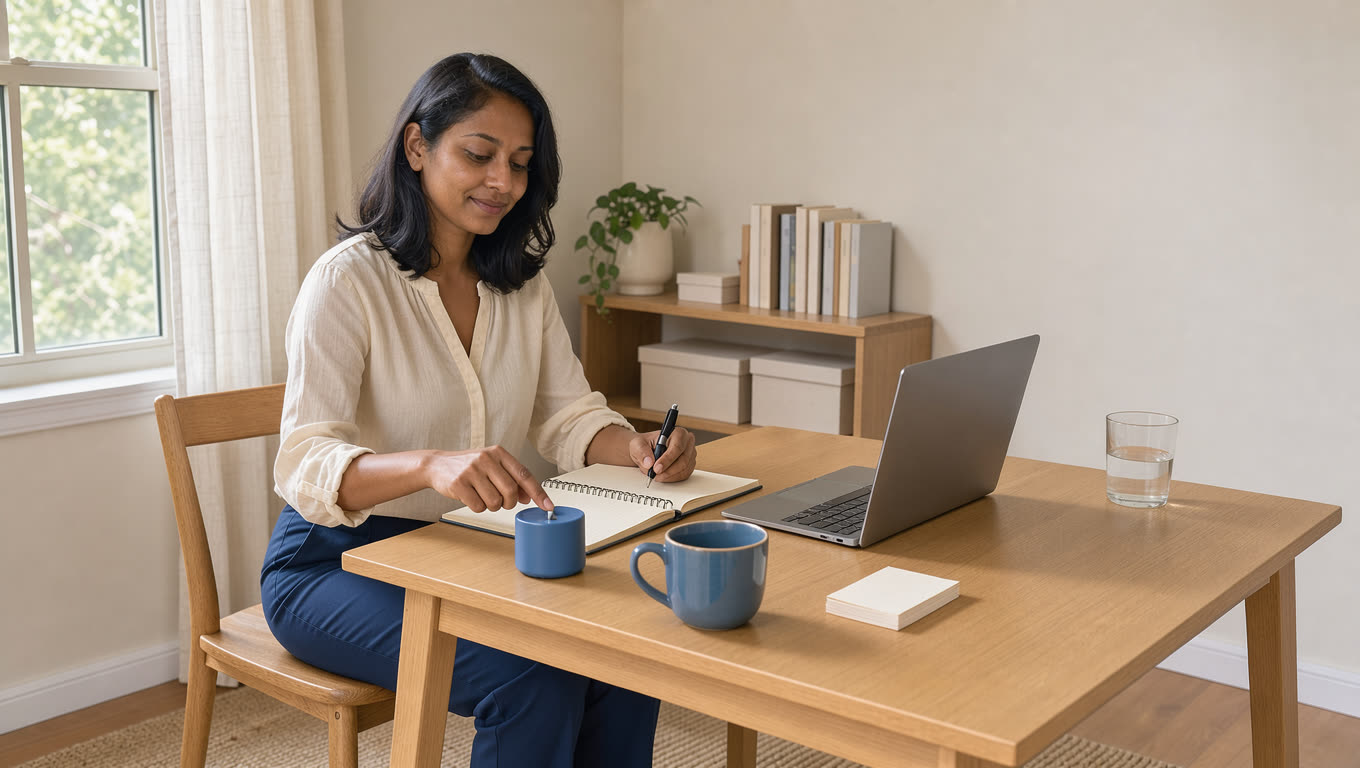
The digital nomad lifestyle has moved from Instagram fantasy to a realistic career path, and women are embracing it in growing numbers. Freed from the requirement of a fixed office, founders, freelancers and consultants can now run a business from a laptop while living in different cities and time zones.
Two women who took that leap show what the journey actually looks like: Sarah, who built an online education and mentorship venture for female professionals, and Mia, who turned creative writing and digital marketing skills into a location-independent freelance career. Their stories reveal the practical habits behind remote success.
Table of Contents
- Why Remote Work Is a Turning Point for Women
- Sarah: Building an Online Education Business From Anywhere
- Mia: Turning Freelance Skills Into a Location-Independent Career
- The Shared Habits Behind Both Journeys
- How to Start Your Own Digital Nomad Journey
- Frequently Asked Questions
- Conclusion: Embracing the Remote Lifestyle
Why Remote Work Is a Turning Point for Women
Remote work removes the two obstacles that have always pushed women out of traditional careers: rigid schedules and the assumption that presence equals productivity. When output matters more than seat time, women can design work around caregiving, health, travel or relocation instead of competing to be the last person seen leaving the office.
The economics help too. A location-independent business can be run from a lower-cost city while charging clients in stronger currencies, which turns travel from an expense into a strategic choice. It also widens the talent market: a consultant in Lisbon can serve clients in New York, Sydney and Dubai without ever booking a flight for a first meeting. For women in regions where local networks are small or heavily male, this equalises access to opportunity in a way that few previous workplace reforms managed to do.
None of this makes nomadism effortless. Visa rules, unreliable internet, timezone spreads and isolation are real friction. What separates the women who thrive from those who burn out is not courage but structure — and both Sarah and Mia built theirs deliberately.
Sarah: Building an Online Education Business From Anywhere
Sarah's remote venture works because it solves a specific problem: women who want flexible careers rarely lack intelligence, they lack a roadmap and a community. Her company sells online courses and mentorship programs that teach female professionals how to pitch for remote roles, price their work and manage clients across time zones.
She started with a single cohort course and a free community group, using live sessions to validate which modules people actually finished and which they abandoned. That feedback loop became the product roadmap. Within a year, the offering had grown into a library of self-paced material plus a mentorship track where experienced nomads guide newcomers through their first remote contracts.
Three decisions made the model scale. First, everything is asynchronous by default, so members in Asia, Europe and the Americas are never locked out of a lesson. Second, mentorship is trained and templated rather than improvised, which keeps quality consistent as the community grows. Third, Sarah treats her own travels as content: she publishes what she learns about visas, coworking spaces and client management, which doubles as marketing and proof that the lifestyle is viable.
Her advocacy for gender equality and work-life balance is not separate from the business — it is the business. The venture's mission attracts partners, speakers and collaborators who would never have engaged with a conventional training company.
Mia: Turning Freelance Skills Into a Location-Independent Career
Mia's path proves that freelancing can be a genuine digital nomad strategy, not just a fallback. With a background in creative writing and digital marketing, she left a salaried content role and spent her first year building an online portfolio and a client base one contract at a time.
The early months were thin. She undercharged, chased late invoices and learned the hard way that a laptop in a beach town is still a laptop. What changed her results was specialising: instead of "content writing", she positioned herself as a writer for B2B technology companies that needed long-form articles and case studies. Fewer prospects, higher rates, repeat work.
Mia now works with a small roster of retained clients, keeps overlapping hours with each of them and batches her travel around project cycles rather than the other way around. Her process is deliberately unglamorous — a fixed weekly reporting rhythm, documented deliverables and a strict rule about scope creep — and that predictability is exactly what lets her move cities every few months without clients noticing or caring.
Her advice to aspiring creatives is blunt: adventure is sustainable only after the systems are in place. Freedom, in her experience, is the output of discipline, not the opposite of it.
The Shared Habits Behind Both Journeys
Sarah and Mia arrived at similar practices from very different directions, and those practices are the real engine of their success.
- Systems before scenery. Both planned infrastructure — payment tools, async communication norms, written processes — before choosing their next destination.
- A narrow first offer. Neither tried to serve everyone. Sarah focused on women switching to remote careers; Mia on B2B technology clients. Specialisation made marketing cheap and pricing easy.
- Community as a moat. Sarah's mentorship network and Mia's referral pipeline both come from relationships they maintain deliberately, not from algorithm luck.
- Energy management. Timezone-friendly schedules, protected deep-work blocks and real rest days keep both from repeating the burnout they left their old jobs to escape.
It is also worth noting what they do not do: they do not chase viral moments, and they do not treat location as their product. The product is always the work.
How to Start Your Own Digital Nomad Journey
Wanting to work remotely is not a plan; a transition sequence is. The following order works whether you want to freelance like Mia or build a venture like Sarah.
- Build an income proof first. Secure one remote client or one sellable online product before you quit. See 10 funding options for female founders if you plan to raise instead.
- Assemble a portable skill stack. Writing, marketing, design, development, bookkeeping and online teaching all travel well — our roundup of must-have skills for female entrepreneurs is a useful audit.
- Design your week, not your itinerary. Fix your working hours, client overlap time and admin block before you book anything. Our work-life balance playbook for female founders covers the trade-offs.
- Sort the paperwork early. Check visa duration, tax residency rules and health insurance for every country on your list.
- Join a community before you leave. Coworking spaces, mentorship cohorts and mastermind groups shorten the learning curve dramatically and protect you from isolation.
Start with short trial periods — one month abroad rather than a one-way ticket — and let the business, not the fantasy, decide how permanent the lifestyle becomes.
Frequently Asked Questions
What exactly is a digital nomad?
A digital nomad is a professional who works remotely while regularly changing location, using laptops and internet-based tools instead of a fixed office.
Which jobs suit the digital nomad lifestyle best?
Location-independent work includes content writing, digital marketing, design, development, online teaching, consulting and virtual assistance — anything delivered digitally with measurable output.
How do women nomads handle safety while travelling alone?
They rely on vetted accommodation, coworking communities, local networks of other women travellers, registered transport and longer stays that allow them to know an area properly.
How do nomads manage different time zones with clients?
By agreeing fixed overlap hours, documenting everything asynchronously and batching meetings into a few days, so a client in another hemisphere never waits a full day for an answer.
What are the biggest financial challenges of location-independent work?
Irregular income, cross-border payments, currency exchange fees and unclear tax residency. The fix is a cash reserve, multi-currency accounts and professional tax advice before you relocate.
Do I need a big audience to start as a digital nomad?
No. Both Sarah and Mia started with one client or one cohort. Audience helps, but a repeatable offer and a reliable delivery process matter far more in the first year.
Conclusion: Embracing the Remote Lifestyle
Sarah and Mia show that remote success is built on ordinary discipline applied in an extraordinary setting: a clear offer, documented systems, protected energy and a community that keeps you accountable. Neither waited until everything was perfect — they started narrow, learned in public and let the business grow into the lifestyle.
If you are considering the jump, treat it as an experiment with a defined scope rather than a leap of faith. Prove the income, build the routine, then book the ticket. The women who make nomadism look effortless are simply the ones who did the boring work first.