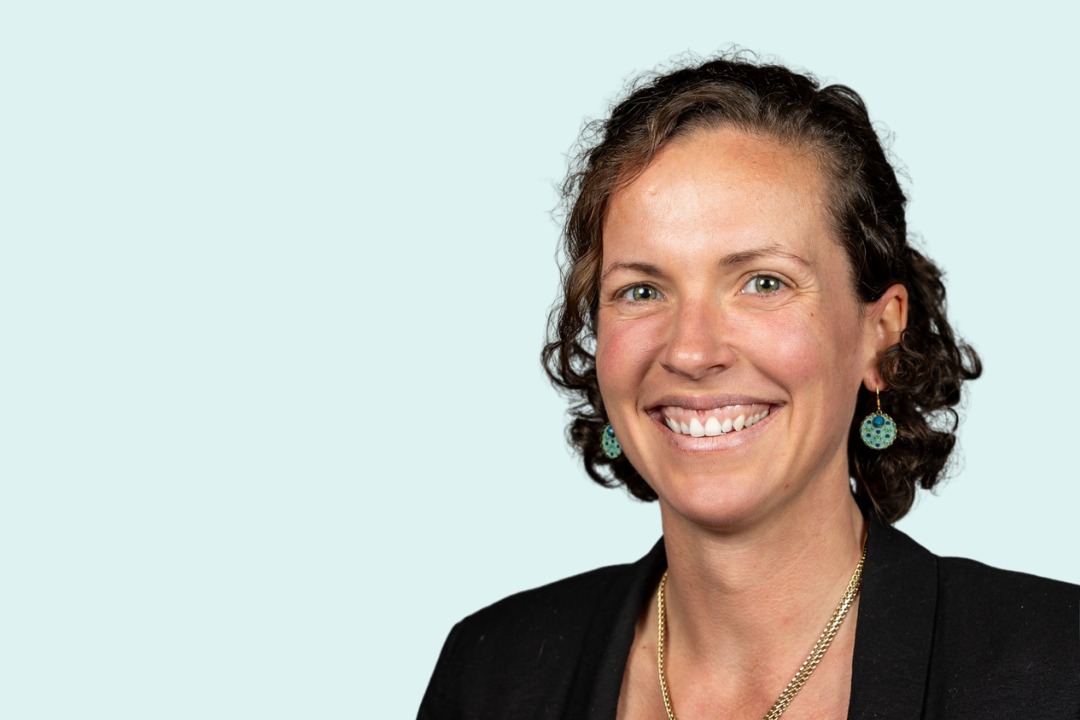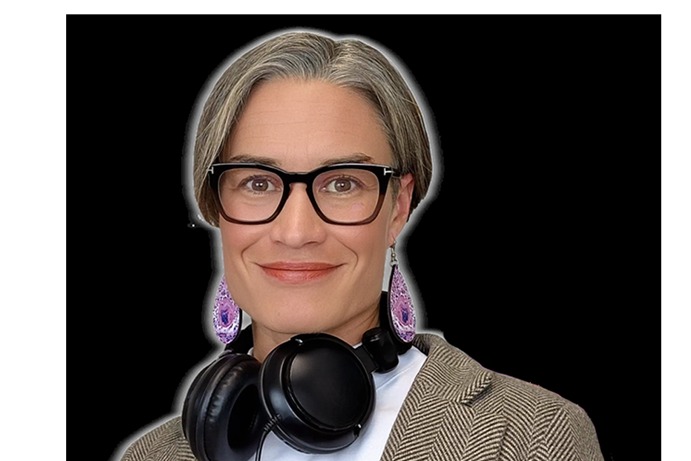
Dr. Aleksandra Zuraw is the veterinary pathologist who turned a niche science into a media business: while working as a senior toxicologic pathologist at Charles River Laboratories, she founded Digital Pathology Place, today one of the most recognised podcast and education brands in digital pathology and medical AI. She is Polish, board-certified, has lived in six countries, and describes herself simply as "the leading voice behind Digital Pathology Place blog and podcast."
Her story matters well beyond the laboratory. It is a textbook case of how a specialist with no media background can build a global audience — 180+ podcast episodes and a community reach of more than 63,000 — by translating an obscure technical field into language that people can actually use. This success story breaks down her career, the platform she built, the market she is riding, and the lessons entrepreneurs can take from it.
Table of Contents
- From a Polish Vet School to a Berlin Pathology Ward
- The Accidental Entry into Digital Pathology
- Building Digital Pathology Place as a Side Project
- The Market She Is Betting On
- What Entrepreneurs Can Learn from Aleksandra Zuraw
- Frequently Asked Questions
From a Polish Vet School to a Berlin Pathology Ward
Aleksandra Zuraw chose veterinary medicine at the age of 12, after reading James Herriot's All Creatures Great and Small, and she practised as a veterinarian for three years before the cold-weather emergency calls of large-animal work pushed her indoors. Realising that Poland offered limited opportunities for internationally recognised specialisation, she reviewed the catalogue of the European Board of Veterinary Specializations, found that pathology and equine medicine interested her most, and moved to Berlin on a scholarship that was meant to split six weeks in a pathology department and six weeks in a horse clinic.
She never made it to the horse clinic. "I started in the pathology department, and about three weeks in, I called the horse clinic and said, 'I'm not coming — I'm staying here,'" she recounted in The Pathologist in January 2026. That single decision shaped the rest of her career: a PhD in infectious pathology, a residency in Berlin, and board certification as a veterinary pathologist (Dipl. ACVP) in a discipline that is deliberately small. Industry estimates cited in her own interviews put the number of board-certified veterinary pathologists at roughly 2,200 worldwide, against about 18,000 human pathologists — a talent pool so thin that a specialist can become globally visible simply by showing up consistently.
Zuraw now works in the United States, the sixth country she has lived in, and holds the rank of senior veterinary/toxicologic pathologist at Charles River Laboratories. Her daily work sits at an invisible but critical junction of the drug industry: every medicine approved by the FDA has had a veterinary pathologist evaluate its preclinical development, because hundreds of candidate drugs are tested in animals before a single patient ever takes a dose.
The Accidental Entry into Digital Pathology
Zuraw entered digital pathology almost by accident, through a task nobody else wanted: while finishing her residency in Berlin, she was given a study that required quantifying immunohistochemistry staining, and visual assessment proved too subjective. She started photographing slides and annotating the images — "quite primitively," she said, in Microsoft Paint. That crude workflow taught her the insight that defined her career: digital images allow quantification, reproducibility and objective analysis.
The project became her competitive edge. Straight out of her PhD she joined an image analysis company, where she worked with computer scientists and tissue-image analysts on algorithms that count immune cells and support biomarker discovery for pharmaceutical immuno-oncology programmes. "A lot of people wait a long time for their institutions to become digitised, but I entered this world instantaneously and didn't want to leave," she told The Pathologist in 2023. She later moved to Charles River Laboratories as a veterinary pathologist, designing and validating image analysis approaches for clinical trial and preclinical study evaluation alongside data scientists at major pharmaceutical firms.
The COVID-19 pandemic then accelerated everything she had been advocating. Slides could not be shipped across borders and pathologists could not travel, so peer reviews moved onto screens. "It wasn't just nice to have anymore. It was a must-have," Zuraw said. The crisis triggered a wave of validation work around Good Laboratory Practice (GLP) for digital pathology systems and converted a nice-to-have workflow into standard practice.
Building Digital Pathology Place as a Side Project
Digital Pathology Place began in 2019 as a blog and grew into a company in 2021, when Zuraw incorporated to help digital pathology vendors reach the right audiences through informative content. The logic was simple: the field mixes pathologists, computer scientists, regulatory experts, vendors and sales teams who all need a shared language, and nobody was producing content that spoke to all of them at once. She calls her audience "The Digital Pathology Trailblazers."
Today the platform is a full media operation — podcast, blog, YouTube channel, webinars, live reviews and a book — with 180+ podcast episodes and a stated community reach of 63,000+ professionals, and it claims an audience of 50,000+ readers and listeners worldwide. Its sponsor and partner roster reads like a directory of the industry: Hamamatsu, Proscia, Aiforia, Epredia, PathPresenter, Pramana, Techcyte, Grundium, Barco and Roche have all appeared alongside her content. In parallel she wrote Digital Pathology 101: Everything You Need to Know to Start and Continue Your Digital Pathology Journey, now available in hardcover, audiobook and a free digital edition.
Crucially, she never left clinical practice. She still works as a senior veterinary pathologist at Charles River Laboratories and contributes regularly to pharmaceutical trade media — a portfolio career in which employment funds credibility and the media business funds independence. That combination is what makes the platform trustworthy to a technical audience: she is a practitioner first, a publisher second. It is the same pattern seen in other founders we have profiled, such as Victoria Repa, whose BetterMe brand grew by owning one narrow audience rather than chasing several.
The Market She Is Betting On
The market Zuraw is helping to educate is growing fast on every credible estimate: Research and Markets valued global digital pathology at $1.42 billion in 2025, rising to $1.68 billion in 2026 (18.5% growth) and reaching $3.29 billion by 2030 at an 18.3% compound annual growth rate. Mordor Intelligence, using a more conservative model, projects growth from $1.83 billion in 2025 to $3.21 billion by 2031 (9.90% CAGR), with whole slide imaging scanners holding 43.5% of 2025 revenue and image analysis and AI software the fastest-growing product segment at a 10.21% CAGR. North America accounted for 47.8% of market revenue in 2025.
The AI slice is growing even faster. Mordor values the AI-in-pathology segment at $145.39 million in 2025, projected to reach $633.69 million by 2031 (28.16% CAGR). Adoption surveys point the same way: a Proscia study conducted by Atheneum found that 82% of organisations using digital pathology have already implemented AI, with 87% of them using image analysis and 66% using process automation, while the Digital Pathology Association reported adoption growth rates of 37.3%, 31.4% and 27.3% across 2021, 2022 and 2023.
Yet the regulatory picture explains why education is still such a profitable niche. According to a 2025 review in Nature Reviews Drug Discovery, FDA authorisations for AI and machine-learning devices rose from fewer than 70 in 2019 to more than 1,000 today, but radiology captures 76% of all approved AI-enabled medical devices while pathology accounts for fewer than 0.5% — only three devices as of December 2024. The technology is arriving faster than the approvals, and that gap is exactly the confusion Digital Pathology Place monetises.
What Entrepreneurs Can Learn from Aleksandra Zuraw
The core lesson from Aleksandra Zuraw's career is that a narrowly defined audience beats a broad one: she did not try to become a "healthcare influencer", she became the voice of one discipline with roughly 2,200 certified practitioners worldwide. Three practical moves follow from her example.
- Turn your daily work into content. The blog started from a real internal problem — different specialties needing a shared language — not from a content calendar. Founders who document the problems they already solve for clients, as Ciara Siegel does in brand strategy, build authority faster than those who chase trends.
- Monetise attention without quitting your craft. Sponsorships from industry vendors, a paid book and webinars all sit on top of a still-active pathologist salary, which removes the pressure to publish sponsored noise.
- Educate first, sell second. With 180+ free episodes and a free e-book, the platform earns the right to charge because it has already given away the fundamentals. The audience metric to copy is not followers but repeat usefulness: 63,000+ professionals reached in a field most marketers cannot even spell.
Zuraw's own framing of the technology is the best closing argument for both the field and her business: AI will not replace pathologists, but pathologists who can use it will have leverage. "If you can use the tools, then you have leverage," she said. In a market heading for $3.29 billion by 2030, the people who teach everyone else to use the tools collect the first-mover advantage.
Frequently Asked Questions
Who is Dr. Aleksandra Zuraw?
Dr. Aleksandra Zuraw, DVM, PhD, Dipl. ACVP, is a Polish board-certified veterinary pathologist working as a senior toxicologic pathologist at Charles River Laboratories in the United States, and the founder of Digital Pathology Place, a podcast, blog and education platform dedicated to digital pathology and medical AI.
What is Digital Pathology Place?
Digital Pathology Place is a media and educational platform founded by Aleksandra Zuraw in 2019 and incorporated as a company in 2021. It publishes a podcast with more than 180 episodes, a blog, webinars and videos, and reports a community reach of over 63,000 professionals, with sponsors including Hamamatsu, Proscia, Aiforia, Epredia and PathPresenter.
How did she get into digital pathology?
During her residency in Berlin she was asked to quantify immunohistochemistry staining, a task too subjective to do by eye, so she began photographing slides and annotating them in Microsoft Paint. The exercise showed her that digital images deliver reproducible, objective measurement, and it led directly to her first job at an image analysis company after her PhD.
Why is veterinary pathology important for drug development?
Every drug approved by the FDA has been tested in animals first, and each of those preclinical studies is evaluated by a veterinary pathologist. Zuraw's slide evaluations therefore feed directly into regulatory submissions, which is why pharmaceutical companies need certified specialists even in a field of only about 2,200 board-certified veterinary pathologists worldwide.
How big is the digital pathology market?
Research and Markets valued digital pathology at $1.42 billion in 2025 and forecasts $3.29 billion by 2030, while Mordor Intelligence projects $3.21 billion by 2031. The AI-in-pathology segment is smaller but faster, growing from $145.39 million in 2025 toward $633.69 million by 2031, a 28.16% compound annual growth rate.
Is AI replacing pathologists?
No. Despite more than 1,000 FDA authorisations for AI and machine-learning devices, fewer than 0.5% of approved devices belong to pathology, against 76% for radiology. Zuraw argues that AI accelerates and standardises reading rather than replacing expertise, and that practitioners who learn the tools gain leverage instead of losing their jobs.
Conclusion
Aleksandra Zuraw's trajectory — from a Polish veterinary student inspired by a James Herriot novel to the host of a globally followed digital pathology podcast — shows that expertise plus consistency compounds. She identified a discipline with a tiny professional audience and a large commercial problem, documented it in public for years, and converted that trust into a media company while keeping the clinical job that gives her authority. For women building specialist businesses, the playbook is clear: choose the narrow field, teach it better than anyone, and let the market — here, a sector heading toward $3.29 billion by 2030 — do the rest.
Sources
- The Pathologist — "Inside the Mind of a Digital Pathology Trailblazer" (interview, January 2026): Berlin scholarship choice, Microsoft Paint entry point, agentic AI and interoperability.
- The Pathologist — "The Place Maker" (interview, May 2023): Digital Pathology Place founding, incorporation in 2021, first job at an image analysis company, every FDA-approved drug reviewed by a veterinary pathologist.
- Drug Discovery Trends — "Digital pathology streamlines drug development process" (June 2024): James Herriot inspiration, Definies and Charles River roles, pandemic pivot, sponsor list, Proscia/Atheneum survey (82% AI adoption), Digital Pathology Association growth rates.
- Digital Pathology Place — About (accessed 2026): 180+ podcast episodes, 63,000+ community reach, platform mission.
- Pharmaceutical Technology — author biography of Dr. Aleksandra Zuraw (2026): current senior pathologist role at Charles River, Digital Pathology 101 book, training in Berlin.
- Charles River — "Bridging the Gap" video series: her role presenting digital pathology education for the company.
- Research and Markets — Digital Pathology Market Report 2026: $1.42B (2025), $1.68B (2026), $3.29B (2030), 18.3–18.5% CAGR.
- Mordor Intelligence — Digital Pathology Market (2026–2031): $1.83B (2025) to $3.21B (2031), 9.90% CAGR, 43.5% WSI scanner share, 47.8% North America share.
- Mordor Intelligence — AI in Pathology Market (2026–2031): $145.39M (2025) to $633.69M (2031), 28.16% CAGR.
- Nature Reviews Drug Discovery — "Artificial intelligence in digital pathology: time for a reality check" (2025): fewer than 70 FDA AI/ML approvals in 2019 to over 1,000 today; 76% radiology vs under 0.5% pathology as of December 2024.