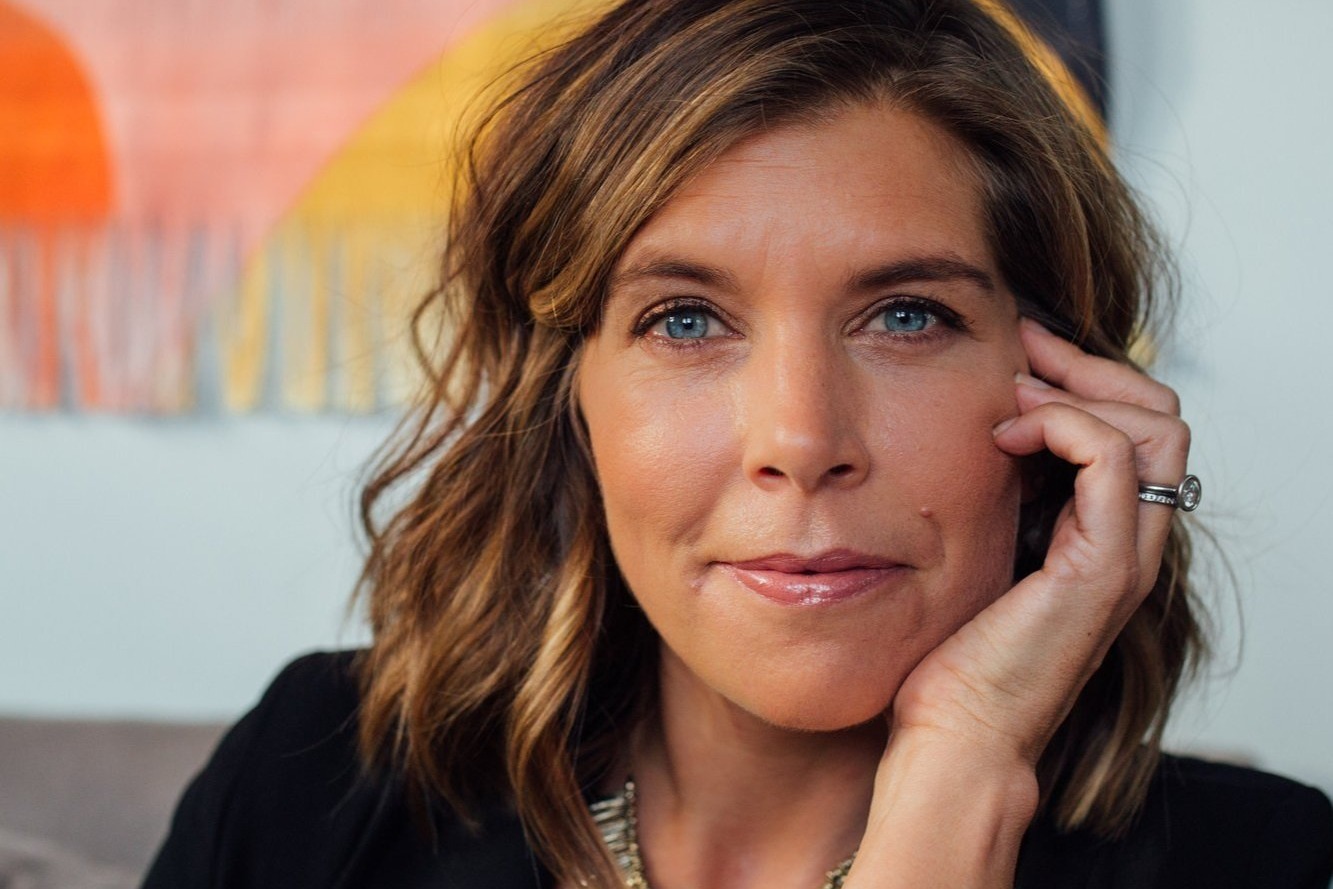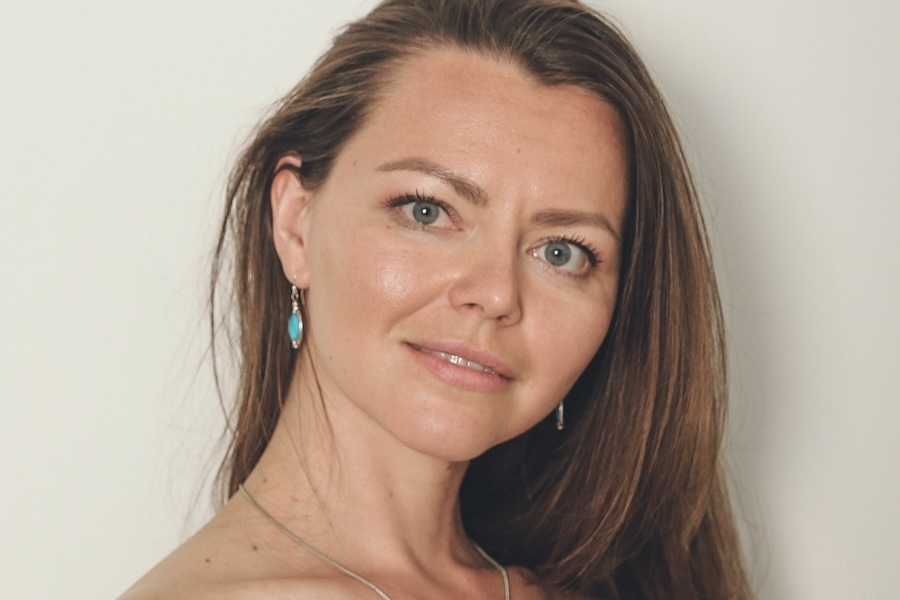
Yulia Saf built a travel business that reaches 400,000 readers a month without ever renting an office. The founder and CEO of Miss Tourist started it in 2014 as a personal blog, has since visited more than 70 countries, and now runs a fully remote team of 12 from Lisbon. Her story is a case study in turning a personal obsession into a diversified digital company — and in learning, slowly, how to stop doing everything herself.
Table of Contents
- Who Is Yulia Saf?
- The Corporate Detour: Economics, Auditing and Three Side Ventures
- Starting a Travel Blog in 2014, While Working Full Time
- The SEO and Pinterest Turning Point
- From Solo Blogger to a Remote Team of Twelve
- How Miss Tourist Makes Money
- Motherhood, Boundaries and the Power of Saying No
- Five Lessons Yulia Saf Shares With New Founders
- Frequently Asked Questions
- Conclusion
Who Is Yulia Saf?
Yulia Saf is the founder of Miss Tourist, a travel website that helps readers plan trips with destination guides, itineraries and money-saving advice. She has traveled full time for more than a decade and has visited over 70 countries, a figure confirmed in her 2024 interview with The Story Exchange. What separates her from the crowded field of travel creators is the operating model behind the content: a distributed team, several revenue streams, and a deliberate bias toward information that saves readers time and money rather than glossy inspiration alone.
She was born in Russia, in an industrial city where, as she puts it, people generally do not travel much. Her route out was not a trust fund but a series of small, repeatable moves: student exchange programs, a scholarship that took her to Rome for two years, Couchsurfing hosts, hitchhiking, and eventually a laptop-based business that could follow her anywhere.
The Corporate Detour: Economics, Auditing and Three Side Ventures
Before she became a full-time entrepreneur, Yulia Saf followed the cautious path: a degree and then a master's in economics, followed by a job in accounting and auditing. She has said she knew early on that she wanted to run her own business, but fear of uncertainty kept her in corporate work for a while. The detour was not wasted — it gave her the financial literacy that later made a content business legible to her in numbers rather than vibes.
Her first self-employment attempts were, by her own account, more about funding travel than building a company. She described three early ventures to Authority Magazine in 2024: selling onesies, helping students study abroad, and a chocolate fountain catering operation. Some worked, some did not. The lesson she drew was structural — she needed something location-independent, scalable and connected to what she actually loved.
Starting a Travel Blog in 2014, While Working Full Time
Saf founded Miss Tourist in 2014 as a side project, writing in the evenings and at weekends while holding a full-time job. Her motivation was not a business plan but repetition: friends kept asking how to plan trips, so she wrote the answers down in one place. According to DollarSprout's 2024 profile, the first revenue arrived around 2016 at roughly $500 per month — modest enough that most people would have quit. Instead she reinvested nearly all of it into better content, structure and marketing.
Timing helped. When she started, publishing from a laptop in Ljubljana or Bangkok was unusual enough to be a differentiator, and she built her workflow around remote operations before Slack and Zoom became default infrastructure. That early comfort with distributed work later became one of her most valuable management skills, because it let her hire for talent instead of geography.
The SEO and Pinterest Turning Point
The real inflection point came when Saf stopped writing like a diary keeper and started thinking like a search marketer. She has said she spent countless hours researching keywords, deliberately targeting long-tail queries with low competition and high intent rather than chasing broad, high-volume terms. DollarSprout reports that the shift lifted the site to a steady $5,000 per month within a couple of years.
Pinterest supplied the second engine. Saf found that visually striking pins with clear, actionable headlines outperformed everything else, and one campaign alone brought in 25 percent more traffic within a few months, according to the same 2024 profile. By 2023 the combination of search and social distribution had pushed monthly revenue to around $10,000. The sequence matters: search traffic built a durable asset, social traffic added spikes on top of it, and founders who depend on only one are permanently exposed to a single algorithm change.
From Solo Blogger to a Remote Team of Twelve
Miss Tourist now runs on a remote team of 12 employees, a structure Saf described to The Story Exchange in July 2024 while based in Portugal. Building it took far longer than it should have: she has said she waited four or five years to make her first hire, not for lack of money but for lack of confidence in delegating and managing people.
The mechanics are less glamorous than the travel photos suggest. Her team sets core hours when everyone is online regardless of time zone, uses chat for quick coordination and video calls when nuance matters, and invests in virtual team-building to hold a shared culture together. Her husband joined the business full time in 2024, giving the company a second permanent operator and giving Saf room to step back from daily execution.
How Miss Tourist Makes Money
Miss Tourist earns roughly $10,000 a month from a deliberately diversified mix rather than one dominant channel. Saf told The Story Exchange that she broadened the business beyond display advertising into affiliate marketing, sponsored content and digital products — a structure she wishes she had built years earlier. Travel is a volatile sector, and single-stream media businesses break when an advertiser pauses or a platform changes its payout terms.
Diversification also changes editorial incentives. Affiliate revenue rewards guides that genuinely help someone book the right hotel; sponsorship rewards audience trust. Saf has been explicit that she stopped chasing free press trips after roughly a year and a half of accepting them, because the obligations rarely aligned with what her readers needed. Choosing which money to refuse is part of the model, not a footnote to it.
Motherhood, Boundaries and the Power of Saying No
Saf became a mother in 2023, and she describes the change as a forced redesign of her operating system rather than a scheduling problem. In her 2024 interviews she explains that she had to delegate more, protect family time with clearer boundaries, and say no to opportunities that did not fit her goals. She also built structure into her personal week, including exercise three mornings a week at 7 a.m., as she told IdeaMensch in December 2024.
Her wider point is that balance for a founder is an architecture question, not a willpower question. Clear expectations, documented processes and trained deputies are what make unavailability possible. Without those systems, a founder who takes a morning off is simply a founder who works at night.
Five Lessons Yulia Saf Shares With New Founders
Saf has distilled her experience into rules she shares with other entrepreneurs, most fully in her October 2024 Authority Magazine interview. They are unglamorous, and they map directly onto mistakes she made herself.
1. Hire earlier than feels comfortable
She waited four to five years before her first hire and believes earlier hiring would have accelerated growth and built her leadership skills sooner. If the founder is the bottleneck on every task, the business can only grow as fast as one calendar.
2. Find mentors instead of figuring everything out alone
Saf says mentors could have shortened her learning curve by helping her focus on the right priorities. Isolation is expensive, especially in the first three years.
3. Invest before you feel ready
She describes hesitating to spend on content, contractors and tools even when the funds were there. Capital deployed into a working channel compounds; capital hoarded does not.
4. Set expectations and KPIs from the first teammate
Even with one contractor, success has to be defined and measured. Clear metrics remove the ambiguity that quietly poisons small remote teams.
5. Build a community of peers
Saf nearly quit early on for lack of anyone who understood the work. Her first travel blogging conference changed that, and she has stayed close to other founders and operators since. For more on this model, see our guide to women building businesses through remote work.
Frequently Asked Questions
Who is Yulia Saf?
Yulia Saf is the founder and CEO of Miss Tourist, a travel planning website she started in 2014. She is a full-time traveler who has visited more than 70 countries, runs a remote team of 12, and is based in Lisbon, Portugal.
What is Miss Tourist and what does it do?
Miss Tourist is a travel platform offering destination guides, itineraries, accommodation advice and time-saving tips. It reaches around 400,000 visitors a month and focuses on practical, first-hand information rather than generic inspiration.
How does Miss Tourist make money?
The business generates around $10,000 a month from display advertising, affiliate commissions on bookings, sponsored content and digital products. Saf diversified deliberately after learning that relying on a single revenue source was risky in a volatile industry.
How long did it take for the blog to become profitable?
First revenue appeared around 2016, roughly two years after launch, at about $500 a month. Focused SEO work lifted it to a steady $5,000 a month within a couple more years, and by 2023 it had reached around $10,000 a month.
How many countries has Yulia Saf visited?
More than 70 countries, according to her 2024 interviews, with some profiles putting the figure near 75. She has lived in Russia, the United States, Italy, France, Thailand, Romania and Indonesia.
What advice does she give to new travel entrepreneurs?
Build a resilient, diversified business model from the start, hire before you feel ready, find mentors, define KPIs for every teammate and stay close to a community of peers. She also warns that free press trips are not free — they cost time and editorial independence.
Conclusion
Yulia Saf's advantage was never a secret destination or a viral moment. It was patience applied to a model that could compound: a blog that became a search asset, a search asset that became a diversified media company, and a solo operator who learned to hand work to a team. The numbers — $500 a month in 2016, $5,000 after the SEO shift, roughly $10,000 a month by 2023, and 400,000 monthly readers by 2024 — describe a decade of iteration rather than a shortcut.
Her most useful contribution for women building location-independent companies may be the permission structure she describes: start while employed, reinvest early, refuse the wrong money, and treat delegation as a skill to practise rather than a trait you either have or lack. If you are mapping out your own content business, our guide to launching a travel blog that actually earns revenue covers the operational side, and our analysis of what Pinterest's growth teaches female founders explains the channel that helped Saf scale.
Sources
- The Story Exchange, "She's a Globetrotter Sharing Tips With Other Travelers" (July 24, 2024) — 400,000 monthly users, remote team of 12, 70+ countries, revenue diversification.
- DollarSprout, "How MissTourist Became a $10K a Month Travel Blog" (September 2024) — founding in 2014, first revenue near $500/month in 2016, $5,000/month after SEO focus, 25% traffic gain from a Pinterest campaign, $10,000/month by 2023.
- Authority Magazine, "Yulia Saf of Miss Tourist: Five Things I Wish Someone Told Me When I First Launched My Business" (October 2, 2024) — economics background, auditing career, earlier ventures, hiring and mentorship lessons.
- IdeaMensch, "Yulia Saf — Full-Time World Traveler & Entrepreneur" (December 31, 2024) — daily routine and exercise habit.
- PVM Magazine, "Breaking Barriers and Inspiring Wanderlust: An Interview with Yulia Saf" (September 24, 2024) — remote team practices, motherhood, husband joining the business in 2024.
- Miss Tourist, "About" page (misstourist.com) — biography, countries lived in, team structure.