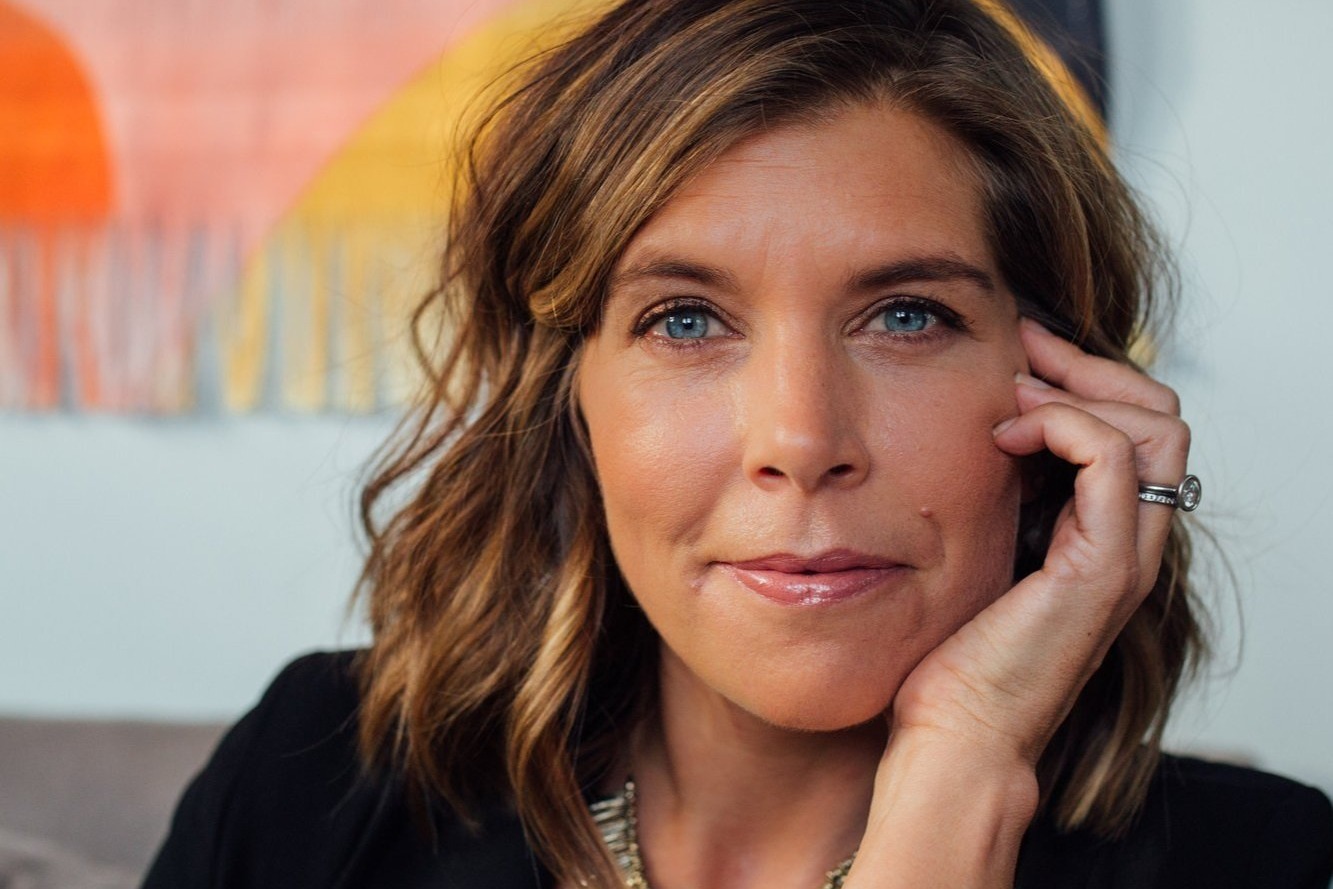
Liya Safina is a Belarus-born digital designer who now leads XR design work at Google while running her own Honolulu design consultancy, Safina & Shekhtman. Over the last decade she has designed products and strategies for Nike, Alibaba, Toyota's Woven City, the Bob Dylan Center and Google, and she has helped launch and transform more than 100 businesses along the way.
Her career is a case study in how an architect from Minsk became one of the quiet forces behind the interfaces people use on their phones, in stores and, increasingly, on their faces.
Table of Contents
- From Water Parks in Minsk to User Experience Design
- Breaking Into the U.S. Design Industry as an Immigrant
- Eight Years of Freelance Work for Global Brands
- Building Safina & Shekhtman in Honolulu
- Leading XR Design at Google
- The Smart Glasses Market She Designs For
- Lessons for Women Founders
- Frequently Asked Questions
- Conclusion
- Sources
From Water Parks in Minsk to User Experience Design
Liya Safina began her career in architecture, not software: she studied the discipline in Belarus and joined a large architectural company in Minsk, where her first projects included water parks, embassies and amphitheaters. That early responsibility with physical, million-dollar budgets shaped the way she later approached digital products — she describes herself as a risk taker who is comfortable moving fast and correcting course when a project goes off track.
After practicing architecture she moved into teaching and was invited to develop the methodology for a massive open online course (MOOC) on urban studies. The experience changed her direction: she realized that digital platforms could reach students anywhere and make education far more interactive and affordable than a lecture hall. That realization pulled her toward user experience and interaction design, the field she has worked in ever since. Today her own website credits her with helping launch and transform more than 100 businesses in the last decade, from e-commerce and smart cities to XR and AI.
Breaking Into the U.S. Design Industry as an Immigrant
Safina broke into the American design market after roughly eight months of near-misses, a period she has described in interviews: she made it to the sixth, seventh or eighth round of interviews only to lose the role to a U.S. candidate, with no feedback explaining why. As an immigrant she had no recognizable local names in her portfolio, so she fixed the problem deliberately — local courses at General Assembly, then a startup of her own, then an application to the San Francisco accelerator 500 Startups, which accepted her even though she could not afford rent in the city at the time.
Her story is far from unusual in the United States. According to a National Foundation for American Policy analysis published in June 2026, immigrants have founded or cofounded 59% of America's privately held billion-dollar startups — 455 of 775 companies — with a combined value of $5.0 trillion. Safina's path from an unknown résumé in New York to a portfolio full of blue-chip brands shows what that entrepreneurial energy looks like on a single career: diversify your efforts, take risks, network, and be patient enough to understand how a given industry actually works.
Eight Years of Freelance Work for Global Brands
Safina spent about eight years freelancing and consulting across the New York design scene, working with clients that included Nike, Alibaba, Bottega Veneta, LeBron James' Uninterrupted, Coinbase and the Bob Dylan Center. Before that she held staff roles at agencies such as Red Antler, ueno., Base Design, I&CO, Free Association, Fantasy and siberia, working on products ranging from autonomous vehicles and blockchain to e-commerce and certification programs.
The range is the point: her client list spans luxury fashion, sportswear, media, mobility and frontier technology, and her speaker biography counts the work as helping launch and transform 60+ businesses to more than $2 billion in revenue. She has also been credited as an advisor to brands such as ASICS and Hinge, and her work has been featured in The New York Times, CBS News, The Future Laboratory UK and Adobe Magazine. That breadth is what later allowed her to run her own consultancy instead of climbing a single agency ladder.
Building Safina & Shekhtman in Honolulu
Safina founded Safina & Shekhtman, Inc. in April 2020 and based it in Honolulu, Hawaii, where it operates as a small design consultancy with a stated team size of 2-10 employees. The company builds websites and apps, AR/VR interfaces, AI-powered products and frontier technology applications, and it works through agency partners including Free Association, I&Co, Base Design and DVTK.
The firm's stated mission is the thread running through all of Safina's work: to build digital products and experiences where technology serves human needs rather than just driving revenue models. Recent projects listed by the company include Google's AI glasses and AR/VR initiatives, Nike, Alibaba, Bottega Veneta and Toyota. In Hawaii she has also become a public voice on technology policy — she sat on the panel of PBS Hawaii's KĀKOU town hall on artificial intelligence in March 2024, introduced as head of digital design and innovation at Safina & Shekhtman. Running a lean, remote-friendly studio from the middle of the Pacific is itself a useful lesson: a small team can serve global clients without a New York or San Francisco address.
Leading XR Design at Google
Since January 2024 Safina has worked at Google as an XR design lead, bringing products such as Google Maps, YouTube, Photos, TV and Fitbit to smart glasses and headsets through the Android XR ecosystem. In that role she has helped define the spatial computing strategy for some of Google's most-used services, deciding how information should appear when the screen is no longer in your hand but in front of your eyes.
The timing is significant. Worldwide shipments of XR devices, including headsets and glasses, were forecast to grow 41.6% in 2025 to reach 14.5 million units, according to IDC's December 2025 tracker, while the smart glasses category alone grew 247.5% during the year as Meta's Ray-Bans and a wave of new AI glasses reached consumers. Designers who can translate familiar products into glasses and headsets are therefore working in one of the fastest-growing corners of consumer technology. Alongside her Google role she has served as an executive creative advisor at the commerce agency Verbal+Visual, a council member of the U.S.-Japan Council since 2025 and a board member of Immersive Tech Week.
The Smart Glasses Market She Designs For
The market Safina designs for is growing quickly and is still wide open: Grand View Research values the global smart glasses market at $2.5 billion in 2025, rising to a projected $14.4 billion by 2033 for a 24.2% compound annual growth rate, while IDC expects XR glasses shipments to grow at a 29.3% CAGR between 2025 and 2029.
Two design questions dominate that expansion. The first is what belongs on a lens at all, and the second is how controls disappear into the environment instead of floating as menus. Safina has argued publicly that diegetic UI — interfaces whose controls are part of the scene the user is looking at, a technique borrowed from video games — is one of the most exciting trends in AR and XR. Hardware concentration is the other reality of the category: IDC put Meta at 72.2% of global XR shipments in 2025, which means a handful of platforms set the constraints every designer works within.
Lessons for Women Founders
Women founders can take three concrete lessons from Safina's career: build a portfolio of recognizable proof, grow an audience organically, and keep your product thesis independent of funding cycles. She has been explicit about each of them — she advises focusing on the 10% of the audience most likely to recommend you, stacking small wins to build momentum, and sharing genuine passions publicly so that clients come to you instead of the other way round.
Those lessons matter more than ever in a funding landscape that has only marginally improved. Of the $289 billion invested globally in venture capital in 2024, just 2.3% ($6.7 billion) went to all-female founding teams, while women-founded companies represented 6.4% of deals, according to a 2025 report that last updated its data in December 2025; the average deal for a female-only team was $5.2 million against $11.7 million for a male-only team. Safina's route — an agency that funds itself, plus advisory and board roles, plus a corporate design leadership position — is a reminder that equity in a venture-backed company is not the only way to build wealth and influence in technology. For more on founders who walked away from conventional paths, see Natalia Bishop's story or Victoria Repa's work with BetterMe.
Frequently Asked Questions
Who is Liya Safina?
Liya Safina is a digital designer and innovation expert born and raised in Belarus, based in Hawaii. She founded the design consultancy Safina & Shekhtman in 2020 and has worked as an XR design lead at Google since January 2024.
What does Safina & Shekhtman do?
It is a Honolulu-based design consultancy that creates websites and apps, AR/VR interfaces, AI-powered innovations and frontier technology applications, with a mission of building products where technology serves human needs rather than just revenue models.
Which brands has Liya Safina worked with?
Her client list includes Nike, Alibaba, Toyota's Woven City, Bottega Veneta, Coinbase, the Bob Dylan Center, Equinox, The New York Times and Google, across e-commerce, mobility, culture and XR projects.
What is Liya Safina's role at Google?
She has been an XR design lead at Google since January 2024, working on bringing services such as Maps, YouTube, Photos, TV and Fitbit to smart glasses and headsets through the Android XR ecosystem.
How did Liya Safina start her career?
She started as an architect in Minsk, working on water parks, embassies and amphitheaters, then taught architecture and helped build a MOOC on urban studies before moving into user experience design in the United States.
What advice does Liya Safina give to new founders?
Her recurring advice is to start with your most motivated 10% of users, to cross-pollinate ideas from unrelated fields, to stack small early wins for momentum, and to be patient — she argues that most people fail from lack of patience rather than lack of work.
Conclusion
Liya Safina's career joins three things that are usually treated as separate: a classical architectural training, an immigrant's bootstrapping hustle, and frontier technology design at the largest platforms in the world. From water parks in Minsk to smart glasses at Google, the constant is her thesis that technology should serve human needs instead of revenue models — and that a small, well-run studio in Honolulu can work at the same table as New York and San Francisco agencies.
For women building businesses in design and technology, her path offers a practical template: prove your work with recognizable clients, keep your own studio financially independent, speak publicly about what you know, and stay patient long enough for the market to catch up with your ideas.
Sources
- IdeaMensch — Liya Safina interview (January 2025)
- Voyage LA — Inspiring Conversations with Liya Safina of Safina & Shekhtman (May 6, 2024)
- CanvasRebel — Meet Liya Safina (September 18, 2024)
- liyasafina.com — official website
- LinkedIn — Safina & Shekhtman, Inc. company profile (founded 2020, Honolulu)
- Eventible — Liya Safina speaker profile
- Chartwell Speakers — Liya Safina biography
- PBS Hawaii — KĀKOU: Hawaiʻi's Town Hall, Artificial Intelligence (March 16, 2024)
- IDC — AR/VR Headsets and Smart Glasses Go Mainstream (September 17, 2025)
- IDC — Global XR Shipments Rebound Behind Glasses-First Momentum (December 11, 2025)
- Grand View Research — Smart Glasses Market Size and Share Report, 2026-2033
- Women in VC & Startup Funding: Statistics & Trends (2025 report, updated December 18, 2025)
- National Foundation for American Policy — Immigrants Have Founded or Cofounded 59% of America's Billion-Dollar Companies (June 3, 2026)