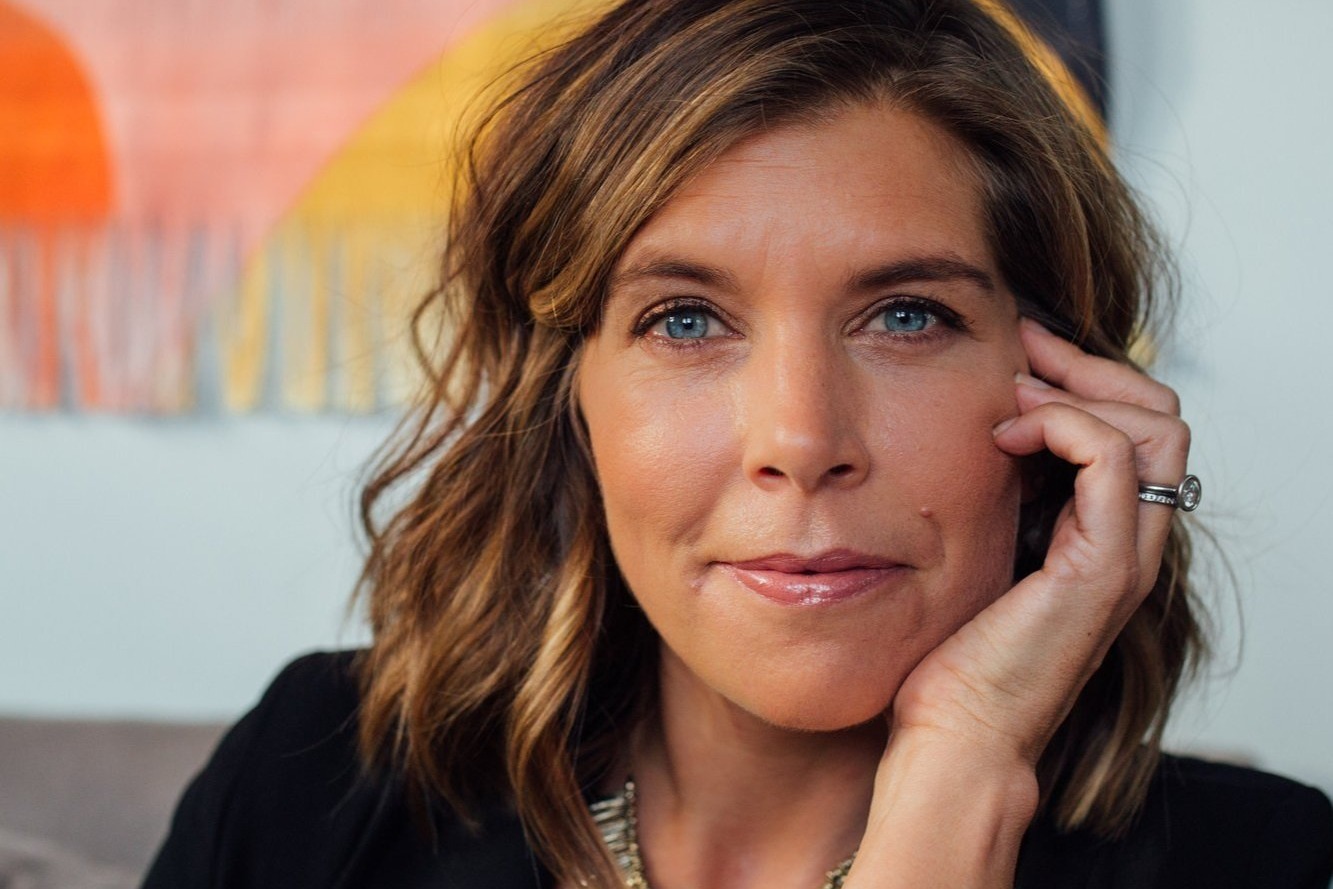
Dr. Lindsay Ruiz, EdD is the founder and CEO of human as usual, a scaling studio that helps hypergrowth companies grow without breaking the people who power them. After more than 20 years leading enterprise transformations inside Fortune 500 brands, she left corporate life in 2021 to build the venture she had first sketched in a pandemic manifesto. Her thesis is simple and increasingly hard to ignore: in an age of artificial intelligence, intact humanity is the unfair advantage.
Table of Contents
- From Venezuela to the Corporate Main Stage
- Why She Left Corporate in 2021
- Humanistic Generative Scaling Explained
- The Scaling Maturity Chasm
- Inside the Scaling Launchpad
- Lessons for Women Founders
- Frequently Asked Questions
- Conclusion
- Sources
From Venezuela to the Corporate Main Stage
Lindsay Ruiz was born and raised in Venezuela, where she fast-tracked her way through school and earned her undergraduate degree at 19. She later moved to the United States, learned a new language and rebuilt her professional identity from scratch. She holds a Bachelor of Arts in Communications (Marketing and Advertising) from I.U.T. Antonio Ricaurte in Venezuela, a Master of Science in Organization Development from American University, and a Doctorate in Organization Development and Change from the University of St. Thomas, where she researched institutional-level dysfunction in the workplace.
Over the next two decades she worked across six continents in advertising, healthcare and biotechnology, technology, retail, and consumer goods, holding senior transformation roles at Fortune 500 companies and major growth brands. As Global Director of Organizational Readiness at Hanesbrands, she revitalized a delayed SAP implementation and led a 140-plus-person team delivering business process management, user acceptance testing and end-user training for more than 250 Champion North America leaders. As Global Leader of Transformation and Change at RTI International, she drove adoption of Microsoft Dynamics CRM across more than 2,000 users, uniting the C-suite, senior leadership and system integrators around a single rollout.
That track record matters because the odds she was fighting are steep: only 34.7 percent of U.S. private-sector businesses survive to their tenth year, according to the U.S. Bureau of Labor Statistics (2024). Ruiz spent her corporate career improving those odds from the inside.
Why She Left Corporate in 2021
The short answer: she wanted to intervene earlier. Ruiz has said she kept seeing problems inside her organizations that needed a larger-scale, earlier-stage solution, and that meaningful, lasting change had to be designed before bad habits hardened. In February 2021 she founded human as usual to work with founders, venture capitalists and investors who wanted to scale with integrity rather than at all costs.
The timing was deliberate. She first wrote the name "human as usual" in 2020, in a manifesto drafted at the height of the COVID-19 pandemic, while reflecting on what business should become. When she revisited those notes, the name was already there — a rebuke of "business as usual," the habit of chasing revenue while ignoring the human cost of growth.
The market she entered is unforgiving. CB Insights analyzed 431 venture-backed companies that publicly shut down since 2023 and found that 70 percent ran out of capital — but the firm is explicit that running dry is usually the final symptom, not the root problem: 43 percent cited poor product-market fit, 29 percent bad timing or macro conditions, and 19 percent unsustainable unit economics (CB Insights, 2026). Only 5 percent pointed to operational or leadership challenges, yet those are precisely the failures that show up later as stalled execution, attrition and cultural erosion.
Humanistic Generative Scaling Explained
Human as usual sells a proprietary product suite called Humanistic Generative Scaling, which combines predictive analytics and behavioral sciences to surface human risks during hypergrowth before they turn into attrition, stalled execution or ethical compromise. It draws on Ruiz's doctoral training in organization development, complexity sciences and generative change, plus certifications in Prosci ADKAR change management, People-Centre Implementation, and business coaching from NC State University.
The approach is grounded in a documented failure pattern. Startup Genome's study of more than 3,200 high-growth technology startups found that premature scaling was the primary cause of failure, present in 70 percent of the startups in the dataset, and that 93 percent of companies that scaled prematurely never broke 100,000 dollars in monthly revenue. Companies that scaled properly grew about 20 times faster than those that scaled prematurely (Startup Genome, 2011). Put simply: growth itself is not the risk — growth the organization cannot absorb is.
The Scaling Maturity Chasm
Ruiz's central diagnostic is the Scaling Maturity Chasm: the hidden breakdown between funder, founder and team where execution stalls, not from lack of ambition or talent, but from early-stage playbooks that collapse under scaling complexity. Her firm argues that founders stretch beyond capacity, teams run on duct tape and urgency, and investors watch dashboards that miss cultural erosion until it is too late.
Her firm's own analysis claims that 70 percent of post-Series A failures are not caused by product-market fit at all, but by human infrastructure that never evolved, and that 65 percent of scaling challenges originate in internal human tensions (human as usual; VoyageRaleigh, 2025). Alongside it sits ROI² — Return on Integrity × Investment — a model that asks whether capital is compounding with operational integrity rather than against it.
Inside the Scaling Launchpad
The flagship engagement is The Scaling Launchpad™, a sprint-based, milestone-driven program that runs to Day 180 with a 30-day ramp-down. Ruiz embeds as an interim Scaling Transformation Officer: at Day 90 the trajectory is locked in, at Day 180 execution becomes advantage, and by Day 210 the teams have developed self-reliance so the outside help can leave. Select interim assignments have included VP of Transformation for Reiter Affiliated Companies, an ag-tech operator, where she recovered a stalled enterprise-wide transformation under the Office of the CEO and delivered a 2.5-year roadmap covering ERP migration, data security and operating-model integration across five business functions.
That model exists because money alone does not fix scaling. In CB Insights' 2026 shutdown analysis, the median failing company had already raised 11 million dollars before it died — a reminder that capital amplifies whatever operating system a company already runs.
Lessons for Women Founders
First, treat human infrastructure as a line item, not an afterthought. Ruiz's career shows that transformation programs fail on adoption, not on software — a lesson echoed in founder research where team problems ranked as the second most cited cause of failure at 18 percent (Failory survey of failed founders, 2024).
Second, build credibility before you build a brand. Ruiz arrived with two decades of measurable results, a doctorate, and a LinkedIn Top Voice recognition, then used that base to launch — including speaking at Dreamforce 2019 and winning the 2022 "Women Making a Difference in Enablement" award. She still mentors emerging leaders through Upnotch and Leadership Triangle.
Third, name what you stand for early. "Human as usual" was written down in 2020 and only became a company in 2021; the manifesto came first, the LLC second. That ordering shows in the brand, which now publishes a Substack called "got human?", a podcast pilot titled "human is the unfair advantage," and a forthcoming book, The Case for Scaling Humanity: Human Literacy in a World of AI, Power & Accelerating Systems, scheduled for release in the fall of 2026. For founders weighing purpose against pace, her story is a template — and her peers' stories, from Ellie Hearne's culture-first consultancy to Amy J. Wilson's Culture Shift Studio, trace the same terrain from different angles.
Frequently Asked Questions
Who is Dr. Lindsay Ruiz?
Dr. Lindsay Ruiz, EdD is the founder and CEO of human as usual, a scaling studio for hypergrowth companies. She is a Venezuelan-born organizational change leader with more than 20 years of Fortune 500 transformation experience across six continents.
What does human as usual do?
human as usual is a scaling studio and insulator embedded in growth-stage companies. It helps founders, VCs and teams scale through hypergrowth without losing their values, their people or their strategic coherence, typically through interim transformation leadership and its Scaling Launchpad program.
What is Humanistic Generative Scaling?
Humanistic Generative Scaling is the firm's proprietary product suite. It blends predictive analytics and behavioral sciences to identify human risks during rapid growth — such as burnout, attrition and cultural erosion — and turns them into an actionable scaling blueprint.
How long does The Scaling Launchpad take?
The Scaling Launchpad is a milestone-based sprint that runs to Day 180 with a 30-day ramp-down. Milestones land at Day 90 (trajectory locked in), Day 180 (execution becomes advantage) and Day 210 (teams develop self-reliance).
What is the Scaling Maturity Chasm?
The Scaling Maturity Chasm is the name Ruiz gives to the hidden gap between funder, founder and team where execution stalls during growth. It is caused by early-stage playbooks that no longer fit the complexity of a larger organization, not by a lack of talent or ambition.
Has Dr. Ruiz written a book?
Yes. Her book, The Case for Scaling Humanity: Human Literacy in a World of AI, Power & Accelerating Systems, is scheduled for release in the fall of 2026. She also writes the "got human?" Substack and hosts the podcast pilot "human is the unfair advantage."
Conclusion
Dr. Lindsay Ruiz spent twenty years proving that large organizations change only when people do, then bet her own career on that belief. human as usual turns a corporate transformation playbook into a founder-friendly service: diagnose the human fault lines, lock in a trajectory by Day 90, and leave before dependence sets in. For women founders raising and scaling in a market where most failures are diagnosed too late, her message is a corrective — grow the company, but grow the humans with it.
Sources
- human as usual — About page (founder background, credentials, methodology): https://humanasusual.com/about — consulted 2026
- VoyageRaleigh — "Inspiring Conversations with Dr. Lindsay Ruiz of human as usual", April 14, 2025: https://voyageraleigh.com/interview/inspiring-conversations-with-dr-lindsay-ruiz-of-human-as-usual
- IdeaMensch — "Dr. Lindsay Ruiz", December 31, 2024: https://ideamensch.com/lindsay-ruiz
- CanvasRebel — "Meet Lindsay Ruiz", October 17, 2024: https://canvasrebel.com/meet-lindsay-ruiz
- LinkedIn — Dr. Lindsay Ruiz profile and human as usual company page (roles, Scaling Launchpad milestones, ROI²), 2026
- CB Insights — "The top 9 reasons startups fail", March 5, 2026: https://www.cbinsights.com/research/report/startup-failure-reasons-top
- Startup Genome — "Premature Scaling: A Deep Dive" (dataset of 3,200+ high-growth tech startups): https://startupgenome.com/insights/premature-scaling-a-deep-dive
- Stripe — "Startup Statistics (2026)", citing U.S. Bureau of Labor Statistics survival data (2024): https://stripe.com/resources/more/startup-statistics-you-should-know