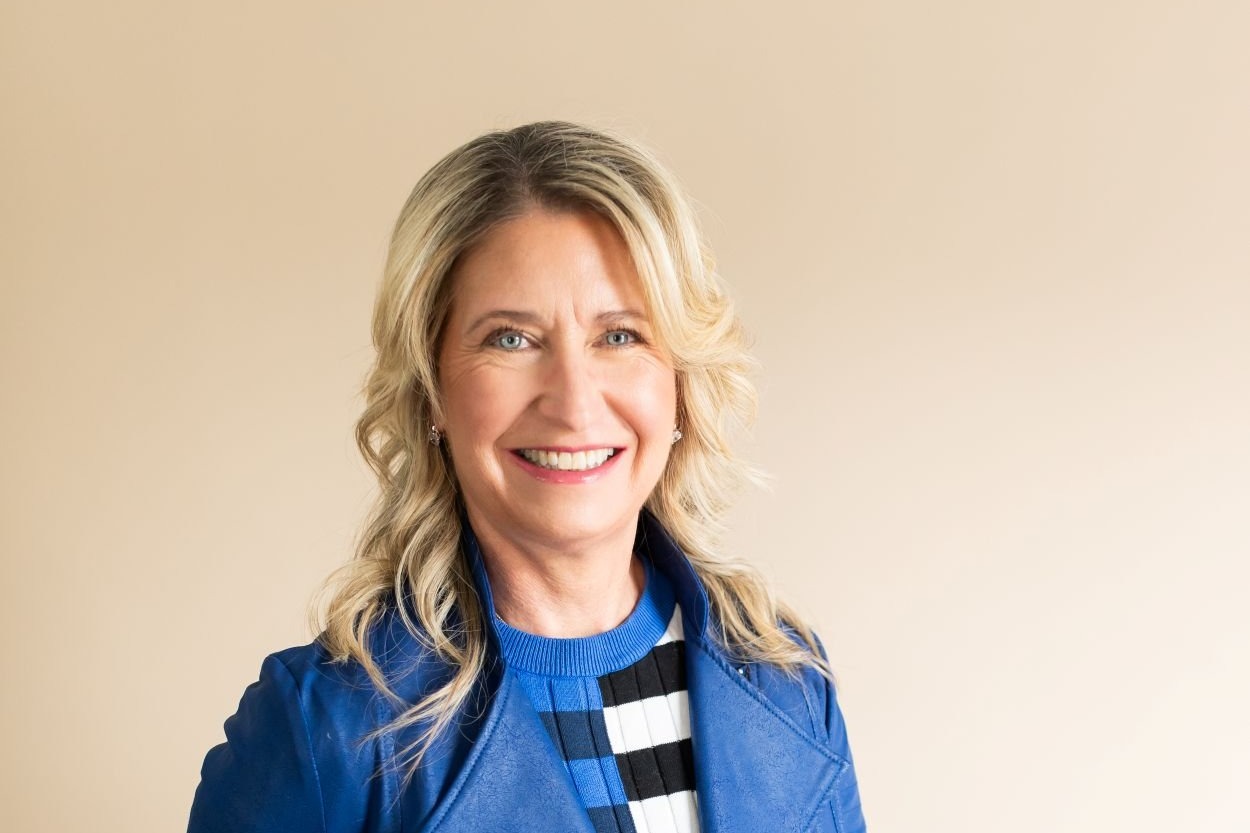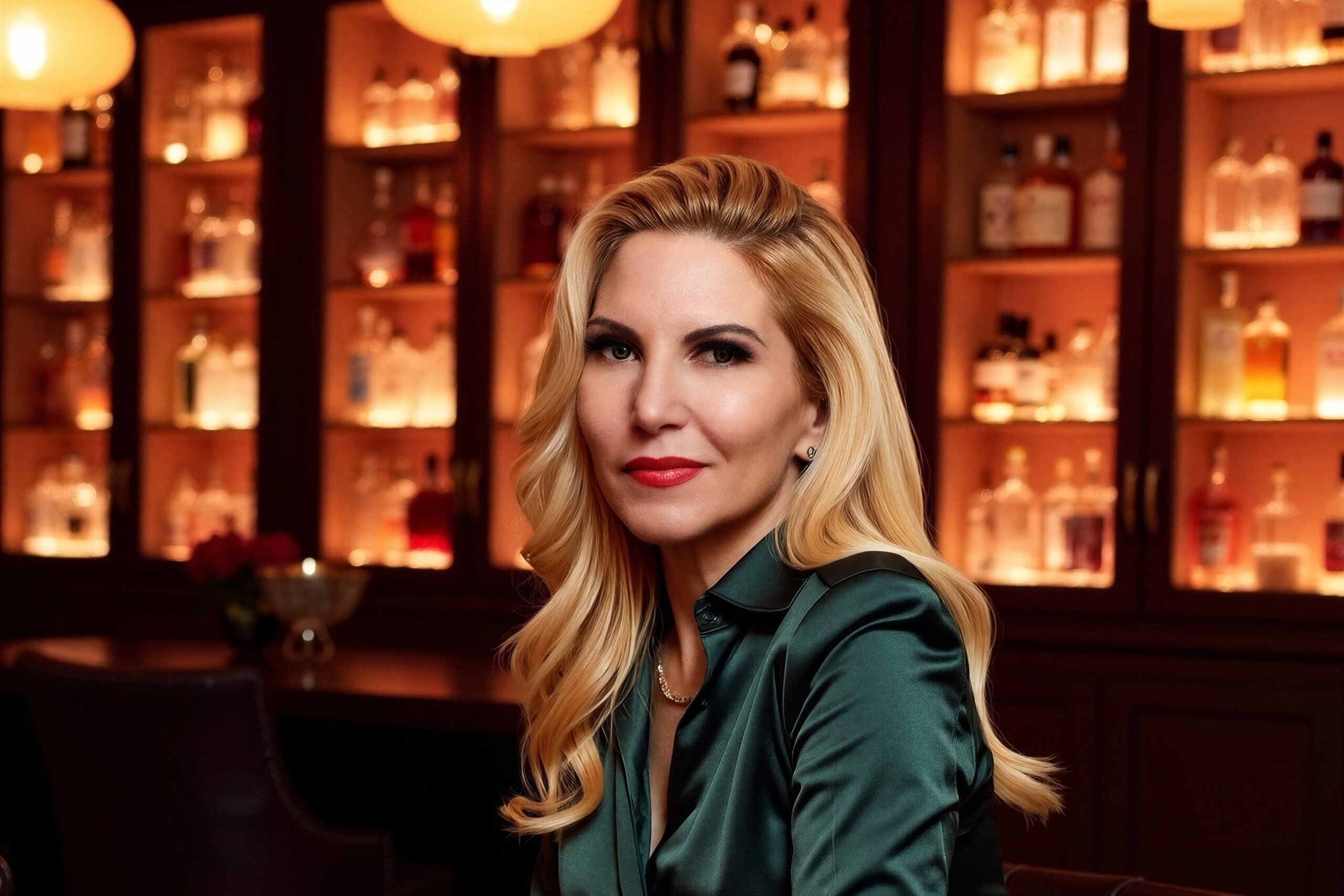
Dr. Natanya Wachtel has spent more than two decades at the intersection of behavioral science, healthcare marketing and media — and she has rebuilt both her companies and her life more than once. She is the founder of New Solutions Network (NSN), a multi-division collective spanning enterprise strategy, wellness, media and public-benefit work, and the co-founder of evrmore, an empathy-AI mental wellness app built for Generation Z. Along the way she has gone from therapist to pharma marketer, from young widow to survivor of multiple near-death health crises, and from a single consulting firm created in 2008 to a network of companies that now partners with global brands, nonprofits and international institutions. Her route echoes other founders profiled on this magazine, from Danielle Sabrina, who moved from high school dropout to Inc. 5000 PR agency founder, to Mathangi Swaminathan, the Harvard-trained founder turning survivors into leaders.
Table of Contents
- Who Is Dr. Natanya Wachtel?
- From Therapy to Behavioral Science Marketing
- Building New Solutions Network
- Reinvention After Personal Crisis
- Evrmore and Empathy AI
- Mentorship, Boards and Advocacy
- Leadership Lessons for Women Founders
- What's Next for Natanya Wachtel
- Frequently Asked Questions
Who Is Dr. Natanya Wachtel?
Dr. Natanya Wachtel is a behavioral psychologist, founder and chief strategy officer of New Solutions Network, a consulting and media collective based in the New York metropolitan area. She holds a PhD in behavioral psychology from Michigan State University alongside her undergraduate degree in psychology, and she is a board-certified health and wellness coach as well as a neural-linguistic programming master practitioner. In practical terms, she helps companies understand why people say one thing and do another — then build products, brands and programs that close that gap.
Today she describes herself without much patience for labels: "People meet me and try to file me under one thing — unofficial therapist, behavioral-science-powered marketer, media person — and I've mostly stopped correcting them." She lives in a wooded suburb outside Manhattan, raising five children while running a network of companies, and she hosts and contributes to several shows focused on mental wellness and transformation, including The Natanya Experience, Psych+Hip Hop and #GameMindset.
From Therapy to Behavioral Science Marketing
Her career started on the clinical side: Wachtel trained as a therapist and worked with families and executives before moving into health education and marketing strategy. The pivot happened because she kept hitting the same wall — clinical work touches one person at a time, while communication and technology can reach thousands. She took that conviction into the pharmaceutical and biotech industry, where she spent more than two decades working on major healthcare brands and helped launch some of the earliest personalized CRM programs that embedded behavioral psychology into pharmaceutical marketing.
That experience gave her a rare hybrid profile: clinical credibility on one side, commercial accountability on the other. Agency and podcast profiles of her work list clients and collaborations including Novartis, Johnson & Johnson, Pfizer, GSK and a series of wellness and health-technology firms, alongside speaking engagements and press features in outlets such as Forbes, Advertising Age and MM&M. It also gave her a thesis she has repeated ever since: interest and change are not the same thing.
Building New Solutions Network
Wachtel founded the company in 2008 as New Solutions Factory, a consulting consortium of behavioral science marketing and healthcare analytics experts. The premise was stubborn and simple: companies were burning millions on products, drugs and programs built for how people were supposed to behave, while real people behaved differently — and the money was lost in that gap. The firm grew steadily, adding HealthEd Princeton, a health education and health-gaming experience design practice, and Insights by Demand, a customer-centric research and real-world-data analytics consultancy.
In 2021 she consolidated those properties into New Solutions Network, a collective of companies organised around enterprise, wellness, media and advocacy. The structure matters to her: NSN is built as a public-benefit company, which means the ethics are written into the legal bones rather than into a mission statement. The business model is deliberate — premium work for clients who can pay funds the same tools for people who cannot. In her words, "the same tools we sell to people who can pay go free to the people who can't, funded by the premium work."
She considers leaving the corporate world to build NSN the biggest risk of her career. The decision took months of planning, and the network that followed — spanning consulting, publishing, shows and live experiences — was assembled gradually rather than launched in a single leap.
Reinvention After Personal Crisis
Any honest profile of Wachtel has to include the part that reshaped everything else. She was widowed young and raised her child alone while running a company. She has since survived multiple near-death experiences, including a clinical death in which she was flatlined and resuscitated, more than one traumatic brain injury, and paralysis that came with a diagnosis that she might never walk again — after which she relearned to walk from zero. At her heaviest she was close to 300 pounds, and the most recent of these episodes happened in front of thousands of people at a wellness event.
She is unusually direct about the professional consequence: "For years, I treated rest like a character flaw and productivity like proof I deserved to exist, so I'd fight my way back online and immediately overload the same system that had just failed." The lesson she draws is a business lesson as much as a health one — a company built by someone running on fumes just becomes a more expensive version of the fumes. That conviction is what pushed NSN away from a traditional agency model toward a collective with boundaries about which clients and which tactics it will accept: no trauma as content, no performance of pain, no extracting from the people who can least afford it.
Evrmore and Empathy AI
Wachtel's technology bet is evrmore, a Gen-Z-focused MedTech start-up she co-founded with former colleagues during the 2020 Covid-19 quarantine. The product is a voice and mood journal app built around what the company calls Empathy AI — machine learning informed by humanistic psychology, designed to build emotional resilience, self-regulation and narrative identity rather than to maximise screen time. The positioning is deliberately anti-extractive: the app does not mine user data for advertising and offers a free tier alongside subscriptions.
The clinical ambition is serious for a consumer app. Evrmore's health pages describe it as a digital therapeutic designed to support adolescents and young adults aged 15 to 25, positioned as an adjunct tool that can improve patient relationships and engagement for clinicians. Wachtel has argued publicly that recognising a mental health problem is only the start — addressing it with outdated tools will not deliver real solutions — and that protective technology, built to defend the mind from algorithm-driven feeds, is the logical next category in an AI-saturated market.
Mentorship, Boards and Advocacy
The public-benefit logic extends well beyond her companies. Wachtel has served as board chair of Women Who Create, a mentorship and scholarship program for women of color, a role she has held since 2021, and as a founding board member of Inspiring My Generation, a nonprofit focused on suicide prevention and mental wellness. She has also worked with the Chopra Foundation on integrating holistic and functional medicine into mainstream Western science, and she mentors across programs such as Girls Inc. and Build.org.
Her advocacy has a consistent spine: access. Across interviews she returns to three causes NSN supports — access to nutrition, access to healthcare and access to education — and to the idea that the same evidence-based tools used by Fortune 500 companies and professional athletes should be available in schools and communities "the industry wrote off." That framing also shapes her media work: shows like Psych+Hip Hop and Behind the Service were created because team members identified a gap — mental health in minority communities and the hidden toll on hospitality workers — and were given room to build the answer.
Leadership Lessons for Women Founders
Three lessons run through Wachtel's advice to founders. First, regulation precedes strategy: "The business will only ever be as regulated as you are. If you build from panic, you'll make panicked decisions and call them strategy." Her working rule is blunt — if saying yes would betray her own nervous system, the answer is no. Second, rest is infrastructure, not indulgence. As a self-described recovering workaholic, she time-boxes her day in 15-minute increments but protects breaks, family time and movement — yoga, Pilates, dance, rollerskating and long walks — as part of the operating system rather than a reward for surviving it.
Third, purpose is commercially rational, not charitable. In her own interviews she cites industry research to that effect: 90% of consumers prefer brands that demonstrate clear values, according to a Cone/Porter Novelli study, and employees in purpose-driven organisations report around 30% higher engagement, according to Deloitte. For founders building in wellness, health or consumer products, her positioning is a useful template: define the values legally, then let the premium side of the business fund the mission side.
What's Next for Natanya Wachtel
Wachtel is currently in an eclectic phase of her career, transitioning from a corporate-heavy consulting world toward a media platform centred on health, wellness and transformation — a business she has described as the experiential equivalent of a lifestyle empire, but grounded in radical self-love and mental wellness. The direction she describes for NSN is "reach with a conscience" rather than scale for its own sake: the same tools running free in schools, carried by grants, UN work and sites being established from Kenya to the Dominican Republic, plus peer-reviewed research proving that investing in people makes them healthier and helps them live longer.
She is deliberately unhurried about the timeline. "Every time I've drawn a neat five-year plan, life has laughed and redrawn it for me," she says. The goal she holds instead is durable: to build something that outlasts her and keeps working in rooms she will never walk into. Given that she has already rebuilt her companies, her health and her definition of success more than once, that is a credible bet rather than a wish.
Frequently Asked Questions
Who is Dr. Natanya Wachtel?
Dr. Natanya Wachtel is a behavioral psychologist and the founder and chief strategy officer of New Solutions Network, a multi-division collective covering enterprise strategy, wellness, media and public-benefit work. She is also the co-founder of evrmore, an empathy-AI voice and mood journal app for Gen Z, and the board chair of Women Who Create.
What does New Solutions Network do?
New Solutions Network is a company made of companies: enterprise consulting, wellness, media and a public-benefit arm, all running on behavioral science. It started in 2008 as New Solutions Factory and expanded in 2021 to include HealthEd Princeton and Insights by Demand, working with health, wellness and life-science brands on positioning, commercialization, CRM and customer research.
What is evrmore?
Evrmore is a MedTech start-up co-founded by Wachtel in 2020-2021. It is a voice and mood journal app powered by what the company calls Empathy AI, built to develop emotional resilience and self-regulation in users aged roughly 15 to 25, with a free tier and no advertising-driven data model.
What challenges has she overcome?
Wachtel was widowed young, has survived clinical death, paralysis and more than one traumatic brain injury, and relearned to walk after being told she might never walk again. She has spoken openly about these experiences and about how they changed her approach to rest, delegation and the pace at which she builds companies.
What advice does she give to women founders?
Her core advice is that a business can never be more regulated than its founder: decisions made from panic are usually panic dressed as strategy. She recommends time-boxing, protecting rest and movement as part of the operating model, delegating early, and choosing mission-aligned clients so that purpose and profit reinforce each other.
Where can I follow her work?
Her shows — The Natanya Experience, Psych+Hip Hop and #GameMindset — are available on YouTube and Spotify, she writes for outlets including Fast Company and Psychology Today, and her company ecosystem is published at newsolutionsnetwork.com. She has said publicly that some of her best collaborations started with a stranger's message.
Conclusion
Dr. Natanya Wachtel's career is a case study in what happens when clinical training, commercial discipline and hard personal experience are combined in one founder. She turned a single behavioral science consultancy started in 2008 into a public-benefit network, took the same principles into an AI product for young people, and used her own crises — widowhood, illness, paralysis — to redesign how her companies work instead of treating them as setbacks to hide. For women entrepreneurs, the takeaway is not the reinvention itself but the structure behind it: earn the risk with client work, write the values into the legal structure, protect the nervous system that runs the business, and build for the rooms you will never enter.
Sources
- Ideamensch — Dr. Natanya Wachtel, Founder of the New Solutions Network (interview, business statistics cited by the interviewee)
- Business Stories Magazine — Natanya Wachtel, founder and chief strategy officer of New Solutions Network (interview)
- New Solutions Network — official company website
- 24-7 Press Release — Natanya Wachtel, PhD Used Her Expertise to Create New Solutions Network and evrmore.io
- Evrmore — official website (Empathy AI voice and mood journal)
- Natanya Wachtel — official personal website
- World's Leaders — Dr. Natanya Wachtel profile