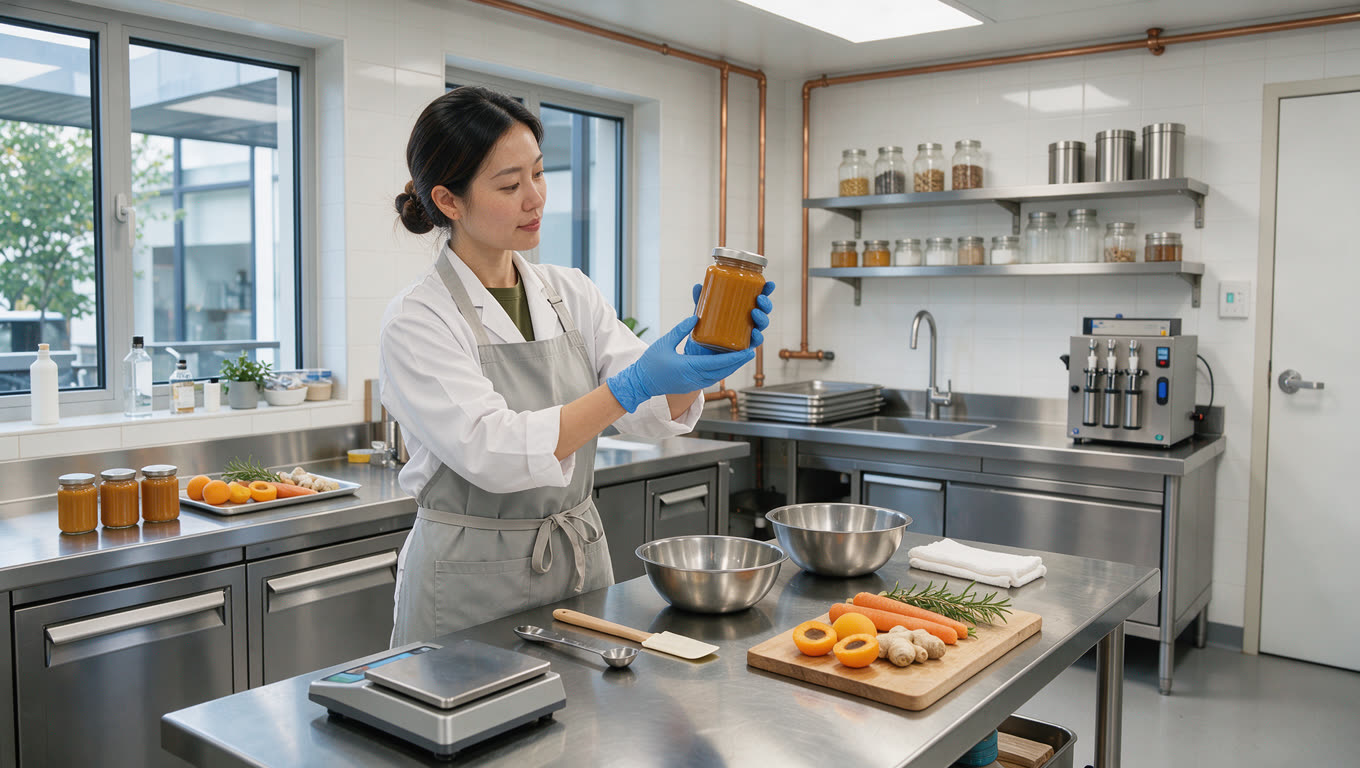
The food and beverage industry is being rebuilt by founders who treat old categories as raw material: soda without the sugar, snacks safe for allergic kids, cereal grown on certified-organic farms, ingredients rescued from byproducts, and pantry staples redesigned for a new generation. This article profiles five innovators doing exactly that.
What unites them is not a product but a method: each spotted a category that had stopped serving people, and rebuilt it from the formula up. Their stories double as a practical map for founders wondering where the next openings in food and drink will come from.
Table of Contents
- Why the Industry Is Being Reinvented
- Denise Woodard and the Allergen-Free Category
- Allison Ellsworth and the Prebiotic Soda Boom
- Ratana Stephens and Organic at Scale
- Claire Schlemme and the Upcycling Model
- Becca Millstein and the Legacy Category Reset
- What These Five Innovators Have in Common
- Frequently Asked Questions
- Conclusion
- Sources
Why the Industry Is Being Reinvented
Food and drink innovation today is driven by three consumer demands at once: healthier formulations, sustainable supply chains, and brands that feel personal. Legacy incumbents struggle to satisfy all three, which is precisely why the category openings exist.
Women founders are disproportionately filling them. Ecosystem support is following: in 2025, programs such as the Capital and Catalyst Grant offered $40,000 plus mentorship exclusively to women-founded food and beverage businesses, part of a widening network of accelerators, grants and buyers looking for exactly the kind of ventures profiled below.
Denise Woodard and the Allergen-Free Category
Denise Woodard built Partake Foods after her daughter was diagnosed with multiple food allergies in 2016 — a personal problem that turned out to affect millions of families. The company makes snacks free from the major allergens, without asking families to accept a compromise on taste.
The lesson for founders is the origin story itself: Woodard did not enter food because the market looked attractive on a spreadsheet. She entered because she had lived the problem, which gave her instant credibility with the exact customers she needed to reach first — and an authenticity that expensive marketing cannot buy.
Allison Ellsworth and the Prebiotic Soda Boom
Allison Ellsworth solved a taste problem inside a wellness trend: she appreciated the health benefits of apple cider vinegar but disliked drinking it, so she and her team developed a prebiotic soda that made the format genuinely enjoyable. As founder and CEO of poppi, she turned that formulation into one of the defining beverage stories of its category.
It is a repeatable pattern: take an ingredient people know is good for them, remove the reason they avoid it, and package the result for everyday occasions. Category growth follows convenience and taste long before it follows nutrition claims.
Ratana Stephens and Organic at Scale
Ratana Stephens, CEO and co-founder of Nature's Path, grew the company into North America's largest independent certified organic breakfast and snack food brand — proof that sustainability and scale are not mutually exclusive in a category famous for cutting corners. Independence is part of the achievement: the brand stayed founder-controlled while competing with multinationals.
Her path shows the long game available in food: organic certification, supply-chain relationships and retail trust compound over decades. For founders of agricultural ventures, our profiles of women farmers breaking new ground trace the same upstream commitment.
Claire Schlemme and the Upcycling Model
Claire Schlemme co-founded Renewal Mill, a San Francisco company that upcycles food byproducts — starting with okara, the soy pulp left over from making soy milk — into high-quality ingredients that keep nutrition in the supply chain. The model treats waste as inventory, which changes both the economics and the environmental footprint of a food business.
Upcycling is emerging as a distinct category rather than a niche: founders are applying it to fruit chips, brewing byproducts and bakery seconds alike. Schlemme's version works because it sells ingredients, not virtue — the products have to perform in real recipes to displace conventional inputs.
Becca Millstein and the Legacy Category Reset
Becca Millstein, co-founder and CEO of Fishwife, is credited with helping make canned fish desirable again — a category that had drifted into pantry neglect for decades. The company rebuilt the format around quality sourcing and design-forward branding, targeting people who never thought of tinned fish as a modern meal.
Legacy categories are underrated territory for innovators: incumbents rarely invest in them, shelf space is available, and the product fundamentals — shelf stability, nutrition, affordability — are already strong. Reaching those buyers through new channels has its own playbook, explored in women shaping the subscription box industry.
What These Five Innovators Have in Common
All five rebuilt a category rather than adding a flavour to an existing one, and all started from a specific person's unmet need — an allergic child, an undrinkable health tonic, a byproduct nobody cooked with. Specificity is their shared advantage: it sharpens the product, the message and the first hundred customers.
The second shared trait is patience with fundamentals: formulas, certifications, sourcing and retail relationships are unglamorous work, but they are what allows a food brand to scale without collapsing. More broadly, their trajectories echo the wider shift documented in innovations shaping the next wave of women-led startups.
Frequently Asked Questions
Who are the five innovators profiled here?
Denise Woodard (Partake Foods), Allison Ellsworth (poppi), Ratana Stephens (Nature's Path), Claire Schlemme (Renewal Mill) and Becca Millstein (Fishwife) — each rebuilding a different part of the food and beverage industry.
What is food upcycling?
Turning byproducts of food production into new sellable ingredients. Renewal Mill, for example, upcycles okara — the soy pulp left from soy milk production — into flours and ingredients rather than letting that nutrition leave the supply chain.
Why are legacy categories attractive for food entrepreneurs?
Because incumbents rarely invest in them. Shelf space is often available and the product fundamentals — shelf stability, nutrition, affordability — are already proven; the innovation is in branding, sourcing and format.
How did Partake Foods start?
Denise Woodard created the brand in 2016 after her daughter was diagnosed with multiple food allergies, building allergen-free snacks that did not force families to trade away taste.
What funding support exists for women in food and beverage?
Growing steadily: grants such as the 2025 Capital and Catalyst Grant ($40,000 plus mentorship for women-founded food and beverage businesses) sit alongside accelerators and category-specific investor networks.
What do these founders have in common?
Each rebuilt a category from a specific unmet need rather than adding a variation to an existing product — and each invested heavily in fundamentals like formulations, sourcing and certifications before scaling.
Conclusion
The innovators profiled here are not disrupting food from the outside — they are rebuilding it formula by formula, from allergen-free snacks to upcycled ingredients. Their common thread is a specific problem, a category incumbents neglected, and the patience to get the fundamentals right.
For aspiring founders, the message is practical: the next opening in food and drink will not be invented in a boardroom. It will come from someone who lived a problem the industry never solved.
Sources
- Crew Marketing Partners (2024). Female Founders & CEOs in the Food and Beverage Industry — profiles of Denise Woodard, Allison Ellsworth, Ratana Stephens, Becca Millstein and others
- Renewal Mill — Our Story: upcycling byproducts such as okara into ingredients
- Senior Executive (2025). Top Women Founders in DTC to Watch in 2025 — roles and companies including Claire Schlemme (Renewal Mill), Angela Vranich (Little Spoon) and Nicki Violetti (Drink LMNT)
- VEGPRENEUR (2025). $40,000 Capital and Catalyst Grant for women-led food and beverage businesses