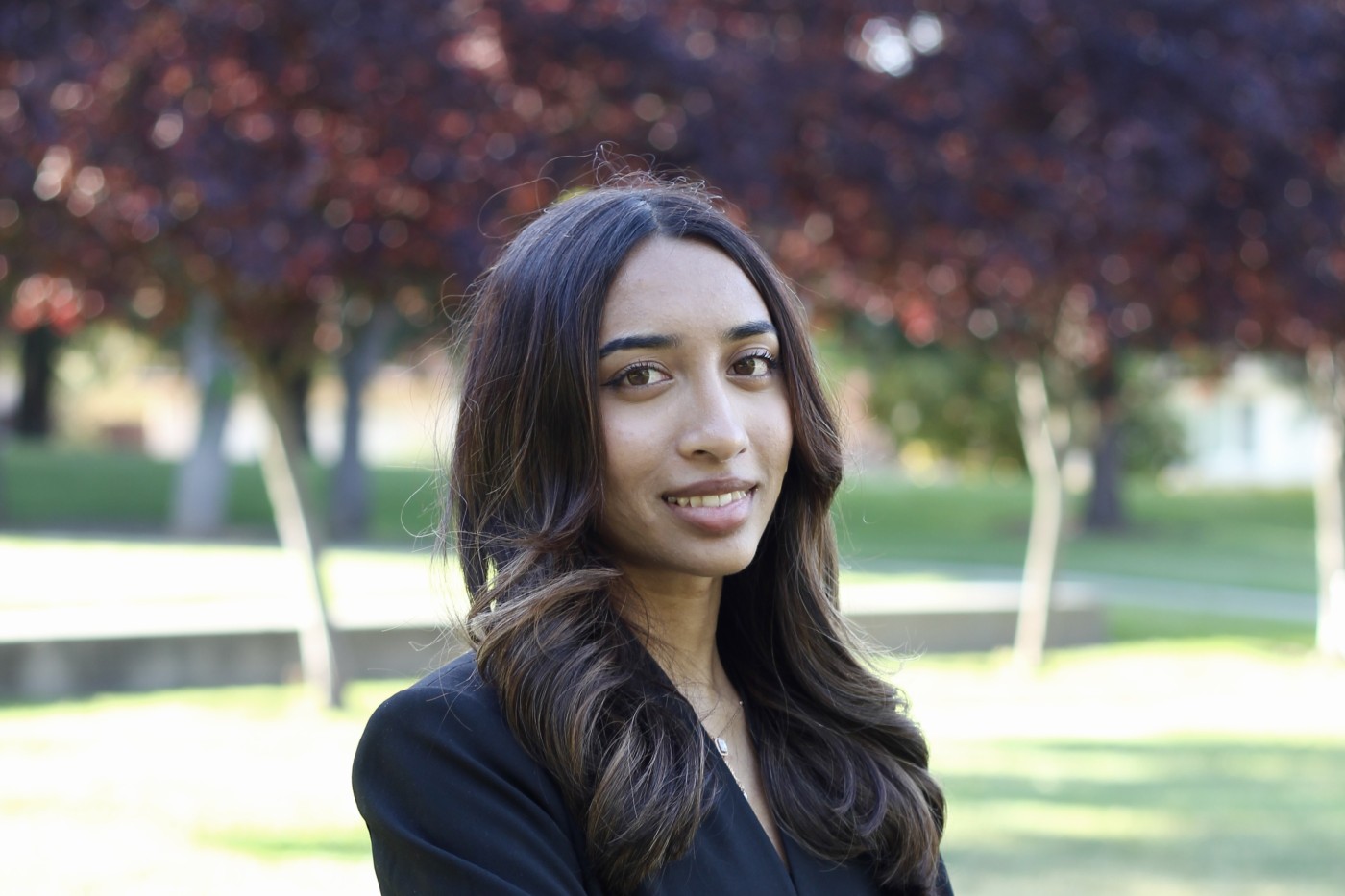
Sarah Shelke was 15 years old when she founded a mental health nonprofit. Four years later, Mind4Youth reports 29,380 volunteers in 71 countries, 183 local chapters and $758,000 raised — an organization built almost entirely by teenagers, for teenagers. In June 2026, The Jed Foundation gave her its Student Voice of Mental Health Award; a few months later she started at the University of California, Berkeley.
Her story matters to founders for an unglamorous reason: she did not wait for money, staff or credentials. She found an infrastructure shortcut, turned volunteers into a distribution channel, and measured everything in units she could defend. That is a playbook any early-stage founder can copy, whatever the sector.
Table of Contents
- From a Family Crisis to a Movement
- What Mind4Youth Actually Does
- The Business Model Behind a Youth-Led Nonprofit
- Managing People Older Than Yourself
- Taking the Argument to Policymakers
- Five Lessons for Any Founder
- What Comes Next
- Frequently Asked Questions
- Conclusion
From a Family Crisis to a Movement
Mind4Youth began with a family member's depression and a set of barriers that had nothing to do with willingness to get help. Shelke, the daughter of South Asian immigrants in Cupertino, California, watched cost and cultural stigma delay care. Instead of looking away, she enrolled in psychology classes at a community college and started an educational Instagram account at 14.
The scale of that gap is well documented. The World Health Organization estimates that one in seven 10-to-19-year-olds — 14.3% globally — lives with a mental health condition, and that most of these cases remain unrecognized and untreated. Shelke's insight was that the untreated majority was not a market waiting to be sold to. It was a distribution problem: the information and the small practical supports existed, but nobody was routing them to the teenagers who needed them.
"Growing up, one of the biggest barriers that I personally faced in accessing mental health care was financial limitations," she told The Jed Foundation in June 2026. "And it wasn't just a personal problem that I saw." Her research kept pointing to the same group: youth in homeless shelters and foster care, for whom therapy competes with food and shelter.
At 15, she co-founded Mind4Youth with Aishwarya Tandon, who now sits on its advisory board. The early version was unremarkable by design — an awareness account, a website, a handful of volunteers. What changed was the decision to stop talking about access and start shipping tangible things into shelters.
What Mind4Youth Actually Does
Mind4Youth runs four programs and a chapter network. HeartCare assembles and distributes mental health self-care kits to youth in homeless shelters and foster-care centers; ArtCare mobilizes volunteers to make cards and small crafts for people who need encouragement; S.E.L.F Care and PageCare bundle wellness products and literacy materials. The organization reports 7,200 HeartCare kits distributed, 65,270 self-care products provided and 1,800 therapy sessions funded with partner providers.
The demand behind those numbers is hard to argue with. In the CDC's 2023 Youth Risk Behavior Survey, 40% of U.S. high school students reported persistent feelings of sadness or hopelessness, and 20% said they had seriously considered attempting suicide. Among girls, 53% reported persistent sadness or hopelessness — a small improvement from 2021, but still more than half.
What distinguishes the model is that the kits are not the product. They are the wedge that gets a teenager to a conversation, a referral and, in some cases, a free therapy voucher. Shelke describes the combination as "resources and services": something physical that a shelter can hand over on day one, and something clinical behind it. That two-step design is why the organization can claim outcomes beyond impressions, a distinction that matters to donors who have learned to discount awareness campaigns.
The Business Model Behind a Youth-Led Nonprofit
Mind4Youth runs on borrowed infrastructure and donated labor, which is how it reached 71 countries without a payroll. The organization is fiscally sponsored by The Hack Foundation, the nonprofit sponsor behind Hack Club (EIN 81-2908499), rather than carrying its own costly back office. That single decision let a teenager accept tax-deductible donations, sign partnership agreements and keep accounting clean without hiring a finance team.
Volunteers do the rest. Mind4Youth reports 29,380 volunteers and more than 290,000 completed volunteer hours. If that labor were paid at even a modest nonprofit rate, the organization's budget would be many times its $758,000 in donations. Chapters — 183 of them — are the delivery layer: local teenagers run kit drives and card events under a shared brand, while headquarters supplies playbooks, training and a curriculum on generational trauma and stigma.
The organization also sits inside a shortage it did not create. As of December 31, 2025, 137 million Americans — roughly 40% of the population — lived in a federally designated mental health professional shortage area, where only 27.3% of the need was met, according to HRSA data compiled by KFF. In that environment, a nonprofit that can deliver products and subsidized sessions through shelters is not competing with clinics. It is filling gaps the system has already conceded.
Partnerships do the heavy lifting on credibility and reach. Mind4Youth lists collaborations with the United Nations, BetterHelp, Scholastic, Lush, Costco and Kendra Scott. Each one is a different kind of asset: BetterHelp supplies therapy capacity, Scholastic supplies classroom distribution, Lush and Costco supply products and retail visibility. Shelke did not build these channels. She rented them.
Managing People Older Than Yourself
Shelke's hardest operational problem was authority. A teenager running an organization attracts two kinds of volunteers: peers who need structure, and adults who assume they know better. Her answer was to build a real org chart early — an executive board with directors of public relations, marketing, social media, partnerships, chapters, events and each program, plus internship and volunteer coordinators.
The structure is deliberately boring, and that is the point. A four-week marketing and editorial internship gives the organization output while giving students portfolio work. A self-paced online volunteer program converts casual interest into logged hours, which matters to teenagers building college applications. Chapter leads get a playbook instead of a phone call with the founder. "I have found that surrounding myself with an amazing, aligned team makes all the difference," she told IdeaMensch. "Everyone has their contribution and when we work together, we achieve incredible things."
Her stated failure is instructive for any young founder. "I believe at times I have been more loyal to organizations and individuals than they were to me," she said. "It's a hard reality to face when things are not reciprocated." The lesson she draws is not cynicism but clarity about where loyalty should reside — a problem that shows up in every founder's life, usually later and more expensively.
Taking the Argument to Policymakers
Shelke treats policy as the leverage point that outlasts any single program. She has spoken before the United Nations Committee on the Rights of the Child, advocated on Capitol Hill for health legislation, and supported a bill introduced in the Virginia Legislature that would restrict over-the-counter diet pills for minors.
The case for that work is arithmetic. The American School Counselor Association recommends a ratio of 250 students per counselor; the national average was 372-to-1 in the 2024–2025 school year. Schools cannot absorb the demand, which means the referral pathway for a teenager in crisis often runs through legislation, Medicaid coverage rules and clinic funding rather than through a counselor's office.
Her account of those rooms is refreshingly unsentimental. "To be the youngest woman in the room, especially one of the few people of color there, it was already feeling like a limitation at the start," she told JED. "But I think getting over that fear and that hurdle showed me that my background is not my disadvantage; it's actually an advantage."
Five Lessons for Any Founder
Strip away the age and the cause, and Mind4Youth looks like a lean startup with an unusually disciplined founder. Five decisions did most of the work.
1. Pick a wedge you have lived through. Shelke's credibility with shelters, donors and policymakers comes from a specific, personal problem, not a general interest in wellness. Founders who choose a problem they have felt personally get a research shortcut and a story that survives due diligence.
2. Rent infrastructure instead of building it. Fiscal sponsorship gave her 501(c)(3)-level fundraising capacity on day one. Most first-time founders spend months incorporating, filing and recruiting a board before testing whether anyone wants the product.
3. Turn your users into your distribution. Chapters and volunteers are not a cost center; they are the sales force. Every new chapter lowers the marginal cost of the next kit drive.
4. Partner with institutions that already own the audience. Scholastic already reaches classrooms. BetterHelp already has therapists. Shelter networks already have the families. Each partnership replaced a channel Mind4Youth would have needed years to build.
5. Measure in units you can defend. Kits, sessions, chapters, hours, dollars raised — each is auditable in a way "awareness" is not. That discipline is why the numbers held up when JED, Princeton and the International Children's Peace Prize scrutinized them. She was a top-three finalist for the 2024 Children's Peace Prize, received the 2026 Princeton Prize in Race Relations, and was featured by Lady Gaga's Born This Way Foundation.
What Comes Next
Shelke started at UC Berkeley in fall 2026 and intends to keep Mind4Youth running while she studies. Her stated goal is a career in policy — passing legislation at state and federal levels — with the nonprofit as the proof of concept that keeps her arguments grounded in delivery rather than theory.
She is also candid about the cost of running an organization in public. Her advice on self-care is the least quotable and most useful part of her message: take breaks, and do not feel guilty about not being productive every second. For a founder who built a 71-country network before finishing high school, that may be the hardest operational discipline of all.
Frequently Asked Questions
What is Mind4Youth?
Mind4Youth is a youth-led mental health nonprofit founded in Cupertino, California. It distributes self-care kits to youth in homeless shelters and foster-care centers, funds free therapy sessions with partner providers, and runs a curriculum and chapter network in more than 70 countries.
How old was Sarah Shelke when she founded Mind4Youth?
She was 15. Shelke started a mental health education account at 14, then co-founded the nonprofit a year later with Aishwarya Tandon, after a family member's depression exposed how cost and cultural stigma block access to care.
How does Mind4Youth fund its programs?
Through donations, corporate and nonprofit partnerships, and donated labor. The organization reports $758,000 raised and is fiscally sponsored by The Hack Foundation, which gives it tax-deductible fundraising capacity without its own back office. Volunteers contribute more than 290,000 hours.
How many countries does Mind4Youth operate in?
The organization reports 183 chapters and 29,380 volunteers across 71 countries as of November 2026. Chapters are founded and run by local students, with headquarters supplying training, program templates and a shared brand.
What awards has Sarah Shelke received?
She won The Jed Foundation's 2026 Student Voice of Mental Health Award, received the 2026 Princeton Prize in Race Relations, and was a top-three finalist for the 2024 International Children's Peace Prize. She is also a published author and a Riley's Way Foundation fellow.
How can a student start a Mind4Youth chapter?
Apply through the Mind4Youth website's "Start a Chapter" page. Chapters run local kit drives, card-making events and awareness campaigns using the organization's playbooks, and volunteers can also join remote internships or the self-paced online program to earn service hours.
Conclusion
Sarah Shelke's advantage was never her age; it was her willingness to build the boring parts. A fiscal sponsor instead of a legal adventure. A playbook instead of a phone call. A kit count instead of an awareness claim. The result is an organization that can prove what it delivered, in 71 countries, before its founder turned 19.
For founders, the transferable lesson is that constraints are usually structural, not personal. Shelke had no capital, no staff and no track record. She had a specific problem, a borrowed back office, and thousands of teenagers who wanted to help. That combination is available to far more people than the ones who use it. If you are mapping your own first move, the nonprofit playbook Maayan Aviv used to run trauma care like a business and Amy J. Wilson's approach to culture change are useful next reads.
Sources
- The Jed Foundation, "Student Voice of Mental Health Award Winner Sarah Shelke on Closing Mental Health Care Gaps," June 8, 2026.
- Princeton Prize in Race Relations, "Sarah Shelke," 2026.
- Mind4Youth, official site and impact figures, accessed November 2026.
- World Health Organization, "Mental health of adolescents" fact sheet, based on the 2021 Global Burden of Disease study.
- Centers for Disease Control and Prevention, Youth Risk Behavior Survey Data Summary & Trends Report: 2013–2023, 2024.
- KFF State Health Facts, Mental Health Care Health Professional Shortage Areas, HRSA data as of December 31, 2025.
- American School Counselor Association, School Counselor Roles & Ratios, 2024–2025 data.