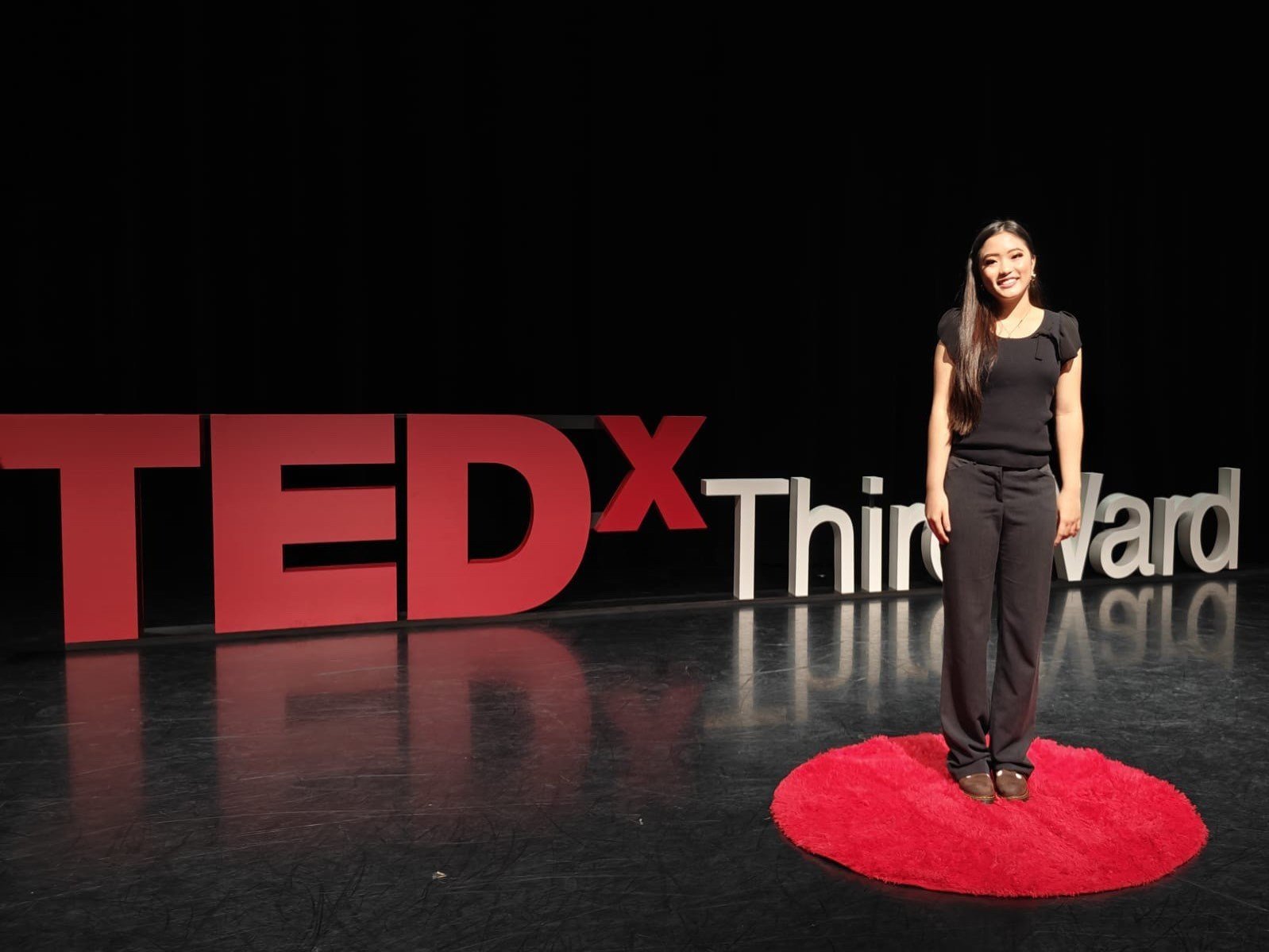
Vivian Liu is not your typical nonprofit founder. At an age when most teenagers are worrying about exams and extracurriculars, she co-founded Origami For Good, a youth-led 501(c)(3) organization that has grown into a global movement: more than 300 student-led chapters, over 7,000 volunteers across 50+ countries, and more than 820,000 folded origami pieces delivered to hospitals, nursing homes, military centers, and children's facilities around the world.
Her story is a masterclass in modern, youth-led entrepreneurship: start small, remove friction, write down your process so anyone can repeat it, and let a simple idea — a paper crane with a kind message — ripple outward into something millions of people can participate in.
Table of Contents
- From a Kitchen Table to a Global Movement
- The Entrepreneurial Playbook Behind the Growth
- Scaling Through Curriculum, Not Through the Founder's Calendar
- Funding and Partnerships That Powered the Mission
- Beyond Origami: A Portfolio of Ventures
- Recognition and Reception
- Lessons for Entrepreneurs
- Frequently Asked Questions
- Conclusion
From a Kitchen Table to a Global Movement
Origami For Good began the way many great ventures begin: with a personal observation. Liu's passion for origami started in childhood, folding paper at her grandmother's kitchen table — cranes, butterflies, flowers. While volunteering in nursing homes, she noticed how many elderly residents spent their days alone. She started folding cranes and giving them away as gifts, and the reactions were immediate: small, carefully crafted objects brought visible joy.
She invited a few friends to join her for folding sessions at school, and in January 2024 she co-founded Origami For Good with Thyra Foronda, turning those sessions into a registered nonprofit. The premise was simple and has never changed: transform discarded and recycled paper into origami, then mail it to soldiers, seniors, patients, and children who need a moment of connection. Today the organization reports more than 300 chapters, 7,500+ volunteers, and 825,000+ origami pieces sent to facilities in countries including the United States, Japan, India, Pakistan, the UAE, and Singapore (Origami For Good, 2026; Katy Times, 2025).
The Entrepreneurial Playbook Behind the Growth
What makes Origami For Good interesting from a business perspective is not the craft — it is the scaling logic. Liu has described her approach in her own words: "I make a bad first version quickly." The first version of Origami For Good was a batch of paper hearts handed out at school to see if anyone cared. People did. Then came a folding guide, then a chapter kit, then the network spread (Ideamensch, 2026).
This is classic lean startup methodology applied to a nonprofit: validate demand with a minimum viable gesture, document what works, and only then invest in structure. The organization reports receiving more than 1,000 chapter applications annually (Origami For Good, 2026), a level of inbound demand most early-stage ventures would envy.
Partnerships were another lever. Origami For Good has collaborated with corporate brands including Krispy Kreme and Panda Express to cover shipping costs and fund new chapter activities (Katy Times, 2025) — turning a cost center (postage for hundreds of thousands of mailings) into a co-branded community initiative.
Scaling Through Curriculum, Not Through the Founder's Calendar
The single most instructive decision Liu made was to stop being the product. Origami For Good started as workshops she ran herself, which capped growth at "wherever I could physically be." Her fix was to write the environmental lessons down: folding pieces from recycled paper while teaching why single-use waste matters, origami whales and sea turtles paired with short lessons on ocean plastic, and similar pairings.
Once a chapter lead in another city could run the same hour-long lesson from a document, growth stopped depending on the founder's presence. Liu frames the lesson plainly: "write down the thing only you can do until it becomes a thing anyone can do" (Ideamensch, 2026). That curriculum-driven model is, by her own account, most of how the organization passed 300 chapters. For any service business — consulting, education, franchising — the principle transfers directly: documentation is what converts expertise into a network.
Funding and Partnerships That Powered the Mission
Origami For Good's growth has been financed through a portfolio of small grants and one major award, a realistic funding map for youth-led ventures:
- $10,000 — Gloria Barron Prize for Young Heroes (2025 class), one of 15 top winners selected from 25 honorees annually (Barron Prize, 2025).
- $1,000 — Awesome Foundation, Conservation and Climate chapter, for pairing folds with environmental science lessons (Awesome Foundation, 2025).
- $2,000 total — two 9/11 "We Serve to Remember" grants from Youth Service America.
- $1,000 — Karma for Cara Foundation microgrant, funded at the program maximum for youth-led service.
- $500 — YouthMADE Festival Amplify Grant from Digital Promise.
Stacking modest, mission-specific grants rather than pursuing a single large fundraising round is a deliberate strategy: each funder gets a clearly bounded outcome (a chapter kit, a shipping budget, a lesson plan), and the organization keeps its independence.
Beyond Origami: A Portfolio of Ventures
Liu does not run a single venture — she operates a small portfolio, and each project reinforces the others. In October 2024 she co-founded Future Female Scholars with Claire Wang, a free STEM tutoring platform that connects teen tutors with students from underserved communities. The platform now counts more than 1,700 registered tutors and 140,000+ followers on Instagram, after an early failure taught her a hard lesson: when they launched, tutors signed up but almost no students showed up, because matching was done by hand over email and sessions died in scheduling. Rebuilding around proper signup and matching, and posting where students actually spend time, turned it around (Ideamensch, 2026).
In parallel, she is a working science researcher: her low-cost water-quality sensor project DiscSPR earned Grand and Special Awards at the 2026 Regeneron International Science and Engineering Fair, plus Best of Fair at the Fort Worth Regional Science and Engineering Fair and a Stockholm Junior Water Prize state medal. She is a Simons Research Fellow at Stony Brook University — one of roughly 50 high school students accepted to the program, a 1.7% acceptance rate — a UN Youth Delegate who attended the 2026 High-Level Political Forum at UN Headquarters, and a member of the Texas State Board of Education's student advisory council (ItsVivianLiu.com, 2026; Ideamensch, 2026).
Recognition and Reception
Recognition has followed the work. At 16, Liu was named a 2025 Gloria Barron Prize winner, a prize that has granted over $1.5 million to young changemakers whose projects have collectively raised more than $31.8 million (Barron Prize, 2025). She has been featured in the Houston Chronicle, Scholastic Magazine, KHOU11's "Great Day Houston," FOX26, Points of Light, and iHeartRadio, and she delivered a TEDx talk at TEDx Third Ward titled "The Lost Art of Living Fully: How Small Moments Spark Big Movements."
The recognition also carries institutional weight: she testified before all 15 Texas State Board of Education representatives in Austin in March 2025, and Origami For Good's work was cited in the 2025 TXSBOE Resolution (Awesome Foundation, 2025). In 2025 she was also named a WAFF Global Teen Leader through the We Are Family Foundation's Three Dot Dash program.
Lessons for Entrepreneurs
Several of Liu's operating principles deserve to be quoted back to any founder, at any stage:
- A rough prototype this week beats a polished plan next month. The paper hearts batch cost almost nothing and validated the entire premise.
- Write your process into a curriculum. Your expertise stops being a ceiling the moment someone else can deliver it from a document.
- Treat friction as a real cost. A genuinely free, genuinely good service still fails if using it takes effort — the Future Female Scholars launch proved it.
- Argue the other side of your own conclusion. Building the strongest case against your own data catches errors before judges and reviewers do.
- Send the cold email. A ninth-grade message to a professor, rewritten for weeks before sending, became her first paid lab internship two days after it finally went out.
Underneath the statistics, the through-line is the same one every entrepreneur recognizes: Origami For Good did not scale because origami is magical. It scaled because its founder turned a kind gesture into a repeatable system — and then got out of the way.
Frequently Asked Questions
Who is Vivian Liu?
Vivian Liu is an American student, nonprofit co-founder, and science researcher from Katy, Texas. She co-founded Origami For Good in January 2024, a youth-led 501(c)(3) nonprofit that has grown to 300+ chapters and distributed more than 820,000 origami pieces worldwide. She also co-founded Future Female Scholars, a free STEM tutoring platform, and is a award-winning science researcher and youth policy advocate.
What is Origami For Good and how big is it?
Origami For Good is a youth-led nonprofit that transforms recycled paper into origami, then mails it to hospitals, nursing homes, military centers, and children's facilities worldwide. Founded in 2024 by Vivian Liu and Thyra Foronda, it reports 300+ student-led chapters, 7,000+ volunteers, and 820,000+ origami pieces delivered across more than 50 countries.
How did Origami For Good grow so quickly?
Three mechanisms: a low-cost "bad first version" to validate demand (a batch of paper hearts handed out at school), written chapter kits and curricula so anyone could run a local program without the founder, and corporate partnerships with brands such as Krispy Kreme and Panda Express to cover shipping and new chapter activities. The organization now receives 1,000+ chapter applications per year.
What awards has Vivian Liu received?
She is a 2025 Gloria Barron Prize for Young Heroes winner ($10,000), a Princeton Prize in Race Relations recipient, a TEDx speaker, a Simons Research Fellow at Stony Brook University, and a Grand and Special Award winner at the 2026 Regeneron International Science and Engineering Fair for her low-cost water-toxin sensor project DiscSPR. Her nonprofit has also won grants from the Awesome Foundation, Youth Service America, and the Karma for Cara Foundation.
What is Future Female Scholars?
Future Female Scholars is a free STEM tutoring platform co-founded by Vivian Liu and Claire Wang in October 2024. It connects teen tutors with students from underserved communities and has grown to 1,700+ registered tutors and more than 140,000 followers on Instagram after rebuilding its tutor-student matching system to cut scheduling friction.
How can I start a chapter or volunteer with Origami For Good?
Anyone can volunteer — no age, experience, or background required — and chapters can be started at a school or in a local community. The organization reports receiving more than 1,000 chapter applications annually, so prospective chapter leads should demonstrate leadership and a concrete plan. Applications and volunteer information are available on the official Origami For Good website.
Conclusion
Vivian Liu's trajectory shows what happens when teenage curiosity meets disciplined execution. From a batch of paper hearts in a Texas high school to 820,000+ origami pieces in 50+ countries, Origami For Good is proof that you do not need capital, a warehouse, or a business degree to build something global — you need a repeatable system, a documented process, and the willingness to ship the imperfect first version. For women entrepreneurs watching from the sidelines, the message is the same one Liu lives by: send the email, make the bad prototype, and let the folds do the rest.
Sources
- Ideamensch, "Vivian Liu — Co-founder of Origami For Good," interview, 2026 — ideamensch.com/vivian-liu
- Origami For Good, official website, 2026 — origamiforgood.org
- ItsVivianLiu.com, "Vivian Liu | Science & Social Impact," official personal site, 2026 — itsvivianliu.com
- Katy Times, "Katy youth wins national award for heroic service activity," September 2025 — katytimes.com
- The Barron Prize, "Meet the 2025 Barron Prize Winners," 2025 — barronprize.org
- Awesome Foundation, "Origami for Good: Environmental Conservation Art," Conservation and Climate chapter, 2025 — awesomefoundation.org