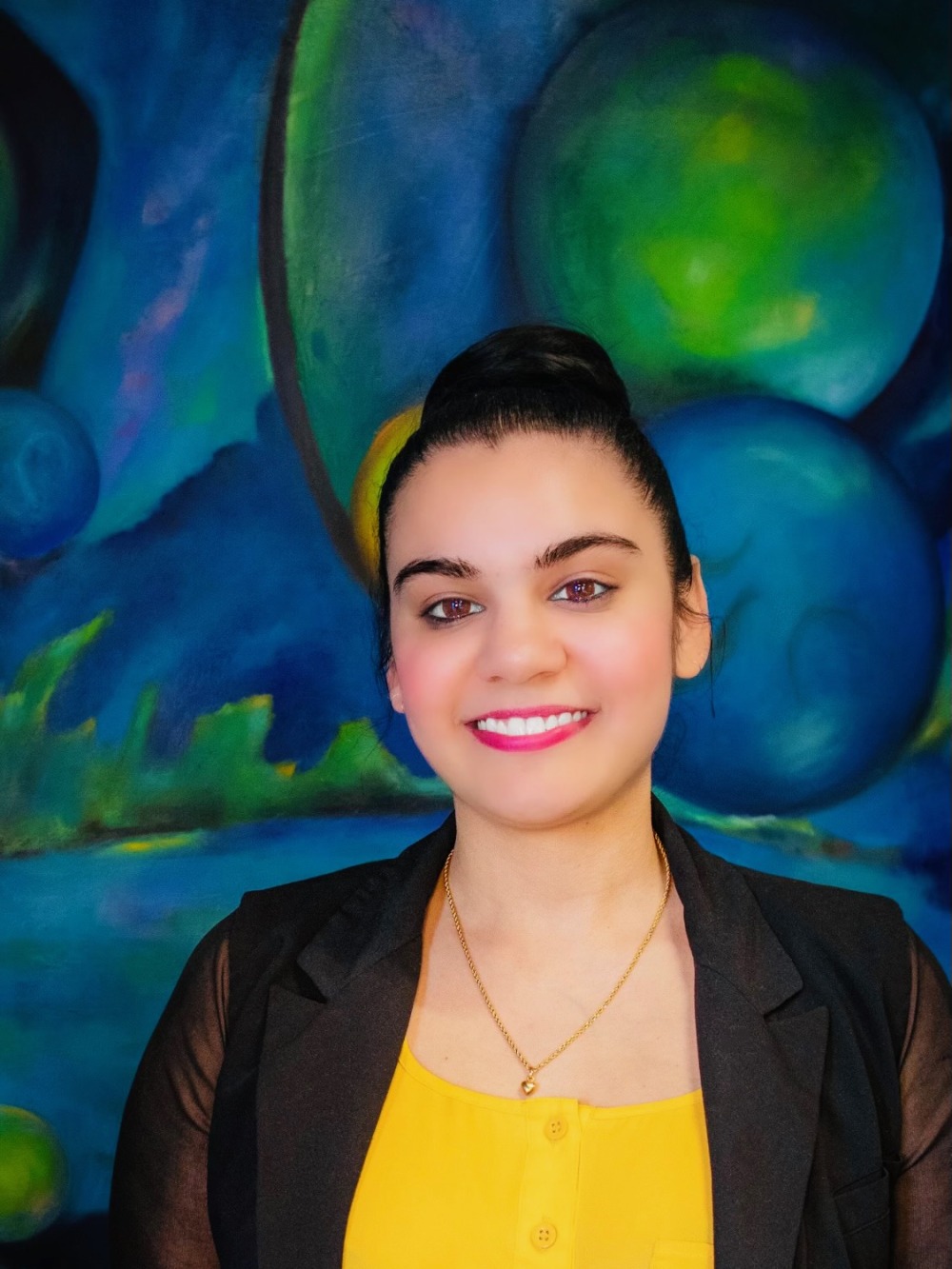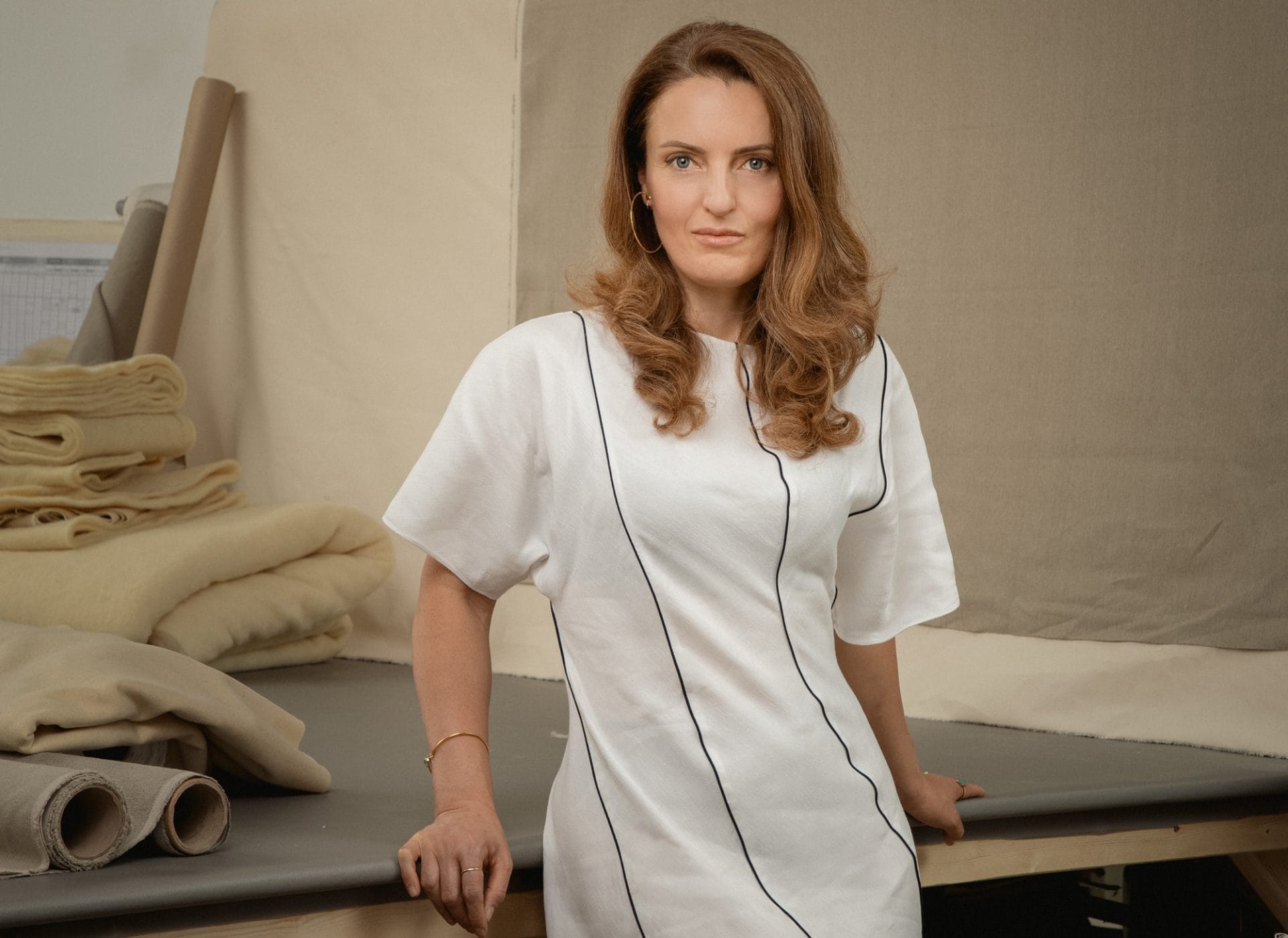
Alesha Cumpton left a stable engineering career in aerospace to build a higher-education institute for holistic health — in a market worth $6.8 trillion. The CEO and co-founder of BINDU Institute spent two decades in corporate roles before turning points in Ibiza, India and a moon ceremony pulled her toward yoga, education and entrepreneurship. Today she leads a Barcelona-based team delivering graduate-level programs at the intersection of modern science and ancient wisdom. The global wellness economy grew 7.9% between 2023 and 2024 to reach $6.8 trillion, according to the Global Wellness Institute's Global Wellness Economy Monitor 2025.
This is how an industrial engineer became the builder of Europe's first master's degree in holistic health sciences — including the funding failure that nearly ended the venture.
Table of Contents
- From Aerospace Engineering to Wellness
- The Decision to Leave Corporate Life
- Co-Founding BINDU Institute
- The Pivot That Saved the Business
- Building Europe's First Master's in Holistic Health Sciences
- Leadership Lessons for Women Entrepreneurs
- Frequently Asked Questions
- Conclusion
- Sources
From Aerospace Engineering to Wellness
Alesha Cumpton began her professional life in aerospace aviation, not wellness: she studied industrial engineering at Arizona State University, worked across Europe, and completed her MBA at IMD in Lausanne. She says aviation never lit a spark — the people who thrived there were weekend pilots and engine builders, and she was not one of them. Movement, meanwhile, was a constant: she danced from a young age, and yoga became the grounding force that survived her corporate travel schedule.
Her mother was a nurse, so the household leaned on conventional medicine, but Cumpton sensed early that healing was more complex than treating symptoms. A pivotal moment during yoga training in Ibiza deepened her commitment to service and community, and she began connecting personal dharma — purpose — with meaningful contribution. The market she eventually entered is no niche: the Global Wellness Institute reports wellness spending reached a record $6.8 trillion in 2024 and is forecast to grow 7.6% a year to approach $9.8 trillion by 2029.
The Decision to Leave Corporate Life
Alesha Cumpton decided to leave corporate life after her daughter was born, building a family and her first venture at the same time. That venture was Gather Yoga, a wellness community with a bold vision that proved ahead of its time and badly under-resourced. When her business partner left, she chose to close rather than carry it alone — and later called it one of the most valuable decisions of her career.
"Walking away was painful because the project was deeply tied to my identity at the time," she told IdeaMensch in January 2026. What she took from the failure was practical: she had learned every layer of business firsthand, and the cost of scaling a big vision without support. That lesson now shapes her fundraising at BINDU, where she seeks "stewards of wealth" for a long-term, regenerative vision.
A second turning point came when friends and former colleagues pushed her back toward a "real job," even suggesting a wellbeing director role. She was scrolling LinkedIn listings, torn between practicality and purpose, when she led a moon ceremony. The circle's response convinced her that holding space for growth and connection was not a side activity but the work itself.
Co-Founding BINDU Institute
BINDU Institute was founded in 2021 in Barcelona by three co-founders with different disciplines: Alesha Cumpton as CEO, Suzanne Faith, PhD, as chairwoman and chief wisdom officer, and Vanina Grisoni as CFO and strategic architect. The name bindu means a point of convergence — a symbol of integration across disciplines and ways of knowing.
The company's LinkedIn profile describes a higher-education business with seven employees, 75% year-over-year headcount growth, and a workforce spread across Spain, Canada, France and Switzerland. Cumpton is an 800-hour certified yoga teacher and ceremonialist as well as a corporate-trained executive, and her remit covers strategy, program development and community building. The faculty roster spans counselling psychology, Ayurveda, functional medicine, yogic studies and naturopathy, backed by an interdisciplinary board of health that includes an MD obstetrician-surgeon — an explicit attempt to bridge Western and Eastern medicine rather than replace one with the other.
The Pivot That Saved the Business
BINDU Institute nearly ran out of money before it found its model, and Alesha Cumpton treats the failure as a lesson in alignment. After an initial seed investment the team expanded fast, shipping more than 30 programs and multiple launches. "In hindsight, we had thrown ourselves into rapid expansion without realizing that we were drifting out of alignment with our core values," she said in April 2025. Time, energy and funding ran out.
The pause that followed produced the strategy the company runs on today. Using their own tools, including Human Design, the co-founders concluded they were not meant to be another platform selling generalized wellness content to consumers — their expertise was in training professionals. That created BINDU's "business to professionals" model, equipping clinicians with integrative tools, plus a second line of work helping organizations build cultures of wellbeing.
It was a sound place to land. Workplace wellness, worth $53 billion globally in 2024, was the only one of the Global Wellness Institute's 11 wellness sectors to shrink that year, falling 1.5% from 2023 — a sign that buyers want evidence-informed programs rather than perks. BINDU's answer is graduate-level and research-informed, not a one-off workshop.
Building Europe's First Master's in Holistic Health Sciences
BINDU Institute's flagship is a master's degree in holistic health sciences, described by PR ON THE GO as Europe's first in the field. Building it meant creating an academic category from scratch: a multidisciplinary curriculum, institutional credibility, and a business case for a degree that did not exist. "People see the polished announcement of a master's program or a new institutional partnership, but very few see the years behind it," Cumpton told Authority Magazine in January 2026.
The timing favors her. Mental wellness reached $268 billion in 2024 and grew 12.4% a year between 2019 and 2024, while traditional and complementary medicine hit $606 billion and is projected to pass $1 trillion by 2029. Europe's wellness market grew 6.3% annually over the same period, yet per capita spending of $1,876 still trails North America's $6,029 — a distance that suggests room for credentialed practitioners rather than a saturated market.
The pipeline into this economy is widening for women professionals, from Luna Irshaid's holistic health work to practical guides such as how to become a certified wellness coach. Cumpton's contribution is the credential at the top of that ladder.
Leadership Lessons for Women Entrepreneurs
Alesha Cumpton's advice to women entrepreneurs is to manage energy before time and to protect the "big rocks" — self-care, family and meaningful work — before small tasks fill the jar. Her rules are unglamorous: a sacred morning practice, honest discernment about when to lead from focused, linear energy and when to lead from intuitive, cyclical energy, and letting the body discharge emotion before it hardens into burnout.
Three traits carry her leadership, she says: vision, resilience and the willingness to expand her comfort zone. Vision is sensing what something could be before it exists on paper; resilience carried BINDU through delays, pivots and unexpected costs; the comfort zone is muscle she stretches repeatedly — from letting go of misaligned team members to stepping into fundraising and sitting in rooms she did not yet feel qualified for. She credits her mother, a nurse who worked full time and shielded the family from financial strain, with teaching her to question norms and invest in education.
For founders who want a lower-entry route into the same economy, our guides on a seven-day lifestyle reset for women entrepreneurs and integrating wellness into the daily routine are a practical starting point.
Frequently Asked Questions
Who is Alesha Cumpton?
Alesha Cumpton, IMD MBA, is the CEO and co-founder of BINDU Institute, a Barcelona-based higher-education organization offering graduate-level programs in holistic health sciences. She has 20 years of experience across wellness, entrepreneurship and corporate leadership, and trained as an industrial engineer before working in aerospace.
What is BINDU Institute?
BINDU Institute is a higher-education company founded in 2021 and headquartered in Barcelona. It delivers research-informed graduate programs and professional trainings combining embodied practice, psychology and whole-system approaches to health, plus organizational wellbeing programs for companies. The name bindu means a point of convergence.
What is Alesha Cumpton's educational background?
She studied industrial engineering at Arizona State University, began her career in aerospace aviation, and completed an MBA at IMD in Lausanne, Switzerland. She is also an 800-hour certified yoga teacher who completed teacher training in India and advanced training in Ibiza.
What was her first business failure?
Her first venture, Gather Yoga, had a bold vision but was under-resourced and self-funded. When her business partner left, she closed the company rather than carry it alone. She says the experience taught her every layer of business firsthand — and the cost of scaling a big vision without proper support.
What is the BINDU Institute master's program?
It is a master's degree in holistic health sciences for experienced practitioners, described by PR ON THE GO as Europe's first in the field. The curriculum combines academic research, embodied practice and interdisciplinary study, delivered alongside organizational wellbeing programming and continuing education immersions.
What advice does Alesha Cumpton give women entrepreneurs?
Organize around energy rather than time: protect a morning practice, put the "big rocks" — self-care, family and meaningful work — into the schedule first, and know when to lead from focused, linear energy versus intuitive, cyclical energy. She also recommends honoring timing and seeking aligned long-term funding instead of forcing an idea into form too early.
Conclusion
Alesha Cumpton's route from aerospace engineer to institute CEO was neither linear nor quick: a failed yoga venture, a funding crisis that forced a pivot, and years of curriculum-building before Europe's first master's degree in the field existed. The thread is her definition of alignment — structure from engineering, purpose from yoga, and a model that trains professionals instead of chasing consumers.
For women entrepreneurs the transferable lesson is that a setback is often a repositioning. Her seed money ran out after 30-plus programs; the rebuild around professional education produced the institute that exists today. In a wellness economy moving toward $9.8 trillion by 2029, the advantage goes to founders who pair conviction with a credentialed offer — the combination she has spent two decades assembling.
Sources
- PR ON THE GO — "Meet Alesha Carmela, Co-Founder of BINDU Institute" (April 8, 2025)
- Authority Magazine — "Discovering Your Life's Purpose: Alesha Cumpton of BINDU Institute" (January 4, 2026)
- IdeaMensch — interview with Alesha Cumpton (January 17, 2026)
- BINDU Institute — About Us (team and faculty)
- BINDU Institute — official website (programs and positioning)
- Global Wellness Institute — Global Wellness Economy Monitor 2025 (November 19, 2025)
- LinkedIn — Bindu Institute company profile (founding year, headcount, locations)
- LinkedIn — Bindu Institute post on Alesha Carmela Prosperini Cumpton