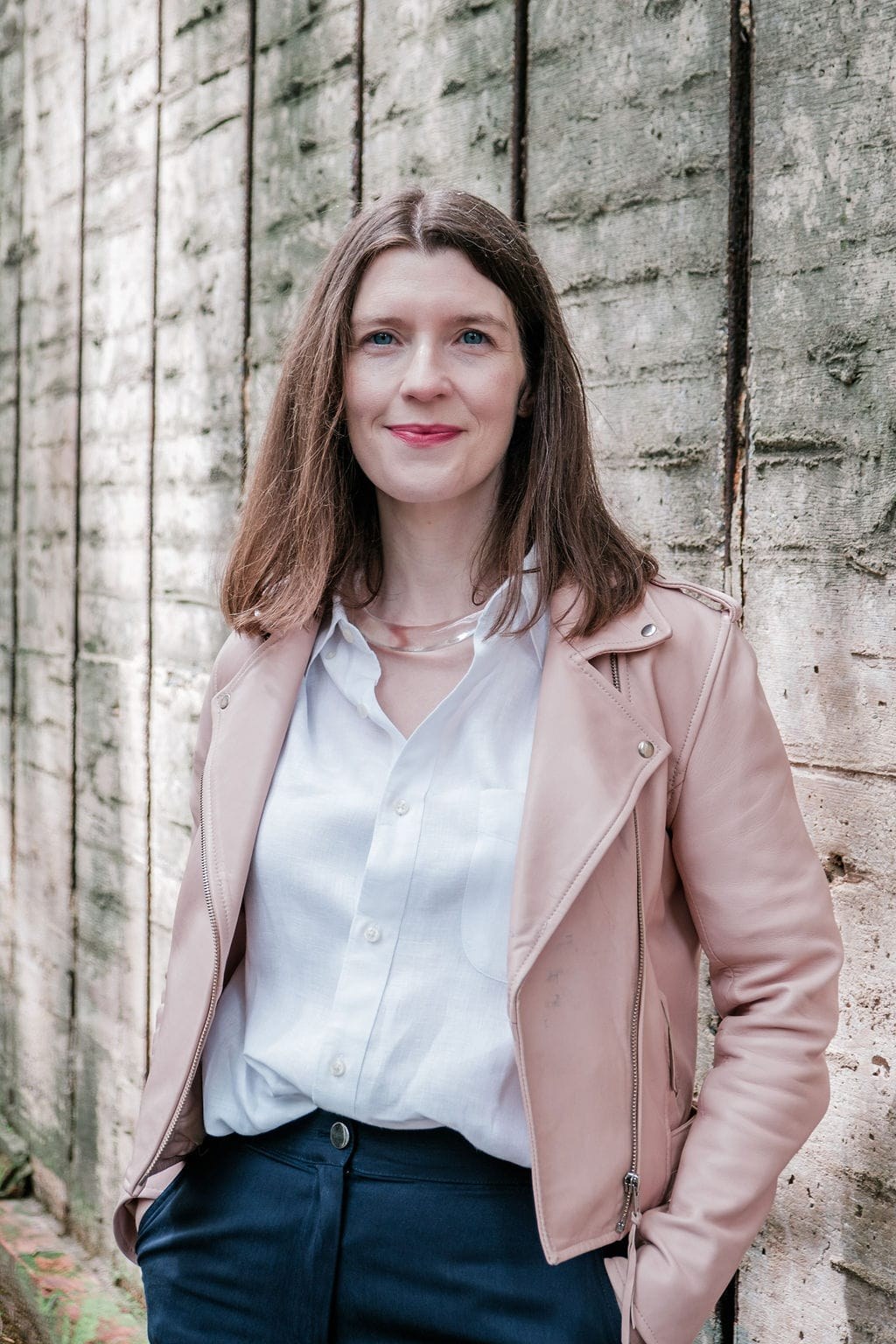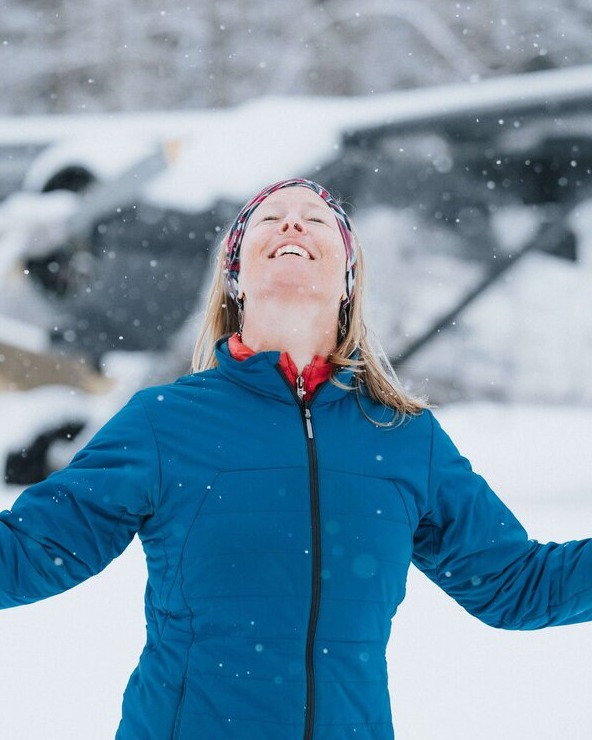
Kellie Okonek is an executive coach and leadership strategist who spent roughly two decades running demanding oil and gas operations before turning those lessons into a consulting practice built around human energy. Today she leads Iron Lady Coaching, works as a Vitality Architect and adventure-based facilitator, and helps founders and leadership teams move from simply functioning to flourishing. Her path bridges senior energy operations in Iraq, Oman and Arctic Alaska, elite ski mountaineering, bush flying and nonprofit board work — a combination that makes her one of the more unusual figures in executive coaching.
Table of Contents
- From Oil and Gas Operations to Entrepreneurship
- Building Iron Lady Coaching
- The Principles of Adventure
- Adventure as a Training Ground
- Productivity and Daily Habits
- Lessons for Entrepreneurs
- Frequently Asked Questions
- Conclusion
From Oil and Gas Operations to Entrepreneurship
Kellie Okonek left oil and gas in 2021, at the end of what she then described as a 17-year career in operations management, and later rounded that record to two decades of leading complex operations in high-stakes environments. A chemical engineer by training, she moved from trading and refining into upstream operations and held senior roles from Alaska's Arctic to the Middle East, including operations management on the Rumaila oilfield in Iraq, documented as one of the largest fields in the world.
She left because the environment was draining her, not because she had failed. What finally shaped her thinking was a failure she did lead: she solved problems many considered unsolvable on Rumaila and was met with retaliation rather than relief. "I failed to understand the depth of power dynamics at play," she later said — a lesson she now carries into coaching, believing the world is not built on merit or logic alone.
Systems thinking plus that hard-won political realism became the basis of her second career. Instead of returning to a corporate ladder, she founded Iron Lady Coaching, first working one-on-one with executives to help them navigate leadership challenges and step into their full potential.
Building Iron Lady Coaching
Iron Lady Coaching grew from one-to-one coaching into organizational transformation because Okonek realized that developing the leader alone changes little: if the team's systems and culture do not evolve with them, lasting change is nearly impossible. Her practice now pairs executive coaching with team strategy, delivered through what she calls High Vitality Teams™ — teams whose energy, clarity and alignment are treated as business assets.
The engagement model has three parts. Bottom-up strategic visioning builds the plan with the people doing the work, so it reflects their insight and stays executable. Roughly six months of strategy execution then embeds that plan in the business's everyday operating system. In parallel, the executive leader evolves, because a drained leader holds back the whole team.
She states the commercial offer plainly: a 45-minute session designed to unlock 20% more capacity from the people a team already has, by showing where capability is locked up and which dynamics block it. The underlying problem is well measured — Gallup reports that only 20% of employees worldwide were engaged at work in 2025, and that managers account for at least 70% of the variance in team engagement. That is the gap her practice targets, and the same gap leaders such as Arianna Huffington argue should be closed by building wellbeing into how a company operates.
The Principles of Adventure
The Principles of Adventure are how Okonek translates wilderness experience into business results, and they are what sets her apart from a conventional strategy consultant. She treats organizations as living ecosystems rather than machines to be optimized — ecosystems that do not merely function but flourish. Humans evolved in environments demanding instinct, intuition and intrinsic motivation, she argues, and modern corporate structures often suppress exactly those capacities.
In practice the framework combines immersive facilitation, leadership strategy and adventure-inspired transformation. Leaders rehearse working with uncertainty, taking smart risks and moving with precision, then apply those skills to strategy. Dysfunction is diagnosed rather than assumed: she looks for structural barriers, misaligned incentives and energy drains that slow execution, and redesigns them while leadership capacity grows at the same time.
The clearest expression is Strategy Through Adventure – Alaska Immersion, which moves a leadership team out of the boardroom into Alaska's wilderness. Distraction falls away, the principles are lived rather than described, and the learning carries back into how the team communicates and executes. Most transformations happen incrementally, she says; hers happen in leaps.
Adventure as a Training Ground
Okonek's outdoor record is not a hobby footnote; it is the source material for her method. She is an elite ski mountaineer with first descents across Alaska, Antarctica, Chile, Argentina and Eastern Europe, including Denali (20,308 feet) via the Messner Couloir and Aconcagua (22,841 feet) via the Polish Glacier, and she has traveled by bike, kite, skis and boots through 29 countries. She is also an Alaska bush pilot who lands on rivers, tundra, beaches and glaciers.
Injuries shaped the philosophy as much as summits. After breaking her collarbone in a ski fall she rehabbed for months, then tore her ACL one year later to the day. Her rule was that she was not allowed to make it wrong: focus on what you can do and what you have. Having always wanted to learn to fly, she told herself "now or never" — and learned. Adaptability over grit is now central to her teaching.
The commitment also runs through institutions. She has volunteered with SheJumps since 2010 and joined its board in 2021, contributing strategic planning and Alaska programming to an organization focused on unlocking human potential through the outdoors — an extension of her stated passion for gender equity and women's leadership in corporations and government.
Productivity and Daily Habits
Okonek's productivity rests on three habits: time outside moving in nature, focused work with clients, and protected space to reflect and write. She calls outdoor movement "cognitive maintenance" rather than exercise, arguing that optic flow, varied terrain and natural light support clarity — and she goes outside when she feels overwhelmed, because movement breaks cognitive stagnation.
Her use of AI is unusually candid. She describes ChatGPT as her coach, editor, thought partner and writing partner, using it to clarify thinking and shape messaging; tactically, she credits it with hours saved on research, brand writing and business planning. Her media diet is equally practical: Huberman Lab is her go-to for applied science on sleep, dopamine, stress adaptation and the nervous system.
Both habits rest on a recovery model borrowed from flow science and her own burnout: flow runs through struggle, release and recovery before it returns, and there is no skipping steps. This is commercial as well as personal — Gallup finds engaged employees are 69% less likely to experience burnout at work, which is why she treats vitality as performance strategy rather than a wellness perk.
Lessons for Entrepreneurs
The clearest lesson is to design how you work, not only what you work on. Most teams obsess over output and ignore the conditions that produce it: whether people are in coordinated and effective action, whether culture supports vitality, whether people can do their best thinking. Start with how the work happens, she argues, and everything else breaks free.
She offers more besides. Trust the process — she jokes she would never do to a novel's main character what life did to her, yet all of it shaped her. Do it your own way: her methodology was forged in oil and gas rather than borrowed from trend cycles. Redefine success away from "more" toward alignment, impact and vitality, a theme she explored in a 2025 Authority Magazine interview. And treat AI as a creative ally, not a threat.
For founders navigating a pivot, her path is a usable template: leave on your own terms, package what you already know into a specific offer, keep one foot in the field where your ideas were tested, and measure your work in human capacity as well as revenue.
Frequently Asked Questions
Who is Kellie Okonek?
An executive coach, leadership strategist and adventure-based facilitator based in Alaska, and the founder of Iron Lady Coaching.
What did she do before becoming a coach?
About two decades in oil and gas after training as a chemical engineer, with senior operations roles from Arctic Alaska to Oman and Iraq. She left the industry in 2021.
What is Iron Lady Coaching?
Her consulting practice, combining executive coaching with bottom-up strategy work, about six months of guided execution, and parallel development of the leader.
What are the Principles of Adventure?
Her framework for turning wilderness experience into business capability: working with uncertainty, taking smart risks and moving with precision.
What is the Strategy Through Adventure Alaska Immersion?
An immersive program in Alaska's wilderness where leadership teams live the principles in real conditions, then bring the resulting clarity and execution habits back to the business.
How does she stay productive?
Moving outside daily as cognitive maintenance, deep work with clients, and time reserved for reflecting and writing — supported by ChatGPT and science-based podcasts.
Conclusion
Kellie Okonek shows that a career forged in extreme environments can be carried intact into a different industry. She left a successful energy operation, rebuilt two decades of leadership experience into an outdoor-rooted coaching methodology, and now speaks the language of bottom-line results while treating human vitality as the route to them. For women entrepreneurs, her path proves that expertise from one world can be redesigned into an original offer in another — if you are willing to do it in your own way.
Sources
- IdeaMensch interview with Kellie Okonek — career history, daily habits, business philosophy.
- CanvasRebel, "Meet Kellie Okonek" (2025) — departure from oil and gas, methodology, injuries and flow science.
- Women Talk Design speaker profile — mountaineering record, Rumaila posting, 29 countries.
- SheJumps board Q&A (March 2021) — career transition, volunteering and board role.
- Authority Magazine interview (April 2025) — redefining success.
- kellieokonek.com — High Vitality Teams, Principles of Adventure, offer details.
- Gallup, Employee Engagement indicator — 20% global engagement in 2025, managers explain at least 70% of variance in team engagement, engaged employees 69% less likely to burn out.