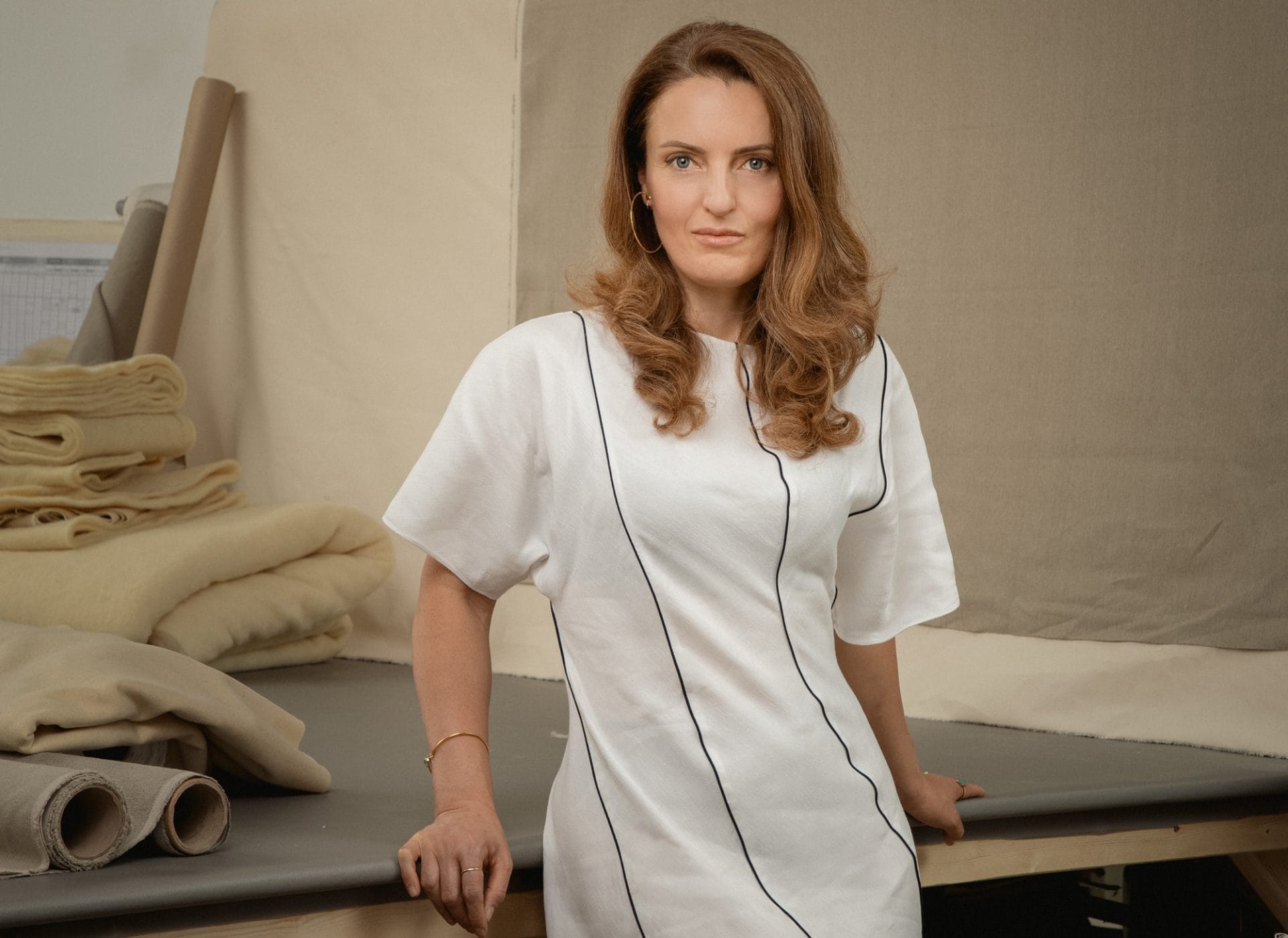
Palveshey Tariq is the founder and lead coach of Alternative Coaching Methods, a coaching practice she built after two company exits, a research post at MIT, and lectures at Harvard University and the World Bank. Her business exists because the resume that once defined her — wealth, titles and Ivy League credentials — left her depressed, addicted and unable to face trauma she had outrun since a homeless adolescence.
The timing is not accidental. Gallup's State of the Global Workplace 2025 report found that 40% of employees worldwide experienced stress "a lot of the day" the previous day, while only 21% were engaged. Tariq's bet is that high performers need what performance reviews cannot supply: self-awareness. Here is how she turned her own collapse into a coaching company, what it sells today, and which principles other founders can borrow.
Table of Contents
- From Homelessness to the Ivy League
- Two Exits and the Limits of Achievement
- The Turning Point
- Building Alternative Coaching Methods
- What the Business Offers Today
- Discipline as a Daily Operating System
- Lessons Founders Can Borrow
- Frequently Asked Questions
- Conclusion
- Sources
From Homelessness to the Ivy League
Palveshey Tariq reached the Ivy League by treating achievement as an escape from homelessness and trauma. She grew up facing instability and trauma, and concluded early that the way out was through titles, accolades and money. That strategy worked on paper: she completed graduate studies in financial technology at Harvard, in computer science and finance at Harvard Business School, and in quantum physics at Yale.
Her professional record reads like a shortlist of elite institutions. Tariq served as an AI researcher at the Massachusetts Institute of Technology, a lecturer at the University of Florida's World Bank Program and an adjunct lecturer at Harvard University, teaching subjects from blockchain technology to block universe theory. She delivered a blockchain lecture for the World Bank in 2018 and returned to Harvard in 2024 for a talk titled "Set, Setting, and Support". She was also chief executive of Protonode Strategies, a cryptocurrency hedge fund.
Behind those credentials was a person under mounting pressure: Gallup's 2025 report notes that female managers' life evaluations fell by seven percentage points in a single year, the sharpest wellbeing decline it recorded among manager groups. Tariq's own decline arrived long before she held any management title.
Two Exits and the Limits of Achievement
Two company exits convinced Palveshey Tariq that success alone does not equal fulfilment. She built and sold two companies, including the Protonode Strategies crypto hedge fund, so Alternative Coaching Methods is not her first venture. The hedge fund is where she locates her clearest business failure: a revolving door of employees, because nobody wanted to work with her. She spent more time training replacements than managing client portfolios and sold the company rather than sustain an unworkable model.
The lesson reorders the job of a founder: files can be managed, but people have to be led, and real leadership means staying a student willing to learn from the people you hire. By the time she had a spouse, a house with a white picket fence and a lucrative career, she was more miserable than when she started — depressed, numb and addicted. In 2019 her body forced the issue: she was hospitalised with a severe case of sepsis. Gallup quantified a version of that pattern in 2026, when 27% of U.S. employees said they always or very often feel burned out at work.
The Turning Point
The turning point came when Palveshey Tariq stopped outsourcing her healing. After a suicide attempt, she says a voice gave her an ultimatum: wait two more years. She sold her house, quit her job, moved to a new city and cut off prescriptions and vices — Adderall, antidepressants, alcohol and nicotine — enduring the withdrawals that followed. Expecting an escape, she turned to psilocybin mushrooms; instead of numbing her, the experience gave her five hours of clarity on the role she had played in her own suffering.
What followed was a two-year practice of meditating four to eight hours a day, rebuilt from the inside out alongside self-inquiry and conscious practices. She describes the shift as becoming the medicine rather than buying it: plant medicines, in her words, shed light on the dark areas and assign homework, but the work still has to be done at home. The sepsis scare, the withdrawals and those daily meditation blocks are the raw numbers behind the career she runs now.
Building Alternative Coaching Methods
Alternative Coaching Methods is a coaching company that sells structured self-awareness to high performers, and it sits inside one of the fastest-growing service categories in the world. Tariq founded the practice to help leaders from all walks of life transcend trauma and transform into high performers, specialising in revealing the limiting beliefs and subconscious narratives that shape behaviour, health, relationships and performance. Her premise is unconventional for a former AI researcher: the most advanced technology in existence is the human body, and most people never learn to operate it.
The market backdrop supports the model. The International Coaching Federation's 2023 Global Coaching Study counted 109,200 coach practitioners worldwide — a 54% increase between 2019 and 2022 — and estimated annual industry revenue of $4.564 billion, up 60% on 2019. The company competes with a specific positioning: hard-science credentials on one side, plant-medicine and integration work on the other, aimed at founders and executives rather than at the wellness curiosity market.
What the Business Offers Today
Today Alternative Coaching Methods sells four things: one-to-one transformational coaching, psychedelic integration support, conscious leadership work, and speaking combined with retreats. Its flagship private programme runs for 12 weeks and is designed for people seeking an intensive, personalised approach to change, while the retreat side takes clients to Jamaica for five-day plant-medicine experiences with preparation and integration built around them. On her psilocybin writing, Tariq is explicit that sessions took place only where such substances have been legalised or decriminalised.
The wider audience is reached through other channels: The Palveshow podcast, where she interviews founders and innovators on the path of raising humanity's consciousness, a newsletter, talks, and a book in progress, How to Kill Yourself: Finding Peace and Purpose Through Pain. The demand is not niche — the ICF reports that 72% of coach practitioners are women and that women make up 58% of coaching clients. For the credentialing route, see our guide on how to become a certified wellness coach; for the business-model angle, integrating wellness recurs across our Success Stories.
Discipline as a Daily Operating System
Palveshey Tariq runs her company on a schedule that starts at 6 a.m. and ends by 8:30 or 9 p.m. Her rule is that discipline is the highest form of self-respect: she records her dreams, drinks lemon water and celery juice, meditates for one hour, walks for thirty minutes, practises yoga for ninety minutes and reads for half an hour before any professional work begins. Client calls run from 11 a.m. to 3 p.m., followed by two focused hours of writing; evenings are for tea, reading or painting.
That structure is also the product she sells: preparation, session, integration, repeat. It converts a wellness philosophy into something a paying client can measure, and business decisions follow the same logic — she grew the company by learning to hold hard conversations with compassion, owning where her own need for control comes from so she can hear where a team is actually struggling.
Lessons Founders Can Borrow
Founders can take at least four lessons from how Palveshey Tariq rebuilt her career. First, achievement is a poor substitute for alignment: two exits and an elite résumé did not fix her. Second, leadership is not administration — the hedge fund nearly failed because she was managing files instead of leading people. Third, health is becoming the real status symbol; she identifies the shift from hustle to vitality, balance and resilience as the trend that excites her most. Fourth, her antidote to comparison and criticism is creation and contribution — a practical answer for anyone measuring their chapter one against someone else's chapter ten.
The category keeps validating the approach. In its latest Global Coaching Study, the ICF put the global number of coach practitioners at a record 122,974. Tariq's version of the opportunity is narrower: a person who has been destroyed a thousand ways knows a thousand ways to rebuild, and that knowledge, packaged with structure, is what clients buy.
Frequently Asked Questions
Who is Palveshey Tariq?
Palveshey Tariq is the founder and lead coach of Alternative Coaching Methods, a coaching practice for high-performing leaders. Before coaching, she was an AI researcher at MIT, a lecturer at Harvard University and the University of Florida's World Bank Program, and she founded and sold two companies.
What is Alternative Coaching Methods?
Alternative Coaching Methods (ACM) is a coaching company that helps leaders uncover the limiting beliefs and subconscious narratives driving their behaviour, health and performance. It combines one-to-one coaching, integration work and retreats, and describes its mission as redefining health and wealth through plant medicine.
What does Alternative Coaching Methods offer to clients?
The practice offers transformational one-to-one coaching, a 12-week private programme, psychedelic integration support, conscious leadership work, speaking engagements and plant-medicine retreats. Tariq also hosts The Palveshow podcast and writes a newsletter.
Where does Palveshey Tariq host her retreats?
Her plant-medicine retreats take place in Jamaica, typically as five-day experiences with preparation and integration support. She has stated that the psilocybin journeys she facilitated occurred only where psychedelics have been legalised or decriminalised.
What is Palveshey Tariq's educational background?
She completed graduate studies in financial technology at Harvard, in computer science and finance at Harvard Business School, and in quantum physics at Yale, and has taught subjects ranging from blockchain technology to block universe theory.
What book is Palveshey Tariq writing?
She is working on How to Kill Yourself: Finding Peace and Purpose Through Pain, a book that shares client stories and details her integration process — a title she frames as dismantling the identity built around external success.
Conclusion
Palveshey Tariq's story is not a rejection of ambition but a retooling of it: she kept the analytical rigour of MIT and Harvard and pointed it at the one system she had never studied properly, herself. Alternative Coaching Methods is what that realignment produced — a company that turns a private collapse into a repeatable service for other high performers, at a moment when Gallup records daily stress for 40% of the world's workers.
For women building service businesses, lived experience becomes an offer only when structure and integration are attached to it.